
Flowers
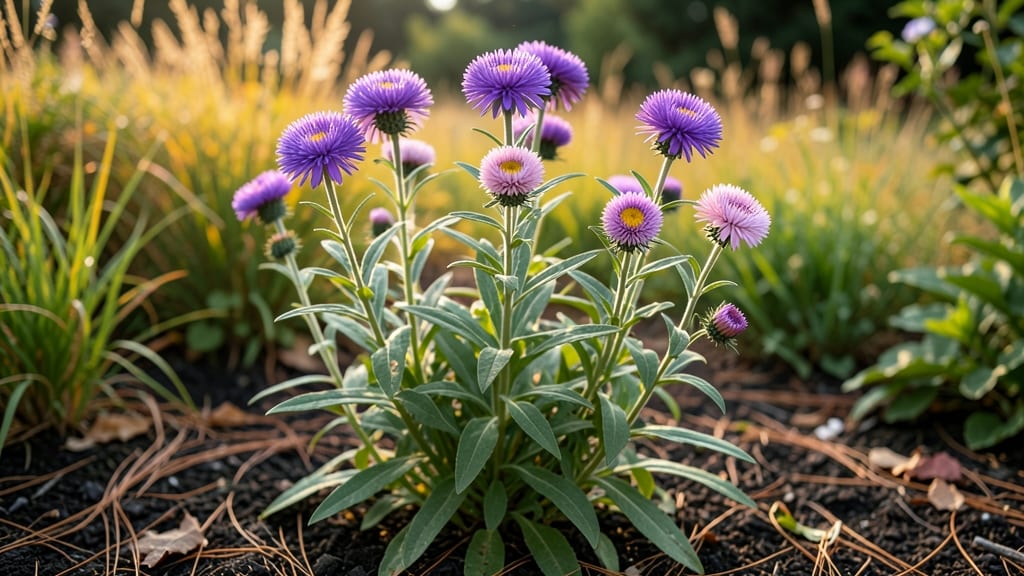
Understanding aster flower height is the key to designing a showstopping fall garden that balances drama and proportion.
If you've ever stared at a seed packet wondering whether that 4-foot aster will tower over your patio or blend into the border, you're not alone.
The difference between a well-planned garden and one that feels chaotic often comes down to knowing which varieties to pick—and how to manage their growth.
From dwarf varieties that stay under a foot to towering 6-foot giants, asters offer options for every space. The right choice can turn a cramped balcony into a floral showcase or let a tall aster anchor your backyard like a living sculpture.
Here’s how to pick the perfect height for your design, control leggy stems, and keep your asters thriving—whether you’re working with containers, borders, or backdrops.

Aster flower height by variety: compact to towering options
Choosing aster varieties isn't just about color—height plays a critical role in your garden's structure. Some varieties stay compact at 8 inches tall, while others reach 6 feet or more. Understanding these differences helps you create stunning fall borders or dramatic backdrops without overcrowding your space.
I've grown asters for years, and the biggest mistake I see is assuming all varieties grow the same. 'Blue Horizon' might fit perfectly in a window box, while 'Patriot' needs room to tower behind shrubs. Let's explore how to match aster height to your garden vision.
Pro Tip: Always check the mature height on seed packets, as juvenile plants can look deceptively small. Some varieties grow 3x taller by bloom time!
| Variety | Height Range | Growth Habit | Best For | Spacing | |||||||||||||||
|---|---|---|---|---|---|---|---|---|---|---|---|---|---|---|---|---|---|---|---|
| Dwarf Varieties | 8-12" | Bushy, compact | Containers, rock gardens | 6-8" | |||||||||||||||
| 'Blue Horizon' | 8-10" | Clumping | Front borders, window boxes | 6" | |||||||||||||||
| 'Little Carlow' | 10-12" | Upright | Hanging baskets, edges | 8" | |||||||||||||||
| Medium Varieties | 18-24" | Semi-upright | Mixed borders, cut flowers | 12-18" | |||||||||||||||
| 'Profusion' | 18-24" | Branching | Mass plantings, pollinator gardens | 12" | |||||||||||||||
| 'Wood's Pink' | 20-24" | Single stems | Cut flower arrangements | 18" | |||||||||||||||
| Tall Varieties | 36-72" | Sprawling | Backdrops, focal points | 24-36" | |||||||||||||||
| 'Patriot' | 36-48" | Sturdy stems | Back-of-border drama | 24" | |||||||||||||||
| 'Royal Velvet' | 48-60" | Tall, slender |
How aster height affects garden design and spacingAster height plays a critical role in creating a balanced garden layout. Tall varieties like 'Patriot Dawn' (up to 5 feet) make stunning backdrops, while dwarf types such as 'Blue Horizon' (just 8-12 inches) work beautifully in borders. Understanding these differences helps you avoid overcrowding or leaving awkward gaps in your design. When planning your garden, consider how aster height will interact with surrounding plants. Tall asters should be placed at the back of beds or near fences, while medium varieties (2-3 feet) create mid-level interest. Dwarf types thrive in foreground plantings or container gardens where their compact stature shines.
For small gardens, I recommend using dwarf varieties in containers or raised beds. Place them near pathways where their compact stature creates visual interest without overwhelming the space. In larger landscapes, tall asters create dramatic focal points when grouped in odd-number clusters (3, 5, or 7 plants). When combining aster heights, follow the 1/3 rule: allocate one-third of your planting space to tall varieties, one-third to medium, and one-third to dwarf types. This creates natural layers that draw the eye through your garden. For example, plant 'Profusion Pink' (medium) in front of 'Patriot Dawn' (tall) with 'Blue Horizon' (dwarf) at the edges. Consider wind resistance when placing tall asters. In exposed areas, stake them early or choose shorter varieties like 'Wood's Purple' (3 feet) to prevent flopping. For windy locations, group plants in tight clusters of 5-7 stems to create natural windbreaks while maintaining visual appeal. To maximize impact, pair tall asters with vertical elements like trellises or arbors. Their height complements these structures while adding softness to sharp architectural lines. In mixed borders, use asters to bridge gaps between shrubs and perennials, creating seamless transitions throughout the season. |