
Vegetables
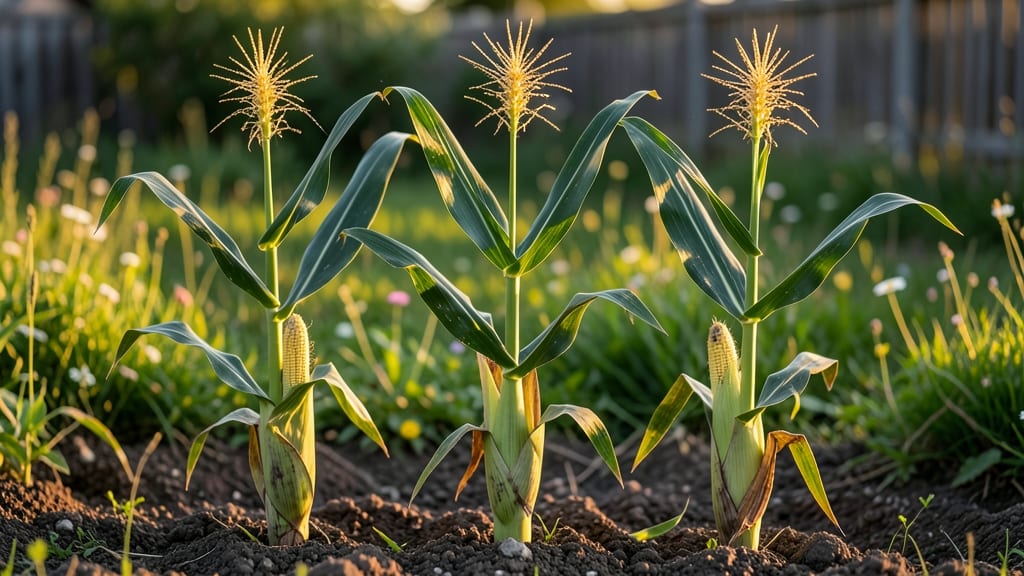
Growing corn on the stalk means summer's sweetest treasure in just 60 days—but only if you nail the soil, spacing, and timing. I learned the hard way that planting too close or skipping soil prep turns golden promise into stunted stalks. The right conditions, though?
You'll harvest ears so tender they practically melt in your mouth. Start with loose, well-drained soil rich in compost—corn loves to stretch its roots. Plant seeds 1 inch deep, 6 inches apart in rows 3 feet apart (that spacing makes all the difference for pollination).
Water consistently, keeping soil moist but never soggy, and watch for those telltale tassels—when pollen drops, silks appear, and that's your 7-day window for peak sweetness. By mid-summer, you'll be shucking ears with juicy, milky kernels that scream "perfectly ripe." The secret?
Harvest when silks turn brown and kernels ooze milky liquid when pierced. One ear per stalk means bigger, sweeter harvests—no sad, tiny cobs here. Works for home gardens, small plots, or even containers (dwarf varieties). Here's how to avoid the pitfalls and get every stalk producing like a pro.
📚 In This Guide
- What you need
- Instructions
- Tips and common mistakes
- Wrapping up and next steps
What you need
- ● Corn seeds: Choose a sweet corn variety (e.g., ‘Silver Queen,’ ‘Peaches & Cream,’ or ‘Ambrosia’). Plant 1–2 seeds per hill, spaced 12 inches apart in rows 3 feet apart.
- ● Garden soil: Well-draining, fertile soil with a pH of 6.0–7.0. Amend with compost if needed.
- ● Fertilizer: A balanced 10-10-10 or 5-10-10 fertilizer (or compost/manure) to boost growth. Apply at planting and again when tassels appear.
- ● Watering supplies: Hose with a gentle spray nozzle or drip irrigation system (corn needs 1–1.5 inches of water per week).
- ○ Garden stakes or trellis (optional but helpful): For tall varieties (e.g., ‘Country Gentleman’), use 5–6 ft stakes to support heavy ears.
- ● Gloves & knee pads: Because gardening is way more fun when you’re comfortable!
- ● Mulch: Straw or grass clippings to retain moisture and suppress weeds.
- ● Corn companion plants: Beans, peas, or marigolds to deter pests and improve soil.
- ● Corn silk markers: Colorful flags to track pollination progress (fun for kids!).
- ● Harvest basket or bucket: For easy transport of those sweet, fresh ears!
Step-by-step instructions for growing sweet corn on the stalk
Growing your own sweet corn is easier than you think—just follow these simple steps for tender, crunchy ears in about two months.
🌱 Step 1: Choose the Right Variety and Planting Location
Pick a sweet corn variety suited for your growing zone, like 'Silver Queen' or 'Golden Bantam'—both mature in about 60 days. Corn thrives in full sun (at least 6-8 hours daily) and needs a deep, well-draining soil rich in organic matter. If your soil is heavy clay, mix in 2-3 inches of compost before planting to improve drainage and fertility.
Corn grows best in blocks or rows, not scattered rows, because wind pollination works best when plants stand close together. For 4 plants, arrange them in a 4-foot by 4-foot square to ensure proper pollination. Avoid planting near last year’s corn to prevent disease buildup.
🌱 Step 2: Plant Seeds at the Correct Depth and Spacing
Plant seeds 1 inch deep and 4-6 inches apart in rows spaced 2-3 feet apart. Corn roots grow deep, so loosen the soil around each seed to encourage strong root development. If your soil is cold, wait until the ground reaches at least 60°F before planting—corn seeds won’t germinate well in cooler soil.
Drop 2-3 seeds per hill and thin to the strongest seedling once they’re 4-6 inches tall. Water gently after planting to settle the soil around the seeds. Avoid overwatering, as soggy soil can cause seeds to rot before they sprout.
☀️ Step 3: Maintain Consistent Water and Fertility
Corn needs 1-1.5 inches of water per week, especially during tasseling (when pollen forms) and ear development. Water deeply at the base of plants in the morning to reduce evaporation and fungal diseases. Keep the soil evenly moist but not waterlogged—corn roots need oxygen to grow strong.
Side-dress with a balanced fertilizer (10-10-10) when plants reach 12 inches tall to boost ear development. Scatter fertilizer about 6 inches away from the base and water it in well. Avoid over-fertilizing with nitrogen, which can lead to tall, weak stalks with fewer ears.
⏰ Step 4: Watch for Pollination and Harvest at Peak Sweetness
Corn is wind-pollinated, so you’ll see tassels (pollen-bearing flowers) appear at the top of stalks about 10-14 days after silking (when silky threads emerge from the ear tips). If tassels look dry or silks fail to appear, hand-pollinate by gently brushing tassels over silks on a warm, still day.
Harvest when ears feel plump and silks turn brown—this usually happens 18-22 days after pollination. Test sweetness by piercing a kernel with your fingernail; if milky liquid oozes out, it’s ready. Cut ears from the stalk with a sharp knife, leaving the husk intact to preserve freshness.
🌿 Step 5: Extend the Season and Prevent Common Issues
For a second harvest, replant a quick-maturing variety 2-3 weeks after the first planting. If your growing season is short, use black plastic mulch to warm the soil and extend the season by 1-2 weeks. Remove mulch once ears begin to form to prevent overheating.
Watch for corn earworms (small white larvae in ears) and leaf blight (brown spots on leaves). To deter pests, plant marigolds or nasturtiums nearby and remove any diseased leaves immediately. Rotate crops yearly to keep soil-borne diseases in check.
Tips & tricks for perfect corn on the stalk
Here's what nobody tells you about growing sweet corn that actually makes the difference between good and great results.
Variety Matters: While 'Silver Queen' and 'Golden Bantam' are classic choices, consider 'Peaches and Cream' for extra sweetness or 'Early Sunglow' for a shorter 55-day maturity. The 60-day window is ideal, but cooler climates benefit from slightly earlier varieties. I've found that smaller ears like 'Golden Bantam' often produce more tender kernels than larger varieties.
Soil Preparation Secret: Before planting, mix in 2-3 inches of compost to improve drainage and fertility, especially if your soil is heavy clay. This step is critical for root development—corn roots grow deep, and compacted soil can stunt growth. I like to add a handful of bone meal at planting time for extra phosphorus, which helps with strong root systems.
Pollination Watch: The 10-14 days between silking and tasseling is when pollination happens. If you notice dry tassels or silks that don't appear, hand-pollinate by gently brushing tassels over silks on a warm, still day. This simple step can double your yield if nature isn't cooperating.
Harvest Timing: The 18-22 day window after pollination is tight—don't wait too long! Test sweetness by piercing a kernel with your fingernail; if milky liquid appears, it's ready. I've learned the hard way that corn sweetness peaks quickly and declines fast after that window.
Pro Tips for Corn On The Stalk
- Here's what nobody tells you about growing sweet corn that actually makes the difference between good and great results.
- Variety Matters: While 'Silver Queen' and 'Golden Bantam' are classic choices, consider 'Peaches and Cream' for extra sweetness or 'Early Sunglow' for a shorter 55-day maturity.
- Soil Preparation Secret: Before planting, mix in 2-3 inches of compost to improve drainage and fertility, especially if your soil is heavy clay.
Frequently asked questions
Got questions about growing corn on the stalk? You’re not alone! Whether you’re a first-time gardener or looking to perfect your technique, here are some of the most common queries—and their answers—to help you grow sweet, crunchy ears every time.
When is the best time to plant corn on the stalk?
Corn thrives in warm soil, so plant after the last frost when temperatures consistently stay above 60°F (15°C). For most U.S. regions, this means late spring (April–June). If your growing season is short, opt for early-maturing varieties (60–70 days) to ensure harvest before fall frost. Pro tip: Soil should be at least 50°F (10°C) for germination!
How long does it take for corn to grow on the stalk?
Most sweet corn varieties mature in 60–100 days, depending on the type. Supert sweet varieties (like ‘Silver Queen’ or ‘Peaches and Cream’) typically ready in 60–75 days. Check seed packets for exact days-to-maturity and adjust planting times to avoid late-season frost. Watch for: Tassels (male flowers) and silks (female flowers) appearing—this signals pollination!
Can I grow corn on the stalk in containers or small spaces?
Yes! Corn needs space (ideally 12–18 inches between plants), but bush varieties (like ‘Golden Bantam’) are compact and perfect for containers or small gardens. Use a 5-gallon pot per plant with well-draining soil. For urban gardens, try vertical trellises—though corn isn’t a climber, some varieties (like ‘Bodyguard’) tolerate light support. Warning: Avoid overcrowding to prevent poor pollination!
What are common pests or diseases, and how do I prevent them?
Corn faces threats like corn earworms, armyworms, and fungal diseases (e.g., gray leaf spot). Prevention tips:
- Rotate crops annually to break disease cycles.
- Use row covers early in the season to deter pests.
- Plant resistant varieties (e.g., ‘Job’s Tears’ for disease resistance).
- Remove and destroy damaged plants to prevent spread.
How do I know when corn on the stalk is ready to harvest?
Harvest when silks turn brown and kernels are plump, milky-white when pierced (like a baby’s fingernail). For super sweet corn, pick when kernels are half-milk, half-starch (usually 18–22 days after silk appears). Morning harvests keep sweetness intact. Storage hack: Eat within 2–3 days or freeze for later!
Why is my corn not sweet or tasty?
Several factors can dull flavor:
- Overripe corn: Wait until kernels are milky, not starchy.
- Poor pollination: Plant in blocks (not rows) to improve cross-pollination.
- Heat stress: Corn loses sweetness in 90°F+ (32°C+) weather. Harvest early!
- Old seeds: Use seeds 1 year or less for best germination and flavor.
Wrapping up and next steps
Growing corn on the stalk is a rewarding journey that delivers fresh, sweet ears straight from your garden in just 60 days! 🌽 With the right soil, spacing, and care, you’ll enjoy the satisfaction of harvesting golden kernels at their peak.
Whether you’re a beginner or a seasoned gardener, this guide makes it simple—so grab your gloves and get planting!
Ready to take the next step? Start small with a few plants, experiment with varieties, and soon you’ll be sharing your homegrown corn with neighbors (or saving it for a delicious summer meal!). Happy growing!