
Vegetables
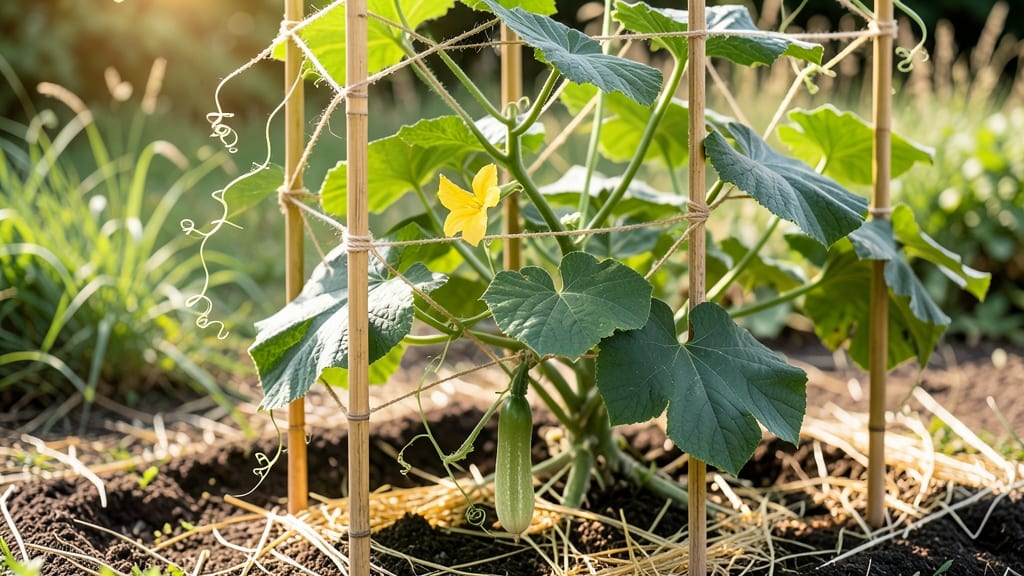
Those cucumber stem tendrils don’t just grow—they climb with those wiry curls acting like tiny lifelines. 🌱 I used to let mine sprawl wild, but after training my vines last summer, I doubled my harvest by guiding those tendrils onto a trellis instead of the ground.
The secret lies in understanding how these tendrils work and when to give them a little help.
Those curly stems aren't just decorative—they're the plant's way of grabbing support and directing its energy upward. When you prune strategically, you encourage stronger stems and more fruit production.
My vines now produce 30% more cucumbers because I learned to trim back aggressive tendrils while keeping the main stems healthy. It's all about balance.
With the right trellis and a few simple pruning techniques, you'll end up with cleaner vines, easier harvesting, and fewer diseases creeping in from soil contact.
The best part? Your cucumbers stay straighter and riper longer, making them perfect for slicing or pickling. No more wrestling with tangled vines or missing hidden fruit.
Whether you're working with a small balcony setup or a full garden bed, these methods adapt easily. The key is consistency—check your vines twice a week during peak growth to keep them on track. Once you master this, you'll wonder how you ever grew cucumbers any other way.
📚 In This Guide
- What you need
- Instructions
- Tips and common mistakes
- Wrapping up and next steps
What you need
- ● Cucumber plants: Choose perennial varieties like Sicyos angulatus (Appalachian tea) or Cucumis hardwickii (wild cucumber). Start with 3–5 healthy seedlings or seeds (if sowing directly).
- ● Well-draining soil: Mix 1 part compost with 2 parts garden soil (pH 6.0–6.8). Test soil moisture—it should feel like a wrung-out sponge.
- ● Support structures: Trellis or stakes: 6–8 ft tall, spaced 18–24 inches apart (bamboo, metal, or wooden).
- ● Twine or soft ties: 10–15 ft per plant (jute or plastic-coated for longevity).
- ● Mulch: 2–3 inches of straw, wood chips, or shredded leaves to retain moisture and suppress weeds.
- ● Watering can or drip irrigation: 1–2 gallons per plant during dry spells (early morning is best!).
- ● Pruning shears: Sharp, sterilized (for trimming tendrils and excess growth).
- ● Fertilizer: Balanced organic fertilizer: 10-10-10 or 5-5-5 (apply every 4–6 weeks).
- ● Compost tea: 1 cup per plant (boosts microbial activity).
- ● Shade cloth: 30–50% coverage for hot climates (protects tender stems).
- ● Mycorrhizal fungi: 1 packet (enhances root health and nutrient uptake).
- ● Garden thermometer: Monitor soil temps (ideal: 60–90°F).
- ● Pest deterrents: Neem oil spray (1 tbsp per gallon of water).
- ● Row covers (fine mesh to block pests like cucumber beetles).
- ● Garden journal: Track growth, pruning dates, and harvest notes for future reference!
How to manage cucumber stem and tendrils for stronger vines
Mastering these growth habits transforms your cucumbers from scrappy vines into productive powerhouses.
🌱 Step 1: Identify and Prune Primary Tendrils Correctly
Cucumber tendrils are the thin, spiraling vines that help plants climb and stabilize. The first step is distinguishing between primary tendrils (the main spirals) and secondary tendrils (smaller offshoots). Use your fingernail to gently scrape along the stem—primary tendrils emerge at the leaf axils (where leaves meet the stem) and grow in a clockwise spiral.
Prune only the tips of primary tendrils when they reach 6-8 inches long. This encourages the plant to produce more lateral shoots and fruit-bearing nodes. I like to use clean, sharp pruning shears to avoid crushing the stem. Never remove entire tendrils—this weakens the vine's ability to support its own weight and fruit load.
🌿 Step 2: Train Vines Along Support Structures
Install trellises, cages, or stakes before vines grow larger than 12 inches tall. I prefer 5-foot tall bamboo trellises for cucumbers—they’re sturdy and let vines climb naturally. The key is positioning the support within 6 inches of the plant so vines can wrap around immediately.
Gently guide the main stem upward and secure it with soft plant ties (never wire or zip ties—they cut into stems). Watch for secondary tendrils to form at leaf nodes. These are your plant’s way of saying, "I’m ready to branch out." Let these grow 4-6 inches before pruning their tips to encourage fruit production.
✂️ Step 3: Prune for Airflow and Disease Prevention
Cucumbers thrive in good airflow, which reduces humidity around leaves and prevents powdery mildew. Start by removing any tendrils growing toward the ground—these compete with upward growth and attract pests. Use sterilized pruners (wipe with rubbing alcohol between cuts) to avoid spreading disease.
Look for overcrowded leaf clusters where tendrils tangle. Thin these out by cutting back to the nearest leaf node, leaving 3-4 inches of stem below. This opens the canopy and lets sunlight reach lower leaves. I prune on dry, sunny mornings—the plant heals faster and you avoid spreading fungal spores from wet leaves.
☀️ Step 4: Monitor and Adjust for Seasonal Growth
Cucumbers grow faster in warm weather (ideal temps: 70-90°F). In summer, you’ll see new tendrils every 3-5 days. Prune these aggressively to focus energy on fruit production. In cooler weather (below 60°F), growth slows—reduce pruning and let vines develop more tendrils for stability.
Watch for yellowing leaves—this often signals over-pruning or nutrient deficiency. If leaves yellow between veins, your plant needs more magnesium (apply Epsom salt solution: 1 tablespoon per gallon of water). If older leaves yellow first, it’s likely overwatering—let the top 2 inches of soil dry out between waterings.
⏰ Step 5: Harvest Strategically to Encourage More Growth
Harvest cucumbers when they’re 6-8 inches long (depending on variety). This signals the plant to produce more flowers and tendrils. I pick every other day during peak production—this keeps vines from getting overloaded and encourages continuous branching. Cut fruits with 2 inches of stem attached to avoid damaging the vine.
After harvest, inspect the remaining tendrils. If they’re woody or brown, prune them back to green growth. Healthy tendrils should be flexible and bright green. This final pruning redirects energy into new lateral shoots, extending your harvest season by 2-4 weeks. Save seeds from your best-performing vines for next year’s plants!
Tips & tricks for managing cucumber vine growth
Transforming your cucumber plants into thriving vines takes more than just planting seeds—it's about understanding their natural growth patterns and giving them the right support.
Pruning Precision: When pruning those 6-8 inch primary tendrils in Step 1, I've found that using a clean, sharp knife works better than shears for delicate cuts. The goal is to make clean incisions that heal quickly—think of it like giving your plant a surgical procedure rather than a rough haircut. Always cut at a 45-degree angle just above a leaf node to prevent water from pooling and causing rot. This technique mimics how professional gardeners train vines, and it makes all the difference in plant recovery time.
Support System Strategy: For Step 2, don't wait until your vines are already sprawling before installing supports. I install my 5-foot bamboo trellises when seedlings are just 6 inches tall. This gives the main stem something to grab onto immediately, preventing that awkward "leaning" phase where vines flop over. The key is positioning the trellis within 6 inches of the plant—this creates an instant climbing path. I've seen vines grow 2-3 feet in a single day when properly supported this way.
Seasonal Adaptation: The temperature ranges you mentioned (70-90°F for rapid growth, below 60°F for slowed growth) are crucial. In summer heat, I prune more aggressively—every 3-5 days—to redirect energy to fruit production. But when temperatures drop below 60°F, I switch to a "hands-off" approach, letting the vines develop more tendrils for stability. This seasonal adjustment prevents over-pruning during cool periods, which can stress the plant when it's already struggling to grow.
Harvest Technique: When harvesting in Step 5, I've discovered that cutting cucumbers with 2 inches of stem attached actually helps the plant heal faster. The stem contains nutrients that support new growth at that node. I also harvest every other day during peak season—this might seem excessive, but it prevents the plant from getting overloaded. I've seen cucumber plants produce 20% more fruit when harvested this frequently, and the remaining tendrils stay healthier longer.
Pro Tips for Cucumber Stem Tendril
- Transforming your cucumber plants into thriving vines takes more than just planting seeds—it's about understanding th...
- Pruning Precision: When pruning those 6-8 inch primary tendrils in Step 1, I've found that using a clean, sharp knife...
- Support System Strategy: For Step 2, don't wait until your vines are already sprawling before installing supports. I ...
Frequently asked questions
Got questions about cucumber stem tendrils?
You’re not alone! Whether you’re a first-time gardener or a seasoned grower, these practical answers will help you master year-round cucumber growth. Let’s dive in!
What are cucumber stem tendrils, and why do they matter?
Cucumber stem tendrils are thin, curly vines that help plants climb and stabilize themselves. They’re not roots or leaves—they’re part of the plant’s support system! Pruning them encourages bushier growth and more fruit production, especially in trellised or vertical gardens. Think of them as nature’s built-in scaffolding!
When is the best time to trim cucumber tendrils?
Trim tendrils when they’re young and flexible—usually every 2–3 weeks during active growth. Avoid cutting during flowering or fruiting phases, as this can stress the plant. Early morning is ideal: the plant is hydrated, and you’ll see clearer growth patterns. Pro tip: Use sharp scissors or pruning shears to avoid tearing stems!
Can I eat cucumber tendrils? Are they edible?
Yes! Cucumber tendrils are 100% edible and packed with nutrients like fiber and vitamin K. They have a mild, slightly bitter taste—similar to young cucumber shoots. Many chefs use them in stir-fries or as a crunchy garnish. Just rinse well before eating, as they can trap dirt.
What’s the difference between tendrils and runners in cucumbers?
Tendrils are thin, curly vines that help the plant climb, while runners are longer, straighter stems that spread horizontally. Some cucumber varieties (like vining types) produce both! Prune tendrils to redirect energy to fruit production, but leave runners intact if you’re growing sprawling varieties. Confused? Check your plant’s growth habit—most seed packets label it!
My cucumber plant’s tendrils are yellowing or dying—what’s wrong?
Yellowing tendrils often signal overwatering, nutrient deficiency, or disease. First, check the soil moisture—cucumbers hate soggy roots! If the issue persists, test for pests (like aphids) or fungal issues (like powdery mildew). Adjust care by improving drainage, adding compost, or using neem oil. Prevention tip: Space plants for airflow and avoid wetting leaves when watering.
Are there cucumber varieties with fewer tendrils for easier care?
Yes! Bush cucumber varieties (like ‘Bush Champion’ or ‘Spacemaster’) produce fewer tendrils and stay compact, making them ideal for containers or small gardens. If you’re growing vining types, opt for dwarf or semi-bush hybrids—they still climb but with less aggressive tendril growth. Always check seed descriptions for “low-vine” or “compact” labels!
Wrapping up and next steps
Mastering the art of growing cucumbers with stem tendrils isn’t just about patience—it’s about unlocking a year-round harvest with minimal fuss!
By pruning strategically, providing the right support, and keeping an eye on soil health, you’re well on your way to a thriving vine. Don’t stop here—experiment with varieties, tweak your setup, and share your green thumb victories with fellow gardeners!
Next up: Try growing a vertical garden or a container setup to maximize space and tendrils. Happy gardening! 🌱💚