
Trees
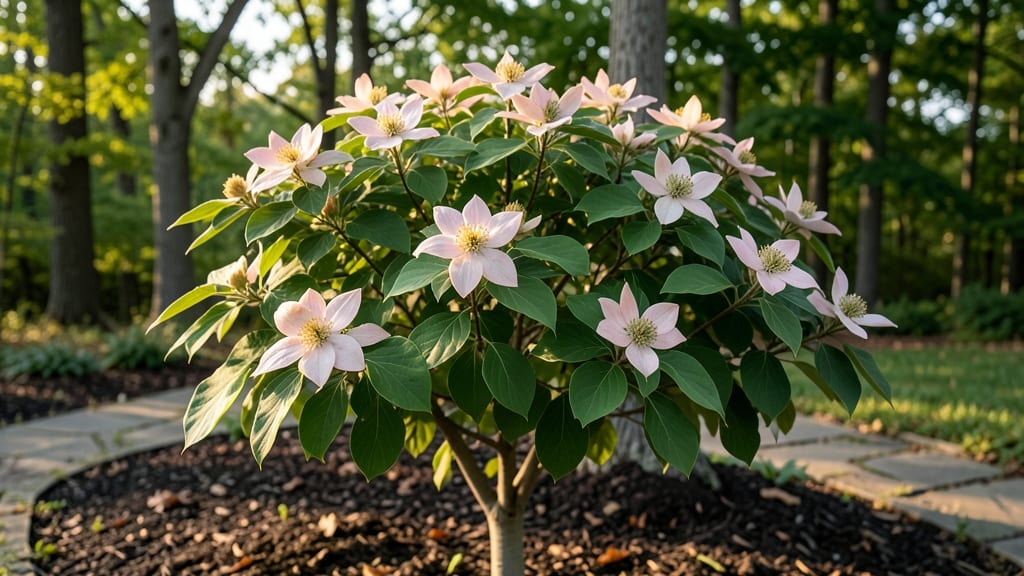
The flowering dogwood's growth rate varies dramatically by variety, with some reaching 10 feet in just three years while others take a decade to mature.
If you've planted a flowering dogwood and wonder how quickly it will grow—or when those stunning blooms will finally appear—you're not alone.
This ornamental tree 🌸 thrives in partial shade and well-draining soil, but its speed depends on factors like sunlight, soil quality, and even your local climate.
Below, I break down the year-by-year height progression for popular varieties, share care tips to accelerate growth, and debunk myths about how long it takes to bloom.


Flowering dogwood growth rate by variety: year-by-year height progression
Flowering dogwoods are prized for their stunning spring blooms, but their growth rate varies dramatically by variety. Knowing your specific dogwood's year-by-year height progression helps you plan pruning, spacing, and landscape design.
Most varieties reach mature height (20-40 ft) within 15-25 years, but some dwarf types mature in half that time.
For example, the 'Cherokee Brave' variety grows 2-3 ft in its first year and can reach 15-20 ft by year 10, while 'Purple Smoke' takes slightly longer to establish. Understanding these milestones ensures you don't overcrowd your planting area or underestimate your tree's future size.
Below is a year-by-year height comparison for popular varieties, including dwarf, semi-dwarf, and standard types. Use this as your growth roadmap to track progress and adjust care as needed.
🌱
The 'Cameo' variety is the fastest to reach its mature size, making it ideal for smaller yards or container growing. Meanwhile, 'White Cloud' and 'Golden Times' grow taller but require more space. Always check your variety's mature height before planting to avoid overcrowding.
Growth rates slow significantly after year 5 as the tree focuses on canopy expansion rather than height. For example, a 'Cherokee Brave' might grow 2 ft in its first year but only 6 inches annually after reaching 15 ft.
This shift explains why some dogwoods appear "stuck" in height during their teens.
Environmental factors like soil quality, sunlight exposure, and water availability can accelerate or slow growth by up to 30%. For instance, 'Purple Smoke' grows 20% faster in well-draining, slightly acidic soil (pH 5.0-6.0) with morning sun. Poor soil or afternoon shade can reduce growth by half.
If your dogwood's growth stalls after year 3, check for root competition, compacted soil, or nutrient deficiencies. A simple soil test and light fertilization in early spring can often jumpstart growth. Remember, patience is key—most dogwoods take 5-7 years to produce their first significant blooms.
🌿
Factors that accelerate or slow flowering dogwood growth rate
Your flowering dogwood's growth rate depends heavily on its environment and care routine. While some varieties like 'Cherokee Brave' naturally grow faster, others like 'Purple Smoke' may take longer to mature. Understanding these factors helps you optimize conditions for healthier, quicker growth or adjust expectations for slower varieties.
One of the biggest influences is soil quality. Dogwoods thrive in well-draining, slightly acidic soil (pH 4.5-6.0). Heavy clay or alkaline soil can stunt root development, slowing growth by up to 30%. Amending with compost or organic matter creates ideal conditions for rapid growth.
Sunlight exposure also plays a critical role. While dogwoods prefer partial shade (4-6 hours/day), too much direct sun can stress the tree, while insufficient light slows growth. Finding the right balance—like morning sun and afternoon shade—maximizes energy for flowering and height gain.
Factors Affecting Flowering Dogwood Growth
✅ Accelerates Growth
- Well-draining soil (pH 4.5-6.0)
- Partial shade (4-6 hours/day)
- Consistent moisture (15-20 gallons/week)
- Light spring feed (balanced 10-10-10)
- Cold-hardy varieties (USDA Zones 5-8)
❌ Slows Growth
- Heavy clay soil (poor drainage)
- Full sun exposure (leaf scorch risk)
- Inconsistent watering (drought stress)
- Over-fertilizing (burns roots)
- Heat-sensitive zones (Zones 9+)
Watering habits directly impact growth speed. Deep, infrequent watering (15-20 gallons weekly) encourages deep root systems, while shallow watering leads to weak, surface roots. In drought-prone areas, growth can slow by 50% if water needs aren't met during critical spring and summer months.
Pruning techniques also influence growth patterns. Minimal pruning in late winter promotes faster vertical growth, while aggressive pruning can delay flowering by 1-2 years. Always remove dead or crossing branches to maintain airflow and reduce disease risk.
Climate zones matter too. Cold-hardy varieties (like 'Cherokee Brave') thrive in USDA Zones 5-8, growing 12-18 inches/year, while heat-sensitive types may struggle in Zones 9+. In warmer climates, growth can stall until cooler seasons return.
By balancing these factors—soil, light, water, pruning, and climate—you can accelerate your dogwood's growth rate while ensuring vibrant blooms for years to come. 🌿