
Light Requirements
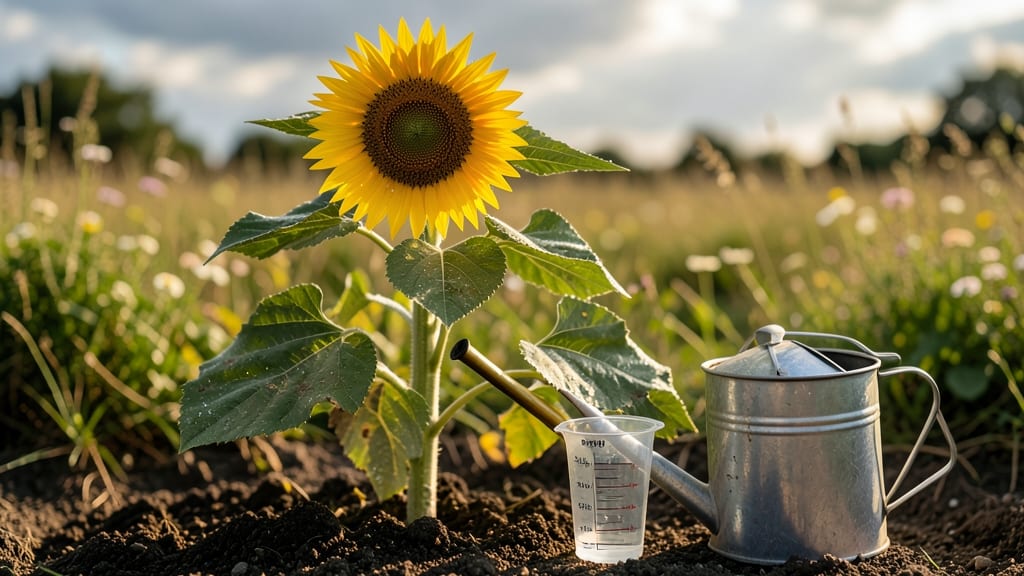
To water sunflowers properly, aim for 1-2 gallons per plant every 3-5 days—a deep soak that keeps the soil evenly moist but never soggy.
Sunflowers may seem low-maintenance, but getting their watering schedule wrong can turn your towering dreams into droopy disappointment. Too little water stunts growth, while too much invites root rot—both kill the very height you’re after.
Young seedlings need consistent moisture, while mature plants crave deep watering at the base to build strong roots. Below, I’ll break down the exact schedule by growth stage, how to test soil moisture, and the one mistake that ruins sunflowers faster than anything else.
By the end, you’ll know when to water, how deep, and why morning is the only time that matters—plus how to spot stress before it’s too late.


Sunflower watering schedule by growth stage: from seed to bloom
Sunflowers thrive on consistency, but their water needs change dramatically from seedling to full bloom. Too little water stunts growth, while too much causes root rot and weak stems.
The key is deep, infrequent watering that encourages strong root systems. I’ve grown sunflowers from 1-foot seedlings to 12-foot giants by following this stage-specific schedule.
Most gardeners make the mistake of watering sunflowers like tomatoes—frequent shallow drinks instead of deep soaks. Sunflowers store water in their taproots, which can extend 6 feet deep.
To maximize their natural drought resistance, we’ll focus on 12-inch deep watering at the right times. Let’s break it down by growth phase.
🌱 SEEDLING STAGE (0-3 weeks): This is the most critical phase. Young sunflowers have shallow roots and need consistent moisture. Water every 2-3 days with ½ gallon per plant, keeping the soil evenly moist. Avoid letting the top 1 inch of soil dry out completely. Overhead watering can spread damping-off disease, so always water at the base.
🌿 VEGETATIVE STAGE (3-8 weeks): Once your sunflowers reach 12 inches tall, their roots are growing rapidly. Shift to deep watering every 3-4 days, delivering 1-1.5 gallons per plant. This encourages the taproot to penetrate deeper, making your plants more drought-tolerant. Check soil moisture by sticking your finger 2 inches deep—water when it feels dry.
🌼 FLOWERING STAGE (8-12 weeks): As buds form and stems thicken, increase water to 1.5-2 gallons every 4-5 days. This is when sunflowers need the most water to support heavy flower heads and prevent bud drop. Mulch around the base with straw or grass clippings to retain moisture and regulate soil temperature. In hot climates, you may need to water every 2-3 days.
🌾 MATURITY STAGE (12+ weeks): Once sunflowers are fully bloomed and seed heads are forming, reduce watering to 1 gallon every 5-7 days. Overwatering now can cause seed rot or attract pests. Let the top 3 inches of soil dry between waterings. If you’re growing sunflowers for seeds, consistent moisture helps plump them out, but avoid soggy soil.
💧 PRO TIP: Always water in the early morning (before 10 AM) to reduce evaporation and fungal risks. Use a soaker hose or drip irrigation to deliver water directly to the root zone, avoiding wet foliage. For container-grown sunflowers, check soil moisture daily—they dry out 3x faster than in-ground plants.
Adjust your watering schedule based on your climate and soil type. In sandy soil, sunflowers may need watering daily during hot spells, while clay soil holds moisture longer, requiring watering every 5-6 days.
Always monitor your plants: wilting leaves signal underwatering, while yellowing leaves or mushy stems indicate overwatering.
For container-grown sunflowers, check soil moisture daily—they dry out 3x faster than in-ground plants. Use pots with drainage holes
How deep to water sunflowers: the 12-Inch rule for strong roots
Sunflowers thrive when their roots dive deep for water, but many gardeners unknowingly water too shallowly—just the top inch or two. This shallow approach forces roots to stay near the surface, creating weak stems that can't support those 10-foot-tall giants you're dreaming of.
The solution? A 12-inch deep soak that encourages roots to grow downward where they'll find moisture and nutrients.
Think of it like building a skyscraper: you wouldn't pour concrete just at the foundation's edges—you need deep, stable support. Sunflowers are no different. When you water deeply, you're telling those roots, "Go deeper—there's stability and sustenance waiting for you."
This method also reduces water waste by ensuring moisture reaches where it's needed most, rather than evaporating from the surface.
⚠️ callout warning ⚠️
Watering only the top 2-3 inches of soil causes sunflower roots to stay shallow, leading to:
- 🌱 Weak stems that snap in wind or rain
- 💧 Drought stress even with frequent watering
- 🌡️ Poor heat tolerance (roots can't access deep moisture)
Fix it: Use a soil probe or long screwdriver to check moisture at 12 inches deep before watering again.
To achieve that 12-inch deep soak, you'll need the right tools. A standard watering can only penetrates about 4-6 inches, which is why I recommend either a drip irrigation system or a soaker hose placed at the base of your plants.
For smaller gardens, a long-handled watering wand can help direct water deeper. The key is slow, steady watering that allows moisture to penetrate without running off.
Here's how to test if you're watering deeply enough: stick your finger 12 inches into the soil. If it feels dry, you need to water again. If it's still moist, wait another day or two. This simple test prevents both overwatering (which causes root rot) and underwatering (which stunts growth).
Pro tip: water in the early morning so the foliage has all day to dry, reducing fungal diseases like powdery mildew.
Young sunflowers need more frequent deep watering—about every 2-3 days—while mature plants can handle every 5-7 days once established. During peak summer heat, increase frequency to every 2 days and watch for wilting leaves, which signal it's time to water again.
Remember, sunflowers are drought-tolerant once their roots are deep, but they won't reach that stage without your help.
For container-grown sunflowers, the 12-inch rule still applies, but you'll need to water more often since pots dry out faster. Choose containers with drainage holes and use a moisture meter to check depth.
Mulching around the base with 2-3 inches of straw or wood chips helps retain moisture and keeps roots cool—just like a cozy blanket for your sunflower's feet.