
Companion Plants
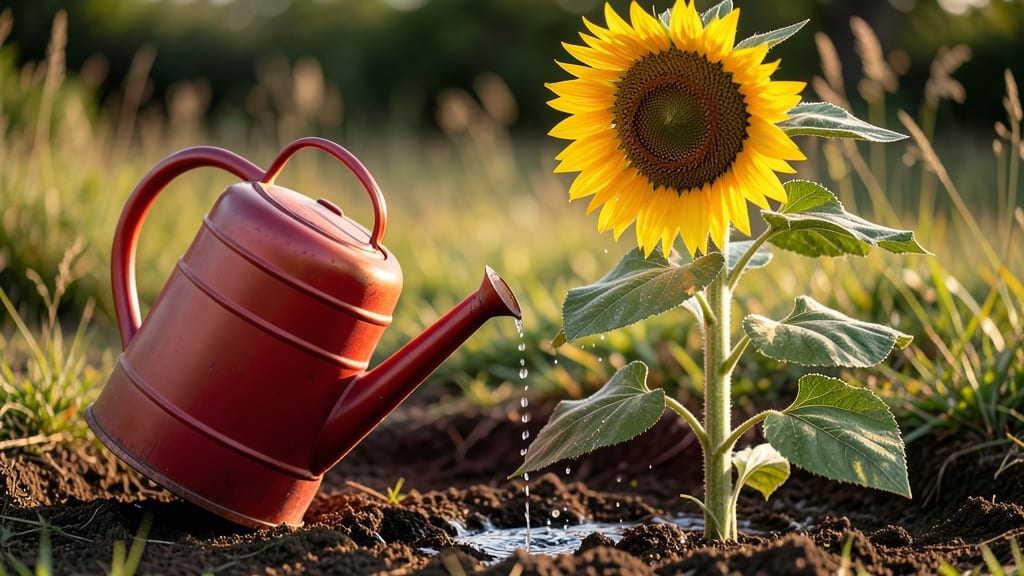
To water a sunflower plant correctly, aim for deep soaks every 3–5 days—more often in blazing heat, less in cooler months—because these thirsty giants 🌻 hate soggy roots as much as they despise thirst.
Picture this: You’ve just planted your sunflower seeds in April, and the soil is still cool. Watering too much now can drown those tender sprouts before they even think about reaching for the sky. But skip the water, and your sunflower wilts faster than a forgotten houseplant.
Here’s the secret: check the soil before you water. Stick your finger an inch deep—if it’s dry, it’s time. If it’s damp, wait another day. This simple trick saves you from both root rot and stunted growth, ensuring your sunflower grows tall and proud instead of struggling to survive.
Below, I’ll break down the exact watering schedule for each stage of growth, from seedlings to full bloom, plus how to spot when you’re over- or underwatering. By the end, you’ll know exactly when to grab the hose—and when to hold back.
Ideal watering schedule for sunflowers by growth stage
Sunflowers are thirsty giants that need just the right amount of water to grow strong and healthy. Unlike drought-tolerant plants, sunflowers demand consistent moisture—especially during their early stages. The key is understanding how their water needs change as they grow from tiny seedlings to towering blooms.
Too much water causes root rot, while too little stunts growth or causes wilting before flowering. Let’s break down the perfect watering routine for each stage of your sunflower’s life.
First, always water sunflowers in the early morning (before 10 AM). This gives leaves time to dry, reducing fungal risks like powdery mildew. Avoid evening watering, as damp foliage overnight invites disease. Use a soaker hose or drip irrigation to deliver water directly to the soil, keeping leaves dry.
For container-grown sunflowers, ensure pots have drainage holes—stagnant water is their biggest enemy. Now, let’s dive into the stage-specific watering schedule that’ll keep your sunflowers thriving.
During the seedling stage (first 4 weeks), your sunflower’s roots are tiny and delicate. Water lightly every 2-3 days, ensuring the top inch of soil stays moist but not soggy. Overwatering here leads to damping-off disease, which kills seedlings before they sprout.
Use a fine mist or watering can with a gentle spray to avoid disturbing the soil surface. If you notice wilting, it’s often a sign of thirst—but also check for proper drainage, as compacted soil can suffocate young roots.
As sunflowers enter the vegetative growth phase (weeks 4-8), they’ll start shooting up like rockets. This is when deep watering becomes critical. Aim to water every 3-5 days, soaking the soil to a depth of 6-8 inches.
The goal is to encourage roots to grow downward, not stay shallow. Look for yellowing lower leaves as a sign of underwatering, or mushy stems if you’ve overdone it. Mulching with straw or wood chips helps retain moisture and keeps roots cool.
When your sunflower starts budding and flowering (weeks 8-12), adjust your watering to match its new needs. Reduce frequency to every 5-7 days but increase the volume to 2-3 gallons per plant. This stage is all about supporting those heavy flower heads without causing stress.
If you see buds dropping before opening, it’s often a sign of inconsistent watering. Morning watering is especially important now to prevent fungal issues like powdery mildew, which thrives on damp leaves.
Once your sunflower reaches maturity and seed production (12+ weeks), it becomes surprisingly drought-tolerant. Cut back to watering every 7-10 days, letting the soil dry to 4-6 inches deep between sessions. Overwatering now can lead to seed rot or attract pests like slugs.
If you’re growing sunflowers for seeds, this reduced watering actually improves flavor and storage life. For container-grown plants, monitor soil moisture daily in summer—pots dry out much faster than garden beds.
Pro tip: Test your soil moisture before watering. Stick your finger 2 inches into the soil—if it feels dry, it’s time to water. If it’s still damp, wait another day. For garden beds, use a soil moisture meter for accuracy, especially in hot climates.
Remember, sunflowers are deep-rooted plants, so shallow watering encourages weak stems. Always water at the base, avoiding the leaves to prevent disease. With this schedule, your sunflowers will reach their full, glorious height—no wil
5 Soil check tricks to avoid overwatering or drought stress
Mastering the art of watering sunflowers starts with understanding your soil. Overwatering can suffocate roots, while underwatering stresses plants during critical growth stages. The key? Regular soil checks to gauge moisture levels accurately.
Here’s how I test my sunflower soil to keep it just right—neither soggy nor dry—so my plants thrive without guesswork.
First, I always check the soil moisture before watering. Sunflowers need consistent moisture but hate soggy conditions. The simplest trick is the finger test: Stick your index finger about 2 inches deep into the soil.
If it feels dry, it’s time to water. If it’s damp, wait another day. This method works best in well-draining soil, which sunflowers prefer to avoid root rot.
Insert finger 2 inches deep. Dry = water; damp = wait.
Lift the pot. Light pot = thirsty; heavy pot = hold off.
Dark soil = moisture-rich; pale soil = dry and parched.
Potted sunflowers dry faster—check daily in summer.
Hot/dry? Water morning and evening. Humid? Reduce frequency.
For container-grown sunflowers, I rely on the weight check. Lift the pot—if it feels light, the soil is dry and needs water. If it’s heavy, the roots have enough moisture for now. This trick is a game-changer for potted plants, which dry out much faster than in-ground varieties.
I also adjust my watering based on pot size: smaller pots need more frequent watering than large containers.
Visual cues matter too. Dark, rich soil usually means it’s holding moisture well, while pale or cracked soil signals it’s time to water. I also watch for soil color changes after rain or irrigation—this helps me track how quickly my soil drains.
In sandy soil, water drains fast, so I water more often but less deeply. In clay soil, I water deeply but less frequently to prevent waterlogging.
Climate plays a huge role in sunflower watering. In hot, dry summers, I water my sunflowers twice daily—once in the morning and once in the evening—to keep roots cool and hydrated.
During humid conditions, I cut back to every 3-4 days to avoid fungal diseases like powdery mildew. Mulching around the base helps retain moisture and keeps roots stable, reducing stress during temperature swings.
Finally, I always water at the base of the plant, not the leaves, to prevent fungal infections. A deep soak—about 1-2 inches of water—encourages roots to grow deeper, making sunflowers more drought-resistant over time.
By combining these soil check tricks with a little observation, I’ve learned to water my sunflowers like a pro, ensuring they grow tall, strong, and full of sunshine.