
Vegetables
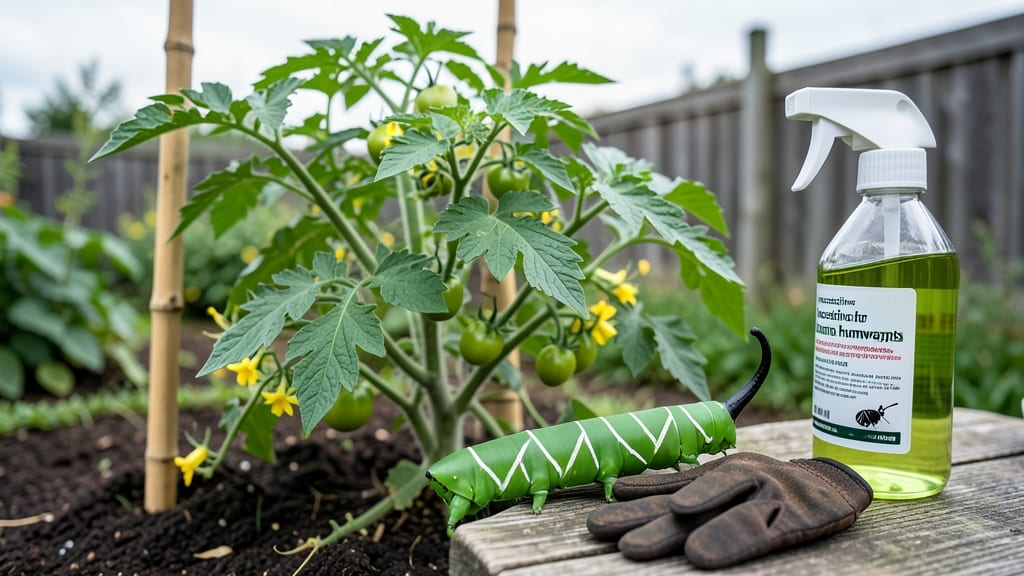
When an insecticide for tomato hornworms like Bacillus thuringiensis (BT) spray strips those caterpillars of their appetite overnight, your plants stay safe—no chemicals, no harm to bees, and no more skeletonized leaves by sunrise. 🌱 I’ve used it for years to save my heirloom tomatoes from these green devils—just a natural, targeted solution that works fast.
BT works by targeting the hornworm’s gut, causing them to stop eating within hours—no harm to your plants or beneficial insects. You’ll need a ready-to-use spray (like Thuricide) or powder to mix with water, and a spray bottle or pump sprayer for even coverage.
Reapply every 3-7 days or after rain, since BT breaks down quickly in sunlight. The first application should happen as soon as you spot those 4-inch caterpillars munching away.
Within 24-48 hours, you’ll see the hornworms slow down, then drop off the plant—no more overnight destruction. The best part? Your tomatoes keep growing strong, and you avoid the chemical residue that can linger on fruit.
Just remember: BT doesn’t kill eggs or pupae, so keep scouting your plants regularly for new hatchlings.
This method works for all tomato varieties, from cherry to beefsteak, and pairs well with hand-picking (drop them in soapy water). For extra defense, interplant with basil or marigolds—hornworms hate the scent. Let’s get those tomatoes thriving again without the worry!
📚 In This Guide
- What you need
- Instructions
- Tips and common mistakes
- Wrapping up and next steps
What you need
- ● Bacillus thuringiensis (BT) insecticide: Choose a ready-to-use spray (like Xentari or Dipel) or a concentrate (e.g., BotaniGard). For a standard garden (up to 500 sq. ft.), a 1-pint bottle (32 oz) of ready-to-use solution is ideal.
- ● Spray bottle or garden sprayer: Option 1: A 1-gallon pump sprayer (for larger gardens or concentrated BT solutions).
- ● Option 2: A 16-oz handheld spray bottle (for smaller applications or spot treatments).
- ● Protective gear: Disposable nitrile gloves (1 pair).
- ● Lightweight long-sleeved shirt and pants (to avoid skin exposure).
- ○ Safety goggles (optional but recommended for sensitive eyes).
- ● Water: 1 gallon of clean, room-temperature water per 1-pint BT concentrate (if diluting). Tap water is fine unless your area has hard water issues.
- ● Measuring cup or scale: For precise dilution (if mixing concentrate). A 1-cup (8 oz) measuring cup works well.
- ● Stirring stick or spoon: To mix BT concentrate thoroughly with water.
- ● Label or marker: To mark spray bottles with the date and mixture ratio (BT degrades in sunlight).
- ● Fine-mist nozzle attachment: For even coverage on delicate tomato leaves.
- ● Flashlight: For evening applications (hornworms are most active at dusk!).
- ● Journal or app: To track application dates and hornworm sightings for future reference.
How to make an effective BT spray for tomato hornworm control
This spray is your eco-friendly shield against those ravenous tomato hornworms—let’s mix it right and apply it strategically.
🌿 Step 1: Gather the Right Materials
You’ll need Bacillus thuringiensis var. kurstaki (BT), available as a powder or liquid concentrate. Check the label for the recommended dosage—usually 1-2 teaspoons per gallon of water for powder or 1-2 tablespoons per gallon for liquid. Pair it with a small spray bottle (16-32 oz) or a garden sprayer for larger plants. Avoid metal sprayers, as BT can degrade over time.
Here’s the thing—BT works best when fresh. Mix only what you’ll use within 24 hours, or store the diluted solution in a cool, shaded spot. If you’re treating multiple plants, divide the batch into smaller containers to prevent bacterial growth. I like to label each spray bottle with the date and dilution ratio to avoid confusion.
💧 Step 2: Mix the Spray Correctly
Fill your spray bottle or garden sprayer with lukewarm water—cold water can reduce BT’s effectiveness. Stir in the BT according to the label instructions, but start with the lower end of the range if you’re unsure. For example, if the label says 1-2 teaspoons per gallon, begin with 1 teaspoon and adjust if needed. Shake or stir vigorously to ensure the BT disperses evenly—clumps won’t work.
Test the spray on a small area of a leaf first. If it runs off too easily, add a drop of mild liquid soap (like Castile soap) to help the solution stick. This won’t harm your plants but will improve coverage on the hornworms’ bodies. Avoid harsh detergents—they can damage foliage.
☀️ Step 3: Apply at the Right Time and Conditions
Spray early in the morning or late afternoon when temperatures are below 85°F. BT loses potency in direct sunlight and high heat, so avoid midday applications. Focus on the undersides of leaves and the stems—that’s where hornworms hide. You’ll see them munching away, often leaving just the skeleton of the leaf behind. A thorough spray ensures they ingest enough BT to stop feeding.
Reapply every 3-7 days or after heavy rain, as BT breaks down quickly in sunlight and water. Consistency is key—hornworms can return if the treatment isn’t maintained. I set a reminder on my phone for reapplication days to stay on track.
✂️ Step 4: Monitor and Supplement as Needed
Check your plants 24-48 hours after spraying. You’ll notice hornworms stop feeding and may appear sluggish or drop to the ground. This is a good sign—the BT is working. However, if you still see active hornworms after a few days, increase the concentration slightly (but don’t exceed the label’s maximum) or apply more frequently.
For severe infestations, combine BT with handpicking. Wear gloves and drop hornworms into soapy water—it’s a quick way to reduce their numbers while the BT takes care of the rest. I also recommend introducing parasitic wasps (like Cotesia congregata) if possible, as they naturally prey on hornworms without harming your plants.
Tips & tricks for effective tomato hornworm control
Between us, BT spray is your garden’s best-kept secret for stopping hornworms without chemicals. Here’s how to make every drop count.
Mixing Precision: When measuring BT in Step 2, use a clean, dry measuring spoon each time—residual moisture can affect the concentration. For powdered BT, I sift it through a fine mesh strainer before adding to water to eliminate clumps that might settle at the bottom of your sprayer. This ensures even distribution, which is critical since hornworms need consistent exposure to the bacteria to stop feeding.
Temperature Matters: The 85°F limit in Step 3 isn’t just arbitrary—BT’s effectiveness drops significantly above this temperature. If your garden gets hotter, apply the spray earlier in the morning or later in the evening when temps naturally dip. I’ve seen BT lose up to 50% of its potency when applied at midday in 90°F+ conditions, so timing really is everything.
Application Strategy: In Step 3, focus on the undersides of leaves where hornworms hide, but don’t neglect the stems. I’ve found that hornworms often climb stems to reach new foliage, so a thorough spray there prevents them from bypassing the treatment. Use a fine mist setting on your sprayer to ensure complete coverage—hornworms need to ingest BT to be affected.
Monitoring Timeline: The 24-48 hour check in Step 4 is your best indicator of success. Look for hornworms that appear lethargic or have stopped feeding—these are clear signs the BT is working. If you still see active feeding after 48 hours, increase the concentration slightly (but stay within label limits) or apply more frequently. I’ve had to double the concentration once when dealing with a particularly stubborn infestation, but it worked within 72 hours.
Pro Tips for Insecticide For Tomato Hornworms
- Between us, BT spray is your garden’s best-kept secret for stopping hornworms without chemicals. Here’s how to make e...
- Mixing Precision: When measuring BT in Step 2, use a clean, dry measuring spoon each time—residual moisture can affec...
- Temperature Matters: The 85°F limit in Step 3 isn’t just arbitrary—BT’s effectiveness drops significantly above this ...
Frequently asked questions
Got questions about using organic insecticide for tomato hornworms? You’re not alone! Here are some common concerns—and straightforward answers—to help you protect your tomatoes safely and effectively.
What’s the best time of day to apply BT spray for tomato hornworms?
Apply BT spray early in the morning or late afternoon when temperatures are below 85°F (29°C). This prevents the spray from breaking down too quickly in the heat, ensuring maximum effectiveness. Avoid spraying when bees or other pollinators are active to protect beneficial insects.
How long does BT spray take to kill tomato hornworms?
BT (Bacillus thuringiensis) works within 48–72 hours after ingestion. Hornworms stop feeding almost immediately but may take a few days to die. For fast results, reapply every 7–10 days or after heavy rain, as BT loses potency when wet.
Can I use BT spray on other garden pests besides tomato hornworms?
Yes! BT is effective against caterpillars on cabbage, broccoli, peppers, and Brussels sprouts. However, it only targets larval moths and butterflies—it won’t harm beetles, aphids, or other pests. Always check the label for specific strains (e.g., Bt kurstaki for caterpillars).
What should I do if BT spray doesn’t work?
If hornworms persist, try these steps:
- Reapply BT—sometimes timing or weather disrupts effectiveness.
- Handpick larvae (drop them in soapy water) during cool hours.
- Introduce natural predators like parasitic wasps or praying mantises.
- Use neem oil as a secondary organic option (follow label instructions).
If infestations are severe, consider row covers to block moths entirely.
Does BT spray harm plants, pets, or humans?
BT is non-toxic to mammals, birds, and plants when used as directed. It’s even FDA-approved for organic farming! However, avoid inhaling the powder or spraying near pets during application. Always wear gloves and a mask when mixing to stay safe.
Wrapping up and next steps
Protecting your tomato plants from hornworms doesn’t have to mean harsh chemicals—BT spray offers a safe, effective, and organic solution that keeps your garden thriving without harming beneficial insects or the environment. 🌱 With the right preparation and application, you can enjoy a bountiful harvest while keeping those pesky caterpillars at bay.
Ready to take action? Start by monitoring your plants weekly and apply BT spray at the first sign of hornworms. Stay consistent, and your tomatoes will thank you! 🍅