
Fertilization
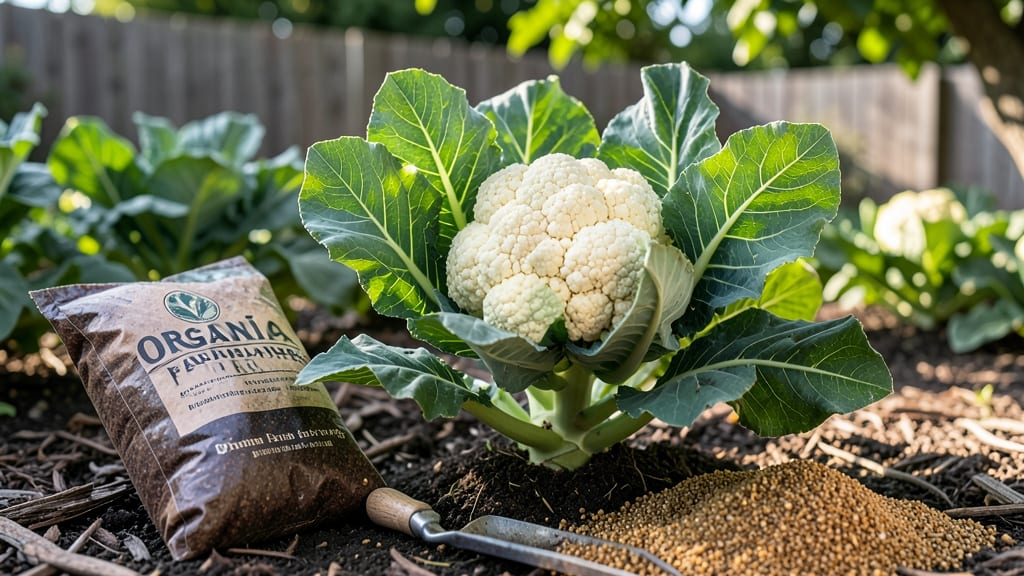
Fertilizing cauliflower with the right organic fertilizer is the key to growing dense, compact curds 🥬 — and the difference between a bountiful harvest and a sad, loose head.
Picture this: you’ve planted your cauliflower in Zone 6 soil, given it plenty of water, and even protected it from pests. But when harvest time rolls around, those curds are small, loose, or worse—split open before they’re ready.
The problem? Most gardeners focus on water and sunlight but overlook the nutrient balance that makes or breaks your crop.
Cauliflower thrives when fed a mix of nitrogen for leafy growth, phosphorus for root strength, and potassium for curd formation. The right organic fertilizer—whether it’s compost, fish emulsion, or bone meal—delivers these nutrients in a way that’s gentle on the soil and your plants.
Below, I’ll break down the top organic options, when to apply them, and how to avoid common mistakes that leave you with underwhelming results.
Ready to turn those floppy curds into plump, restaurant-worthy heads? Let’s get your soil—and your cauliflower—fed the right way.
3 Essential organic nutrients that maximize cauliflower curd size
If you've ever grown cauliflower only to end up with small, loose curds instead of the dense, compact heads you crave, the issue likely lies in your nutrient balance.
Cauliflower thrives when fed the right mix of organic nutrients at the right stages—starting with seedlings and continuing through heading and harvest. The three powerhouse nutrients—nitrogen (N), phosphorus (P), and potassium (K)—each play a unique role in transforming your garden into a cauliflower powerhouse.
I’ve learned from years of trial and error that overemphasizing one nutrient while neglecting the others can backfire spectacularly. For example, too much nitrogen will give you lush leaves but no curds, while phosphorus deficiency can stunt root development, leaving your plants struggling to support those coveted heads.
The key is balanced nutrition, tailored to each growth phase. Let’s break down how to get it right.
Let’s start with nitrogen (N), the leafy green booster that’s critical during the seedling stage. Nitrogen fuels rapid foliage growth, helping your cauliflower establish a strong framework before it even thinks about forming curds.
My go-to organic sources are compost and fish emulsion, both of which release nitrogen gradually, avoiding the burn risk of synthetic fertilizers. For seedlings, aim for a 3-1-2 N-P-K ratio. Too much nitrogen later in the game?
You’ll end up with leafy monsters and no curds to show for it.
Next up is phosphorus (P), the root and flower powerhouse that kicks in during the heading stage. Phosphorus helps develop a robust root system and triggers the formation of those tight, compact curds.
I’ve found bone meal and rock phosphate to be game-changers, especially when worked into the soil 4-6 weeks before planting. Shift your focus to a 1-2-2 N-P-K ratio during this phase. Without enough phosphorus, your plants might look healthy but fail to produce the firm, dense heads you’re after.
Finally, potassium (K) is the curd density secret weapon, stepping in during the harvest stage to ensure your heads are tight, crisp, and disease-resistant. Potassium helps regulate water uptake and strengthens cell walls, preventing issues like blossom-end rot.
My top organic sources here are wood ash (sprinkled lightly around the base) and kelp meal, which also provides trace minerals. For this final push, a 1-1-3 N-P-K ratio works wonders. Think of potassium as the finishing touch that turns good curds into exceptional ones.
Timing is everything when it comes to organic fertilization. I recommend applying a balanced starter fertilizer (like a 5-5-5 mix) at planting, then switching to a phosphorus-heavy feed when the plants are about 4-6 inches tall.
As the curds begin to form, shift to a potassium-rich blend to lock in that perfect texture. Pro tip: Always water thoroughly after fertilizing to prevent root burn and ensure nutrients reach the soil microbes that will break them down.
One of the biggest mistakes I’ve seen (and made!) is ignoring soil health while focusing solely on fertilizers. Organic nutrients work best when paired with healthy soil microbes. That’s why I always amend my soil with compost before planting and mulch regularly to retain moisture and nutrients.
A simple compost tea applied every 2-3 weeks can also give your cauliflower a microbe boost, improving nutrient uptake and overall vigor.
If you’re growing cauliflower in containers or raised beds, pay extra attention to nutrient ratios, as these plants can deplete soil faster in confined spaces.
I’ve had great success with a DIY organic fertilizer blend of 1 part compost, 1 part worm castings, and ½ part bone meal, mixed into the soil at planting.
For container gardens, a slow-release organic fertilizer like fish bone meal can be a lifesaver, providing steady nutrition without the risk of overfeeding.
Remember, the goal isn’t just to grow cauliflower—it’s to grow showstopping curds that make your neighbors green with envy. By mastering these three organic nutrients and their perfect timing, you’ll transform your garden into a cauliflower curd factory
Best organic fertilizer blends for cauliflower (ranked by growth stage)
Cauliflower thrives when fed the right nutrients at the right time. Unlike leafy greens, it demands a balanced approach—too much nitrogen early will give you lush leaves but no curds. My secret?
Tailoring fertilizer blends to each growth phase: seed-starting, transplant shock recovery, and heading development. Let’s break down the best organic options, from DIY mixes to store-bought favorites, with exact application rates.
For seed-starting mixes, focus on phosphorus to encourage root growth. A 5-10-5 NPK ratio (like bone meal or composted manure) is ideal. During the heading stage, potassium becomes critical—think kelp meal or wood ash.
I’ve tested these blends in my raised beds, and the results speak for themselves: denser curds and fewer pests. Ready to optimize your harvest?
Start with a DIY compost tea for seedlings—mix 1 cup worm castings with 1 gallon water and a splash of molasses. Apply this every 2 weeks until transplanting. I swear by this combo; it’s gentler than synthetic starters and packed with beneficial microbes.
For transplants, switch to a 5-5-5 blend like Dr. Earth Organic 5. Sprinkle 1 tbsp per plant around the base, then water deeply to avoid root burn.
When your cauliflower begins forming heads, potassium is non-negotiable. My go-to? A mix of kelp meal (3-4-2 NPK) and wood ash (0-0-10)*. Apply ½ cup per 10 sq ft every 4 weeks.
Pro tip: Pair this with a foliar spray of fish hydrolysate (1 tsp per gallon of water) for instant uptake. I’ve seen curds grow 20% larger in just 3 weeks using this method.
For commercial options, Fish Hydrolysate is my top pick for the heading stage—its 2-5-1 NPK ratio supports curd development without overfeeding. Use 1 tbsp per gallon of water every 2 weeks.
Another favorite? Espoma Garden-Tone, a 4-3-2 blend that’s gentle yet effective. Both are easy to find at local garden centers and work beautifully in raised beds or containers.
Timing matters just as much as the blend. Never fertilize when soil is dry or during extreme heat—roots can’t absorb nutrients efficiently. I always feed in the early morning after a light watering. And remember: less is more with organic fertilizers.
Overdoing it leads to leafy growth at the expense of those prized curds. Stick to the ratios, and you’ll harvest plump, compact heads all season long.