
Vegetables
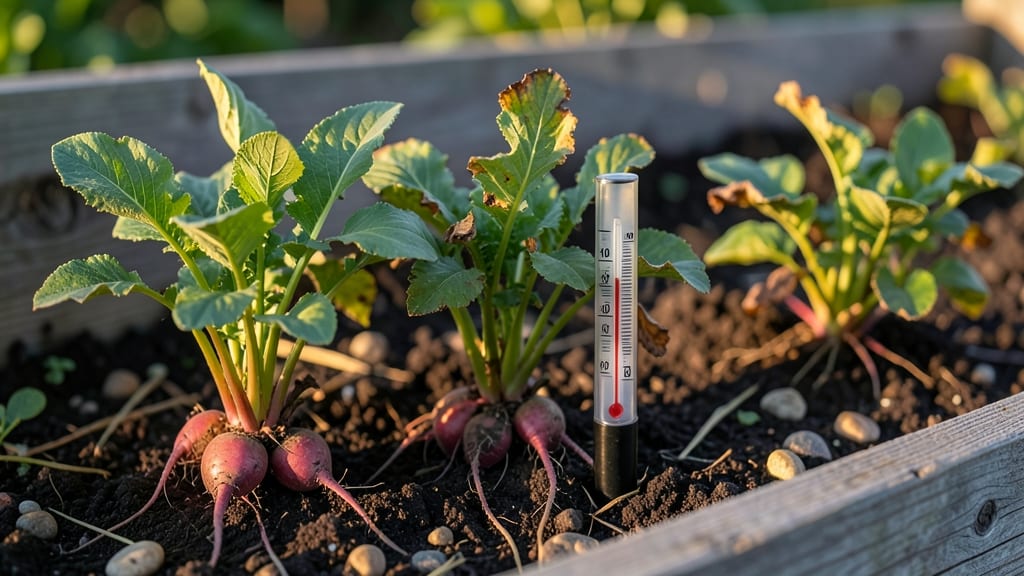
Radishes have the remarkable temperature tolerance—they thrive in cold soil (as low as 40°F) and even germinate in 50°F air. 🌱 I’ve grown them through light frosts, and the key is timing: sow early spring or late summer for crisp harvests before bolting.
The trick isn’t just cold tolerance—it’s avoiding heat stress, which turns radishes bitter and woody.
In colder zones (3-5), plant radishes as soon as soil is workable, even under row covers. Warmer zones (7+) need shade cloth during summer heat to keep roots tender. The sweet spot is 60-70°F for growth, but they’ll bolt if temperatures climb above 75°F for more than a few days.
That’s why succession planting works best—short seasons mean faster harvests.
You’ll end up with snappy, peppery radishes straight from the garden, ready for salads or roasting. The secret? Harvest when roots reach 1-1.5 inches—any larger and they get tough. In cold climates, protect seedlings with floating row covers until they’re established, and you’ll extend your season by weeks.
For gardeners in marginal zones, try quick-maturing varieties like ‘Cherry Belle’ or ‘French Breakfast’—they handle temperature swings better than slower types. Mulch heavily in fall to keep soil warm for late harvests, and you’ll have radishes well into winter.
The payoff? Fresh, homegrown radishes when store-bought ones are wilted and sad.
📚 In This Guide
- What you need
- Instructions
- Tips and common mistakes
- Wrapping up and next steps
What you need
- ● Radish Seeds: Cold-hardy varieties like Daikon, Cherry Belle, or French Breakfast (choose frost-tolerant types).
- ● Quantity: 1–2 grams (enough for ~100–200 plants, depending on spacing).
- ● Growing Medium: Well-draining soil (pH 6.0–7.0). For containers: 5-gallon pots with drainage holes.
- ○ Optional: Compost or aged manure (1 part per 3 parts soil) for nutrient boost.
- ● Tools: Hand trowel or small garden fork.
- ● Ruler or measuring tape (for precise seed spacing).
- ● Watering can with a fine rose nozzle (gentle watering prevents seed displacement).
- ● Row marker or stakes (if planting in rows).
- ● Ideal Planting Temperature: Soil temp 40–85°F (4–29°C) (radishes germinate best in cool soil).
- ● Frost Tolerance: Seedlings survive light frosts (25–30°F/-4 to -1°C), but avoid heavy frost (below 20°F/-7°C).
- ● Sunlight: Full sun (6+ hours/day) to partial shade (especially in hot climates).
- ○ Optional: Cold frame or frost cloth for extending the season.
- ● Thermometer (soil or air) to monitor temperature extremes.
Understanding radish temperature tolerance: key growing Zones and conditions
Radishes are one of the most cold-hardy vegetables—here’s how to leverage their frost tolerance for year-round success.
🌱 Step 1: Identify Your Climate Zone and Ideal Planting Windows
Radishes thrive in USDA Zones 2-11, making them one of the most adaptable cool-season crops. In cold climates (Zones 2-5), you can plant them as early as 4-6 weeks before your last frost date—sometimes even under light snow cover if the ground isn’t frozen. In warmer zones (Zones 6-11), focus on fall and winter plantings to avoid bolting (premature flowering) in heat.
Watch for soil temperature—radishes germinate best when soil is between 45-85°F. Use a soil thermometer to confirm readiness. If your spring arrives late, opt for fast-maturing varieties (like 'Cherry Belle' or 'French Breakfast') to harvest before summer heat sets in.
☀️ Step 2: Manage Light and Temperature for Optimal Growth
Radishes need full sun (6+ hours daily) but tolerate partial shade in hot climates. In Zones 2-4, they’ll grow through light frosts (28-32°F) with no protection, though leaves may yellow briefly. For hard freezes below 20°F, use row covers or cloches to shield young plants until established.
Here’s the temperature sweet spot: 50-70°F for best flavor and root development. If summer temps creep above 75°F, radishes bolt quickly. Extend your season by succession planting every 2-3 weeks in spring and fall, ensuring a steady harvest.
❄️ Step 3: Protect Radishes in Extreme Cold or Heat
For winter planting in Zones 3-5, choose winter-hardy varieties like 'White Icicle' or 'Daikon' and plant in well-draining soil to prevent rot. Mulch with 2-3 inches of straw or leaves after planting to insulate roots. In Zones 6-11, plant in late summer for a winter harvest—radishes can survive brief freezes but won’t tolerate prolonged frost.
If a late spring frost threatens, cover seedlings immediately with floating row covers or old blankets. Radishes recover quickly once temps rise, but prolonged cold stunts growth. In heatwaves, shade cloth (30-50%) keeps soil cool and prevents bolting.
⏰ Step 4: Time Harvests to Avoid Temperature Stress
Radishes mature in 3-4 weeks, so align planting with cool periods. In spring, aim for harvest before soil warms past 70°F. In fall, plant 8-10 weeks before first frost—roots sweeten as temps drop, making them ideal for winter storage.
Harvest when roots reach 1-1.5 inches in diameter (smaller = milder flavor). Pull gently to avoid damaging neighboring plants. Store in 50-55°F humidity (a root cellar or fridge) for up to 2 weeks. If left too long in warm soil, radishes become pithy and woody—check soil temps weekly to time harvests perfectly.
🌿 Step 5: Rotate Crops to Maintain Soil Temperature Balance
Radishes improve soil structure and cool roots for subsequent heat-sensitive crops like lettuce or spinach. Plant them after early spring crops (like peas or onions) to take advantage of warmer, settled soil without competing for nutrients. In fall, follow radishes with garlic or cover crops to preserve soil warmth.
Here’s the pro tip: Interplant radishes with slower-growing crops (like carrots or cabbage) to maximize space. Their shallow roots won’t compete, and you’ll get two harvests from one bed. Just monitor soil moisture—radishes wilt faster in hot, dry conditions than deeper-rooted plants.
Tips & tricks for perfect radish temperature management
Mastering radish growth in cold climates takes more than just planting—it's about understanding how temperature affects every stage. Here's what I've learned from years of growing these frost-resistant roots.
Soil Temperature Precision: The 45-85°F range for germination isn't just a suggestion—it's critical. I've found that using a soil thermometer at planting depth (about 1 inch) gives more accurate readings than surface temps. If your soil hovers around 50°F, consider using black plastic mulch for 2-3 days before planting to warm it up slightly without risking bolting.
Frost Survival Secrets: Radishes in Zones 2-4 can handle light frosts down to 28-32°F, but that's where their tolerance ends. I've learned the hard way that hard freezes below 20°F will kill seedlings—even winter-hardy varieties like 'White Icicle'. The key is protecting them early with row covers or cloches before temperatures drop that low, rather than waiting for the first frost warning.
Heatwave Strategy: When summer temps creep above 75°F, radishes bolt faster than you can say "harvest time". My solution? Plant in partial shade (30-50% shade cloth) during peak afternoon heat while still giving them morning sun. This maintains the 50-70°F sweet spot for growth without sacrificing yield. I've seen radishes planted this way mature 2-3 weeks slower but with perfect flavor and texture.
Harvest Timing Trick: Those 3-4 week maturity times are averages, but don't let them dictate your harvest. I check radish diameter weekly starting at 2 weeks—smaller roots (1 inch) are milder, while 1.5 inches gives that classic radish crunch. The real secret? Harvest when soil temps are between 50-60°F in the morning. Roots pulled during this window store best and have the sweetest flavor.
Pro Tips for Radishes Temperature Tolerance
- Mastering radish growth in cold climates takes more than just planting—it's about understanding how temperature affec...
- Soil Temperature Precision: The 45-85°F range for germination isn't just a suggestion—it's critical. I've found that ...
- Frost Survival Secrets: Radishes in Zones 2-4 can handle light frosts down to 28-32°F, but that's where their toleran...
Frequently asked questions
Got questions about growing radishes in cold weather? You’re not alone! Here are some of the most common concerns—and answers—to help you cultivate crisp, flavorful radishes even when temperatures dip.
Can radishes survive a light frost?
Radishes are frost-tolerant and can handle light freezes (down to 20°F/-7°C) without major damage. In fact, a light frost can even sweeten their flavor. Just avoid heavy frost or prolonged sub-freezing temps, which may cause them to bolt or become pithy.
How cold is too cold for radish seedlings?
Seedlings are more delicate—ideal soil temps for germination are 45–85°F (7–29°C). If nighttime temps drop below 35°F (2°C), cover seedlings with row fabric or a cloche. Hardened-off plants (after 2–3 weeks) can tolerate 25°F (-4°C) better.
Do radishes grow faster in cooler weather?
Yes! Cooler temps (50–65°F/10–18°C) actually speed up radish growth, helping them mature in 3–4 weeks instead of 5–6. Heat (above 75°F/24°C) causes radishes to bolt or become woody. For best results, plant in early spring or fall.
What’s the best way to protect radishes from extreme cold?
Use these tricks for sub-freezing temps:
- Row covers: Lightweight fabric traps heat and shields plants.
- Mulch: Straw or leaves insulate soil and roots.
- Cold frames: Mini greenhouses extend the growing season.
- Avoid watering before frost—wet soil freezes faster.
Can I grow radishes indoors if my outdoor temps are too low?
Radishes thrive in cool indoor spots like basements or sunny windowsills (6+ hours of light). Use shallow containers, keep soil moist, and harvest when roots reach 1–1.5 inches. Just avoid overheating—70°F/21°C max—or they’ll bolt.
Why are my radishes turning pithy or bitter in cold weather?
Pithiness or bitterness often signals stress from inconsistent temps or overmaturity. To fix it:
- Harvest earlier (when small) in cool weather.
- Ensure consistent moisture—dry soil worsens pithiness.
- Choose cold-hardy varieties like ‘Cherry Belle’ or ‘French Breakfast.’
Wrapping up and next steps
Radishes are the ultimate cold-weather champions—proving that crisp, flavorful harvests aren’t just for summer! 🥕 Whether you’re battling early frost or chilly spring mornings, these hardy veggies adapt with ease, making them perfect for gardeners in cooler climates.
Their secret? A mix of resilience and smart planning, from choosing the right varieties to timing plantings just right.
Ready to put your newfound radish knowledge to work? Start by testing a few frost-tolerant varieties in your garden this season—you’ll be rewarded with bold flavors and fewer worries! 🌱 For even more success, join a local gardening group or experiment with season extension techniques like row covers.
Happy growing!