
Vegetables
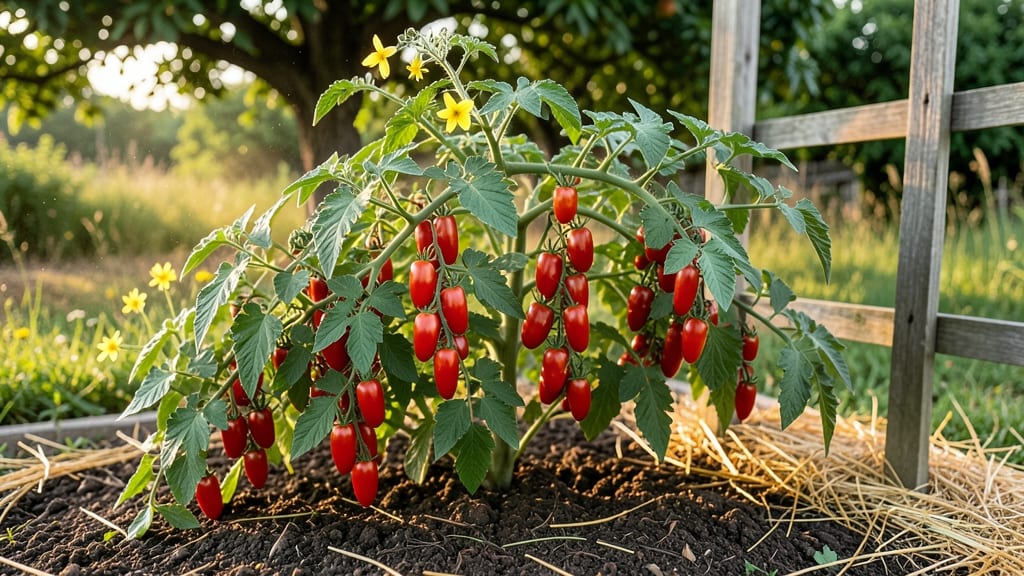
The Roman Candle tomato grows like a purple-streaked dream—indeterminate vines that climb and produce striking, heirloom-quality fruit with almost no fuss. 🌱 I fell for this variety after seeing its bold, striped tomatoes at a farmers' market, and now it's my go-to for dramatic color and reliable production.
The key to success? Matching its love of warmth, space, and consistent care to its vigorous growth habit.
This tomato thrives in full sun (6-8 hours daily) and well-draining soil with plenty of organic matter—think compost-rich loam or a raised bed mix. Plant seeds indoors 6-8 weeks before last frost, then transplant after soil warms to 60°F+.
Since it's indeterminate, give it a strong trellis or cage (6 feet tall) to support its sprawling vines, which can produce fruit all season long.
Water deeply 1-2 times per week, keeping soil moist but not soggy—consistency is everything for those vibrant purple-streaked fruits. Prune regularly to remove suckers and encourage airflow, and fertilize lightly with balanced organic fertilizer every 3-4 weeks.
The payoff? Juicy, flavorful tomatoes that look like edible art and taste even better.
Pair it with basil, marigolds, or onions to deter pests, and watch for common tomato issues like blight or aphids—early intervention keeps plants thriving. Harvest when fully colored and firm, and enjoy the showstopping variety that makes every meal feel special. Ready to grow your own purple masterpiece?
📚 In This Guide
- What you need
- Instructions
- Tips and common mistakes
- Wrapping up and next steps
What you need
- ● Seeds: 3–5 Roman Candle tomato seeds (purple-striped or heirloom variety). Look for reputable seed suppliers for high-quality stock.
- ● Potting mix: 10–15 lbs of well-draining, organic potting soil (or a mix of 60% compost, 30% coco coir, and 10% perlite).
- ● Containers or garden bed: For containers: 5-gallon pots (1 per plant) with drainage holes.
- ● For in-ground: Full sun (6+ hours daily) and loose, fertile soil with a pH of 6.0–6.8.
- ● Fertilizer: Balanced organic fertilizer (e.g., 5-5-5 or compost tea) to kickstart growth.
- ● Stakes or cages: 5–6 ft tall tall tomato cages or bamboo stakes to support vines.
- ● Watering can or hose: With a gentle spray nozzle for even moisture.
- ● Pruning shears (for trimming suckers).
- ● pH testing kit (to monitor soil acidity).
- ● Row covers or shade cloth (if growing in hot climates).
- ● Garden twine (for securing vines to stakes).
- ● Warm soil temps (60°F+) for planting seeds or seedlings.
- ● Patience! Roman Candles take 70–85 days to mature.
- ● Consistent watering (keep soil moist but not soggy).
Step-by-Step revival guide for Roman Candle tomatoes
Here's how I bring these dramatic purple-striped heirlooms back from neglect—no fuss, just flavor.
🌱 Step 1: Assess and Prune Damaged Growth
Start by examining your Roman Candle plant for signs of life. Look for green stems with at least one leaf—these are your anchors for revival. Use clean, sharp pruners to remove any blackened or mushy stems at the base, cutting ½ inch below the damage to avoid leaving infected tissue.
Trim back any leggy growth above the first set of healthy leaves. This might seem drastic, but you're redirecting the plant's energy toward rebuilding its root system. I always keep the topmost leaves—even if they're yellowing—to help maintain photosynthesis until new growth emerges.
☀️ Step 2: Adjust Light and Water Immediately
Move your Roman Candle to a location with 6-8 hours of bright, indirect light daily. These tomatoes thrive in full sun but need gentle reintroduction if they've been struggling. Place them near a south-facing window or under a grow light if natural light is insufficient.
Water deeply but carefully—only when the top 2 inches of soil feel dry to the touch. Overwatering suffocates roots, while underwatering stresses them further. I use room-temperature water to avoid shocking the plant, and I water at the base rather than overhead to prevent fungal spores from settling on leaves.
💧 Step 3: Feed with Balanced Fertilizer
After your plant shows signs of recovery—new leaves unfurling or stems thickening—introduce a balanced liquid fertilizer (10-10-10 ratio) diluted to half strength. This provides essential nutrients without overwhelming the plant's weakened system. I fertilize every 2-3 weeks during the growing season.
For an organic boost, mix in a handful of compost around the base of the plant. The slow-release nutrients will encourage root regrowth without the risk of burning tender new shoots. Avoid high-nitrogen fertilizers—they promote leafy growth at the expense of fruit development, which is the last thing you want with a heirloom like Roman Candle.
✂️ Step 4: Encourage New Growth with Strategic Pruning
Once you see new leaves emerging, it's time to prune for strength. Remove any suckers—those small shoots growing between the main stem and branches—up to 12 inches from the base. This redirects energy to the main plant rather than spreading it thin across weak growth.
Pinch off the first flower cluster if your plant is still small. While it might seem counterintuitive, this forces the plant to focus on leaf and stem growth first. You'll be rewarded with a sturdier plant capable of supporting the weight of those dramatic purple-striped fruits later in the season.
🪴 Step 5: Monitor and Maintain Through Recovery
Check your plant daily for new growth—tiny leaves or stems thickening are your best indicators of success. Keep the soil consistently moist but never soggy, and continue providing bright light. If you notice any yellowing leaves, they may need more light or less water.
After 4-6 weeks of consistent care, your Roman Candle should be well on its way to recovery. At this point, you can gradually reintroduce it to full sun and begin fertilizing more regularly. The key is patience—these dramatic tomatoes are worth the wait for their bold, striped fruits.
Tips & tricks for reviving Roman Candle tomatoes
Real talk: I've nursed back more Roman Candles than I care to admit, and these are the hard-won lessons that actually work.
Pruning Precision: When you're cutting back that leggy growth in Step 1, don't just hack away—look for the first set of healthy leaves and make your cut just above them. This preserves the plant's ability to photosynthesize while still redirecting energy to root recovery. I've seen dramatic turnarounds when people skip this detail and end up with stunted regrowth.
Light Transition Strategy: The 6-8 hours of bright indirect light in Step 2 is non-negotiable, but here's the secret: gradually increase exposure. Start with 4 hours the first day, then add 1-2 hours daily until reaching full light. Sudden full sun can scorch recovering leaves, setting you back weeks. Think of it like physical therapy for your plant.
Fertilizer Timing: Wait until you see those first tiny new leaves before introducing fertilizer in Step 3—this is critical. Feeding too early can burn tender new roots. I use a spray bottle with my diluted 10-10-10 mix to avoid over-saturating the soil. And remember: less is more with heirlooms like Roman Candle—they appreciate quality over quantity when it comes to nutrients.
Sucker Management: In Step 4, when removing suckers up to 12 inches from the base, don't forget to check the undersides of branches. These hidden growths can sap energy from your main plant. I make it a habit to run my fingers along each stem—you'd be surprised how many sneaky suckers hide there waiting to steal your tomato's strength.
Pro Tips for Roman Candle Tomato
- Real talk: I've nursed back more Roman Candles than I care to admit, and these are the hard-won lessons that actually work.
- Pruning Precision: When you're cutting back that leggy growth in Step 1, don't just hack away—look for the first set of healthy leaves and make your cut just above them.
- Light Transition Strategy: The 6-8 hours of bright indirect light in Step 2 is non-negotiable, but here's the secret: gradually increase exposure.
Frequently asked questions
Got questions about growing or enjoying Roman Candle tomatoes? You’re not alone! Here are answers to the most common queries—from planting to harvest and everything in between.
When is the best time to plant Roman Candle tomatoes?
Plant seeds indoors 6–8 weeks before your last frost date (around March for most U.S. zones) or direct-sow after soil reaches 60°F+ (mid-May in most regions). These heat-loving tomatoes thrive in warm weather—avoid early spring planting unless you use row covers!
How long does it take for Roman Candle tomatoes to mature?
Expect 75–85 days from transplant to harvest. The striking purple-striped fruits ripen in late summer, so plan accordingly if you’re in a shorter growing season. Patience pays off—they’re worth the wait!
Can I grow Roman Candle tomatoes in containers?
These vining tomatoes do well in 5-gallon+ containers with sturdy trellises or cages. Just ensure they get 6–8 hours of sun daily and use a balanced fertilizer (like 10-10-10) every 3–4 weeks. Dwarf varieties may need extra support.
Why aren’t my Roman Candle tomatoes turning purple?
Lack of sunlight or cooler temps can delay color development. Move plants to a sunnier spot and ensure consistent warmth (70°F+). Over-fertilizing with nitrogen also slows ripening—balance with phosphorus/potassium for vibrant hues.
What’s the best way to use Roman Candle tomatoes in cooking?
Slice them fresh in salads (they’re slightly sweet!), roast for sauces, or blend into salsas. Their unique flavor shines in bruschetta or as a garnish for grilled meats. Pro tip: Let them ripen fully—their purple stripes deepen with time!
Wrapping up and next steps
The Roman Candle tomato isn’t just a feast for the eyes with its dramatic purple stripes—it’s a low-maintenance gem that brings bold flavor and easy-growing charm to your garden or kitchen. Whether you’re a seasoned gardener or a curious beginner, this variety proves that stunning produce doesn’t require complicated care.
Now that you’re armed with tips and answers, why not give it a try? 🌱 Start by planting a few seeds or snagging a transplant, and let this showstopper steal the spotlight in your next meal—or even your neighbor’s green thumb envy!
Next step: Grab your gloves, pick a sunny spot, and let the Roman Candle tomato work its magic—your taste buds (and Instagram feed) will thank you! 😉