
Flowers
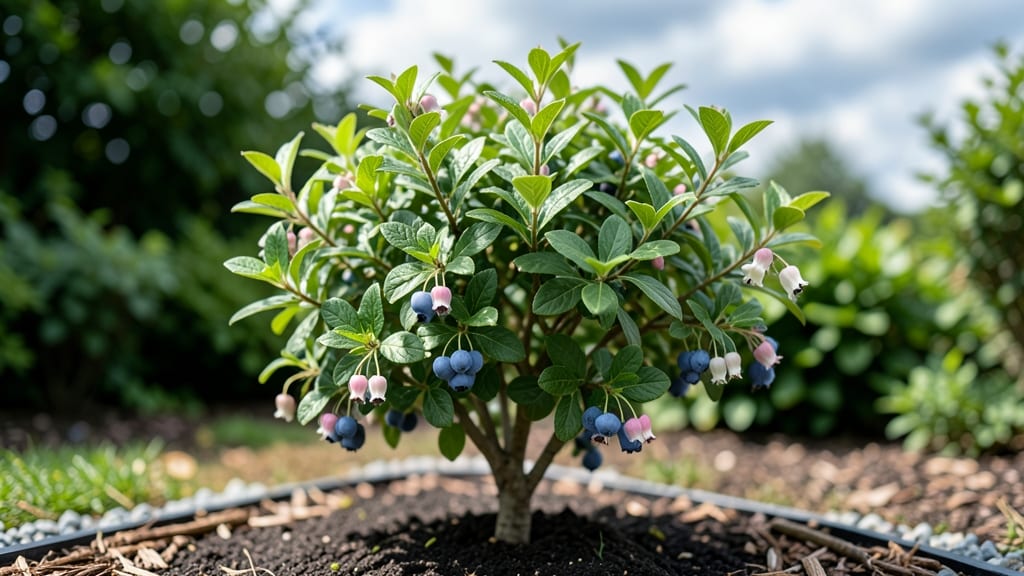
Blueberry flowers transform into fruit through five distinct stages, each with its own timing and care needs — and missing just one can mean no harvest at all.
Picture this: you’ve waited all season for those first pink buds to appear, only to watch them drop off before any fruit forms. It’s frustrating, but knowing the exact triggers at each stage can turn that disappointment into a bountiful harvest.
From bud formation in spring to ripe berries by summer, every phase depends on the right balance of pollinators, soil pH, and watering. I’ll walk you through the week-by-week timeline, visual cues to spot trouble early, and the simple adjustments that make all the difference.
By the end, you’ll recognize the signs of healthy development, troubleshoot common issues like blossom drop, and even boost your yield with proven pollination tips tailored for USDA Zone 6.
Blueberry flower to fruit stages: a week-by-week pollination timeline
Understanding the blueberry flower to fruit stages helps you anticipate care needs and troubleshoot issues before they impact your harvest. Blueberries follow a precise pollination timeline that spans about 8-12 weeks, from bud formation to ripe berries.
Each stage depends on temperature, moisture, and pollinators, so knowing these cues lets you optimize growing conditions for maximum fruit set.
In USDA Zone 6, blueberry blooms typically appear in late April to early May, with fruit ripening by mid-to-late summer. However, cooler climates may delay these stages by 2-4 weeks.
Whether you're growing highbush, rabbiteye, or lowbush varieties, the core stages remain the same—just the timing shifts based on variety and location.
Visual cues are your best guide: watch for bud swell, pink buds, white flowers, and tiny green berries to track progress. Below, I’ve broken down each stage with weekly milestones, care tips, and environmental triggers to help you intervene if growth stalls.
| Stage | Week | Visual Cues | Key Actions | Environmental Needs |
|---|---|---|---|---|
| Bud Formation | Week 1-2 | Swollen buds appear along stems | Prune dead wood; monitor for pests | 50-60°F, moist soil |
| Blooming | Week 3-4 | Pink/white flowers open | Attract pollinators; avoid frost | 60-75°F, consistent water |
| Pollination | Week 4-5 | Flowers wilt; tiny green berries form | Hand-pollinate if needed; thin clusters | 65-80°F, light rain |
| Fruit Set | Week 6-8 | Berries grow pea-sized | Fertilize lightly; mulch to retain moisture | 70-85°F, deep watering |
| Berry Development | Week 9-12 | Berries darken and enlarge | Monitor for pests; harvest when ripe | 75-90°F, consistent moisture |
During bud formation (Week 1-2), swollen buds signal the start of the process. This stage is critical because cold damage or drought can kill buds before they open. If your area experiences late frosts, consider covering young plants with frost cloth until temperatures stabilize above 40°F at night.
By Week 3-4 (blooming), pink and white flowers will dominate your shrub. This is when <
Critical growth triggers: how to boost blueberry fruit set and yield
Blueberries may look like self-pollinating powerhouses, but optimal fruit set depends on a few critical growth triggers you can control. From soil acidity to pollinator support, these factors determine whether your flowers become plump, juicy berries—or just drop off. Let’s break down the science-backed strategies to maximize your harvest.
First, soil pH is non-negotiable. Blueberries thrive in acidic soil (pH 4.5–5.5). If your soil tests higher, amend it with elemental sulfur or peat moss before spring. A pH above 6.0 can stunt fruit development entirely, leaving you with tiny, underripe berries or no fruit at all.
5 Critical Growth Triggers for Blueberry Fruit Set
- 1
- 2
- 3
- 4
- 5
Test annually and amend with sulfur or peat moss. Low pH = more boron uptake, which boosts fruit set.
Plant two compatible varieties (e.g., 'Bluecrop' + 'Duke'). Bees carry pollen 300–500 feet—space plants 10–15 feet apart.
Water deeply 2–3x/week during bloom. Drought stress causes blossom drop. Mulch with pine needles to retain acidity.
Remove dead wood in late winter and thin crowded branches in summer. Good airflow reduces fungal diseases like mummy berry.
Flowers need 55–85°F for pollination. Frost below 28°F kills blooms. Use frost cloth if late frosts are common in your zone.
Next, cross-pollination is your secret weapon. While some blueberries are partially self-fertile, planting two varieties (like 'Bluecrop' and 'Duke') ensures better fruit set. Bees are your best allies—avoid pesticides during bloom, and place bee-friendly plants (like lavender or clover) nearby to attract them.
Watering isn’t just about keeping roots happy—it’s about supporting fruit development. During bloom and early fruit set, deep watering 2–3 times per week prevents blossom drop.
Use drip irrigation to avoid wetting leaves, which reduces fungal risks like botrytis blight. Mulch with pine straw to double down on acidity and moisture retention.
Don’t overlook pruning strategies. Prune 10–20% of old wood in late winter to encourage new growth, and thin crowded branches in summer to improve airflow. Poor airflow traps humidity, inviting mummy berry fungus, which can destroy up to 90% of your crop if unchecked.
Finally, temperature matters. Blueberry flowers thrive in 55–85°F—too hot or too cold, and pollination falters. If late frosts threaten, cover plants with frost cloth or use a row cover. In hot climates, provide afternoon shade to prevent flower burn.
By mastering these five growth triggers, you’ll turn every bloom into a berry—not just a few. Start with soil pH, then focus on pollinators, water, pruning, and temperature. Your blueberry bushes will thank you with bucketfuls of fruit! 🫐