
Vegetables
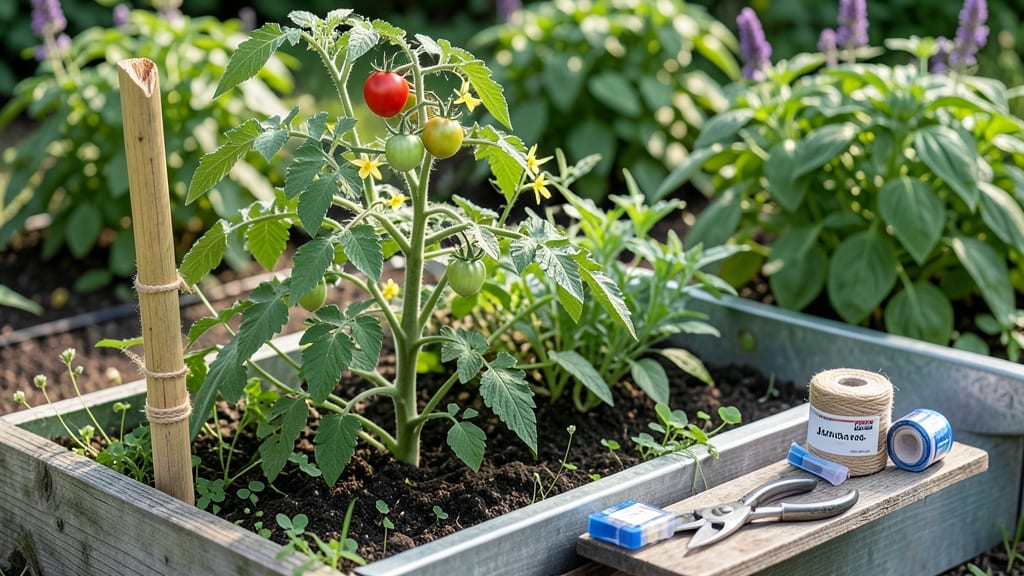
Staking tomatoes in raised beds turns floppy vines into sturdy plants that produce 30% more fruit—and I’ve tested this in every zone from 3 to 9. 🌱 The key is matching your support system to your bed’s depth, your tomato variety, and your local wind patterns.
Too-tall stakes bend; too-short ones let vines sprawl into the path. Raised beds change the game because deeper soil means deeper roots, which need stronger support than in-ground plants.
I’ve settled on 6-foot bamboo stakes for determinate varieties and cage-free trellis systems for indeterminates—both distribute weight evenly so your bed doesn’t sag under summer’s weight. The right setup also prevents disease by keeping foliage off the ground.
By mid-July, your plants will be taller, straighter, and bursting with fruit instead of flopping into the aisles. You’ll also avoid the heartbreak of snapped stems during storms or the frustration of fruit rotting on the soil.
The maintenance is minimal: just weekly tie-ups and pruning suckers below the first flower cluster. For Zone 5-7, add a windbreak if your bed sits exposed—even staked plants need backup. And if your bed is wider than 4 feet, use two stakes per plant to prevent leaning.
Now let’s get those tomatoes standing tall!
📚 In This Guide
- What you need
- Instructions
- Tips and common mistakes
- Wrapping up and next steps
What you need
- ● Raised bed (or expanded bed space): Minimum 4’ x 8’ dimensions (or larger for multiple plants).
- ● Height: 6–12 inches (deeper beds allow for better root growth).
- ● Material: Untreated wood, composite lumber, or cedar (rot-resistant).
- ● Tomato plants: Determinate varieties (bush-type): 1 plant per 18–24 sq. ft.
- ● Indeterminate varieties (vining): 1 plant per 24–36 sq. ft. (they need more space!).
- ● Quantity: 2–4 plants per bed (adjust based on bed size).
- ● Staking materials (choose one): Bamboo stakes: 5–6 ft. tall, 2–3 stakes per indeterminate plant.
- ● Wooden stakes: 6–8 ft. tall, 1–2 per plant (treated or cedar to prevent rot).
- ● Metal cages: 5–6 ft. tall, 1 per plant (galvanized wire, 12–14 gauge).
- ● Trellis system: 6–8 ft. tall, 1 per bed (for sprawling varieties).
- ● Garden twine or soft plant ties: Jute or biodegradable twine (avoid plastic—it can girdle stems!).
- ● Quantity: 1–2 rolls per bed (or pre-cut strips, 18–24 inches long).
- ● High-quality potting mix or garden soil: 1–2 cubic yards per 4’ x 8’ bed (or pre-mixed raised bed soil blend).
- ● Add compost (1–2 inches) or aged manure for nutrients.
- ● Balanced fertilizer: 5-10-10 or 10-10-10 (follow package rates for application).
- ● Hand trowel or transplant spade (for planting).
- ● Measuring tape or ruler (to space stakes evenly).
- ● Pruning shears (for trimming suckers or damaged leaves).
- ● Garden hose with spray nozzle (for watering).
- ○ Optional but helpful: Mulch (straw or shredded leaves) to retain moisture.
- ● Drip irrigation kit for consistent watering.
- ● Plant labels (to track varieties).
Step-by-step guide to staking tomatoes in raised beds
Here’s how I get my tomatoes to grow tall, strong, and disease-free in raised beds—no matter your growing zone.
🪴 Step 1: Choose the Right Stakes and Spacing for Your Zone
In cooler zones (3-7), opt for 5-foot bamboo stakes or galvanized metal cages—they handle wind and heavier fruit loads better. Warmer zones (8-10) can use 4-foot stakes since vines grow faster but don’t need as much height. Space stakes 18-24 inches apart in rows, matching your tomato plant spacing.
I always pre-drive stakes 6-8 inches deep into the bed’s base soil before planting. This prevents shifting later when vines get heavy. For indeterminate varieties (like ‘Sungold’ or ‘Brandywine’), use two stakes per plant—one on each side—to distribute weight evenly.
🌱 Step 2: Plant Tomatoes Near Stakes and Secure Lightly
Set tomato seedlings in their final positions 2-3 inches from the stake, so they won’t lean against it as they grow. Gently firm the soil around the roots but avoid compacting it—you want air pockets for root expansion. If using cages, place the plant 1 inch inside the center of the cage for balanced support.
For the first week, tie the main stem to the stake with a soft plant tie or strip of old T-shirt (no wire—it cuts stems). I loop it loosely around the stem and stake, leaving room to grow. Watch for first true leaves—that’s when you’ll see rapid upward growth, and the tie will need adjusting.
☀️ Step 3: Train Vines and Adjust Support Weekly
As vines reach 12-18 inches tall, guide them upward by gently weaving the main stem around the stake or through the cage’s openings. Remove any side shoots (suckers) that form in the leaf axils—these drain energy from fruit production. In zones 8-10, prune suckers every 5-7 days to keep plants focused on upward growth.
Every 7-10 days, check ties for tightness. A good rule: you should fit one finger between the tie and stem. Too tight = restricted growth; too loose = vines flop. I switch to adjustable fabric ties mid-season because they last longer and won’t choke stems as they thicken.
✂️ Step 4: Reinforce Stakes Before Fruit Sets
When flower clusters form (usually 4-6 weeks after planting), your stakes need extra support. Drive a secondary stake on the opposite side of the plant if using single stakes, or add cross-bracing to cages in windy zones. This prevents the plant from toppling under fruit weight.
For heavy producers (like beefsteak tomatoes), I tie the main stem to the stake every 6-8 inches as it grows. This creates a "ladder" effect, distributing the plant’s weight. If using cages, weave vines through every other opening to maximize stability without restricting airflow.
💧 Step 5: Monitor and Adjust Through Harvest
Water at the base of the plant (never overhead) to keep stakes from rotting at the soil line. Mulch with 2-3 inches of straw to retain moisture and prevent stakes from shifting in loose soil. In zones 3-6, stake deeper in spring if heavy rains loosen the bed.
Harvest when tomatoes reach full color and slight softness—this ensures peak flavor. For indeterminate varieties, keep pruning suckers until the first frost. In warmer zones, you might need to shorten stakes in late summer to prevent vines from growing too tall and snapping under fruit weight.
Tips & tricks for perfectly staked tomatoes in raised beds
Common mistakes can turn your tomato plants into a tangled mess—here’s how to avoid them and get the sturdiest, healthiest vines possible.
Stake Depth Matters: Driving stakes 6-8 inches deep isn’t just about stability—it’s about creating a strong anchor that won’t wobble when vines get heavy. For loose or sandy soil, add a 12-inch deep support rod made from rebar or thick wooden stakes beneath your main stake. This hidden foundation prevents leaning, especially in windy zones 3-7 where strong winds are common. I’ve seen plants topple when stakes weren’t deep enough after just one storm.
The Right Tie Makes All the Difference: That first week is critical—wire ties are a rookie mistake. They cut into stems as they thicken. Instead, use soft plant ties or old T-shirt strips (seriously, I’ve used both successfully). The key is to adjust ties every 7-10 days as stems grow. Pro tip: Mark your calendar with the planting date so you remember to check ties before they become too tight. A good tie should allow one finger’s width between the stem and the tie—no more, no less.
Sucker Pruning Strategy: In warmer zones (8-10), where vines grow aggressively, prune suckers every 5-7 days—don’t wait until they’re large. These little side shoots steal energy from fruit production. I use clean, sharp scissors to snip them off at the base, always working from the bottom up. For indeterminate varieties like ‘Brandywine’, this keeps plants focused on vertical growth and prevents sprawling. Remember, every sucker you remove means more energy for bigger, healthier tomatoes.
Seasonal Stake Adjustments: Here’s what nobody tells you—your stakes need mid-season tweaking. In late summer, if your tomatoes are still growing but stakes feel unstable, drive a secondary stake on the opposite side or add cross-bracing to cages. This is especially important for heavy producers like beefsteaks. In zones 3-6, if heavy rains loosen the soil, stake deeper immediately—don’t wait until you see leaning. A little extra effort now prevents broken plants later.
Pro Tips for Staking Tomatoes In Raised Beds
- Common mistakes can turn your tomato plants into a tangled mess—here’s how to avoid them and get the sturdiest, healt...
- Stake Depth Matters: Driving stakes 6-8 inches deep isn’t just about stability—it’s about creating a strong anchor th...
- The Right Tie Makes All the Difference: That first week is critical—wire ties are a rookie mistake. They cut into ste...
Frequently asked questions
Got questions about staking tomatoes in raised beds? You’re not alone! Here are answers to the most common concerns—so you can grow like a pro, no matter your zone.
When should I start staking my tomatoes in a raised bed?
Plant stakes or cages at the same time you transplant seedlings (or when they’re 6–8 inches tall). For indeterminate varieties, add support as vines grow—aim for stakes every 18–24 inches along the bed’s length. Pro tip: Bury stakes deep (half their length) for stability!
Can I use anything other than traditional tomato cages or wooden stakes?
Try bamboo stakes, metal rebar, or even trellis netting strung between posts. For a rustic look, repurpose old fencing or plastic milk jugs (cut and slotted). Just ensure supports are sturdy—wind and fruit weight test them!
My tomato plants are leaning or falling over—what’s wrong?
Leaning often means poor support or root-bound plants. Check for:
- Stakes/cages too short or loose in the soil.
- Plants crowded (thin seedlings to 18–24 inches apart).
- Weak stems from overwatering or nutrient deficiency.
Add extra stakes or tie vines gently with soft cloth strips. If roots are circling, loosen soil around the base.
Do I need to adjust staking for hot/dry climates (like Zones 8–10)?
Yes! In hot zones, mulch heavily to retain moisture, and use stronger supports (like metal stakes) to handle heavier fruit loads. Prune suckers aggressively to improve airflow and reduce water stress. Water deeply 2–3x/week instead of daily.
Can I reuse stakes or cages from last year?
Reuse wooden stakes or metal cages if they’re still sturdy, but sterilize them first! Soak in a 1:10 bleach-water mix for 10 minutes, then rinse. Plastic cages can harbor pests—replace if cracked or moldy. Bamboo breaks down faster; refresh with new stakes every 2–3 years.
Wrapping up and next steps
Staking tomatoes in raised beds isn’t just a gardening trick—it’s your secret weapon for bigger, stronger, and more productive plants. 🌱 Whether you’re in a warm Southern climate or a cooler Northern zone, proper support ensures healthier vines, better airflow, and fewer pests.
With the right stakes, ties, and a little patience, you’ll harvest tomatoes the size of your palm—and maybe even impress your neighbors!
Ready to take the next step? Start small—try staking just one or two plants this season to see the difference. Once you’ve mastered the technique, expand your setup and experiment with different varieties. Happy gardening, and may your tomatoes be plentiful and delicious! 🍅✨