
Vegetables
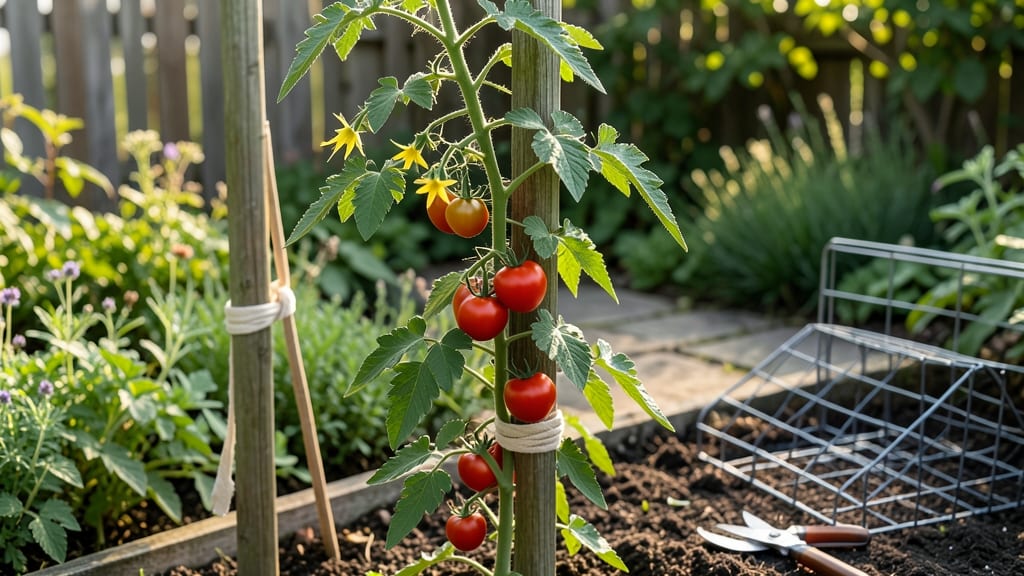
Your tomato plants can handle 10 pounds of fruit—if you tie them up the right way. 🌱 I’ve seen sagging stems snap under the weight of a single beefsteak tomato, but proper support turns floppy plants into sturdy producers.
The key is matching the method to your tomato type and harvest goals.
Determinate tomatoes (bush varieties) need simple cages or low stakes, while indeterminate vines (like Sungolds) demand 6-foot stakes or trellises for their endless growth. I swear by soft plant ties—they won’t cut into stems like twine—and I replace them every few weeks as the plants thicken.
The right setup keeps fruit off the ground, prevents disease, and makes harvesting a breeze.
By late summer, your plants will be bursting with ripe tomatoes, none of which will rot on the vine. Proper airflow from good support also cuts down on blight, and the stems stay strong enough to hold even the heaviest heirlooms.
No more broken branches or lost harvests—just steady, productive plants all season long.
Works for greenhouses, containers, or backyard gardens—just adjust the height and spacing. Here’s how to set it up without the guesswork.
📚 In This Guide
- What you need
- Instructions
- Tips and common mistakes
- Wrapping up and next steps
What you need
- ● Tomato plants: Healthy, staked or trellised varieties (like indeterminate types) that need support.
- ● Support stakes or trellis: Wooden stakes (5–6 ft tall, 1–1.5 inches in diameter)
- ● OR metal/bamboo stakes (6 ft tall, 0.5–1 inch in diameter)
- ● OR a sturdy tomato cage (5–6 ft tall, 18–24 inches wide)
- ● Tying materials: Soft plant ties: 3–4 ft lengths of jute, hemp, or cotton twine (avoid plastic or wire—it can damage stems!).
- ● OR Velcro plant straps: Reusable, gentle on stems (1–2 per plant).
- ● Pruning shears or scissors: Sharp, clean pair for trimming suckers or excess foliage.
- ○ Gloves (optional but recommended): Protects hands from thorns and rough stems.
- ● Soft cloth or rags: To cushion stems if ties might rub against them.
- ● Staple gun + plastic-coated staples: For securing ties to stakes (if using permanent support).
- ● Watering can with a gentle spray nozzle: Keeps plants hydrated post-tying.
- ● Plant clips or rubber bands: For temporary support while ties are adjusted.
Step-by-Step instructions for supporting tomato plants
Here's how I keep my tomato plants sturdy and productive all season long.
🌱 Step 1: Choose the Right Support System
Start with a strong support system that matches your plant's needs. For determinate tomatoes (bush varieties), a 4-foot tall cage works perfectly—just push it into the soil at planting time. For indeterminate tomatoes (vining types), use 5-6 foot bamboo stakes or heavy-duty wooden posts buried 2 feet deep for maximum stability.
I always check the plant's growth habit before choosing—indeterminates need taller supports because they keep growing until frost. Drive the stake 3-4 inches from the main stem to avoid damaging roots when watering. If using a cage, place it right at planting so roots grow through the wire without stress.
🪴 Step 2: Install Support as Plants Grow
For stakes, tie the main stem to the support every 12 inches using soft plant ties (never wire or twine—it cuts into stems). I start tying when the plant reaches 18-24 inches tall, then repeat every 7-10 days as it grows. This prevents wind damage and keeps the plant upright as fruit develops.
Here's the trick: don't tie too tightly—leave a little wiggle room so the stem can thicken naturally. If you notice the tie digging into the stem, loosen it immediately. For cages, simply weave the vines through the wires as they grow, securing with soft ties only where needed.
✂️ Step 3: Train Vines for Maximum Support
Once the plant hits the top of its support, stop tying upward and let the vines spread naturally. For indeterminates, I pinch off the topmost leaves when they reach the support's height to encourage energy into fruit production rather than more vertical growth. This is where heavy harvests happen—focus on horizontal growth after the plant hits its support limit.
Watch for suckers (those little shoots in the leaf axils)—remove them weekly so the plant puts energy into fruit, not extra stems. A well-trained vine will have strong, sprawling branches covered in fruit rather than one long, top-heavy stem.
💧 Step 4: Adjust Supports as Fruit Develops
As tomatoes swell and ripen, the weight can bend or break stems if not properly supported. Check your ties every 5-7 days and add extra support where needed. For heavy fruit clusters, I sometimes weave small branches between the main stem and support to distribute weight.
If you notice leaves touching the ground, trim them immediately—this prevents soil-borne diseases. Keep the plant open and airy so sunlight reaches all sides. A well-supported tomato plant will have firm stems, evenly distributed fruit, and minimal breakage even under heavy loads.
⏰ Step 5: Maintain Through the Season
Throughout the growing season, check ties monthly—they stretch and weaken over time. Replace any that feel loose or frayed. In windy conditions, give extra attention to tall indeterminates, as they're most vulnerable to snapping. I also water at the base rather than overhead to keep stems strong and supports stable.
By late summer, your supported tomatoes will look like strong, productive trees rather than floppy vines. The key is consistent training—just 10 minutes every week keeps plants healthy and harvests bountiful. When frost nears, harvest everything and let the plant die back naturally on its support.
Tips & tricks for perfectly supported tomato plants
These simple tricks will help you avoid common mistakes and get the most out of your tomato harvest.
Support System Selection: For indeterminate tomatoes, I recommend using 5-6 foot bamboo stakes instead of wooden posts when possible—they're lighter to handle and less likely to tip over in windy conditions. If you're using cages, opt for the heavy-duty galvanized wire type rather than plastic, as they provide better support for heavy fruit loads. The extra few dollars upfront pays off when you're not dealing with collapsed plants mid-summer.
Tying Technique: In Step 2, when you're tying every 12 inches, use the "figure-eight" method for extra stability. Wrap the tie around the stem once, then cross it over the support, and wrap again—this creates a secure anchor point that won't slip. I keep a small bag of these soft plant ties in my gardening tool belt for quick adjustments. The key is to adjust them as the stem thickens, which happens about every 7-10 days.
Pruning Strategy: When you reach the top of your support in Step 3, don't just stop tying—also pinch off the topmost leaves right at the stem. This redirecting of energy to fruit production is what transforms a good harvest into a spectacular one. I make this my weekly garden ritual along with checking ties, and it's made a noticeable difference in my yields over the years.
Season-Long Maintenance: The 10 minutes per week you spend checking ties and adjusting supports in Step 5 really adds up. I set a reminder on my phone for every Friday morning to do this quick maintenance. During windy periods, I add an extra check on Wednesday too—those are the days when plants are most vulnerable to damage. A little prevention goes a long way with tomatoes.
Pro Tips for Best Way To Tie Up Tomatoes
- These simple tricks will help you avoid common mistakes and get the most out of your tomato harvest.
- Support System Selection: For indeterminate tomatoes, I recommend using 5-6 foot bamboo stakes instead of wooden posts when possible—they're lighter to handle and less likely to tip over in windy conditions.
- Tying Technique: In Step 2, when you're tying every 12 inches, use the "figure-eight" method for extra stability.
Frequently asked questions
Got questions about tying up your tomatoes?
You’re not alone! Whether you’re a first-time gardener or a seasoned pro, these answers will help you master the art of support for your tomato plants. Let’s dive in!
Why do tomatoes need to be tied up?
Tying up tomatoes prevents the plants from toppling over under the weight of heavy fruit, improves air circulation (reducing disease risk), and makes harvesting easier. Without support, vines can break, leading to lost produce and stressed plants. Think of it as giving your tomatoes a sturdy backbone!
When is the best time to tie up tomato plants?
Start tying up your tomatoes early—as soon as they’re 12–18 inches tall and have 3–4 sets of true leaves. This gives the plant time to grow stronger while the support system keeps up. If you wait until the fruit is heavy, the plant may already be struggling. Pro tip: Check weekly and adjust ties as the plant grows!
Can I use anything other than twine or soft ties for tomato supports?
While soft plant ties or twine are classic choices, you can also use:
- Velcro plant ties – Easy to adjust as the plant grows.
- Old pantyhose or fabric strips – Gentle on stems and reusable.
- Jute twine – Biodegradable and sturdy.
- Tree stakes + soft straps – Great for indeterminate varieties.
What should I do if my tomato plant is already leaning or broken?
Don’t panic! Gently straighten the stem and secure it to the support with soft ties, being careful not to snap it. If a branch breaks, prune it back to a healthy joint (just above a leaf) to encourage new growth. For severe damage, focus on supporting the remaining plant—it can still produce fruit!
How tight should the ties be around the tomato stem?
The ties should be snug but not tight—think of a loose hug. You should be able to slide a finger between the tie and the stem. As the plant grows, loosen the ties gradually to avoid restricting its thickness. Never leave ties too tight; they can girdle the stem and strangle growth over time.
Wrapping up and next steps
Mastering the best way to tie up tomatoes is your ticket to healthier plants, bigger yields, and less stress during harvest season! Whether you choose twine, stakes, or cages, the key is consistency—check your supports every few weeks to adjust as your vines grow.
With the right technique, you’ll enjoy plump, disease-resistant tomatoes all season long.
Ready to put your new skills to work? Grab your supplies, pick a sunny spot, and get growing! 🌱🍅 And once your tomatoes are thriving, why not share your harvest—or your tips—with fellow gardeners? Happy planting!