
Vegetables
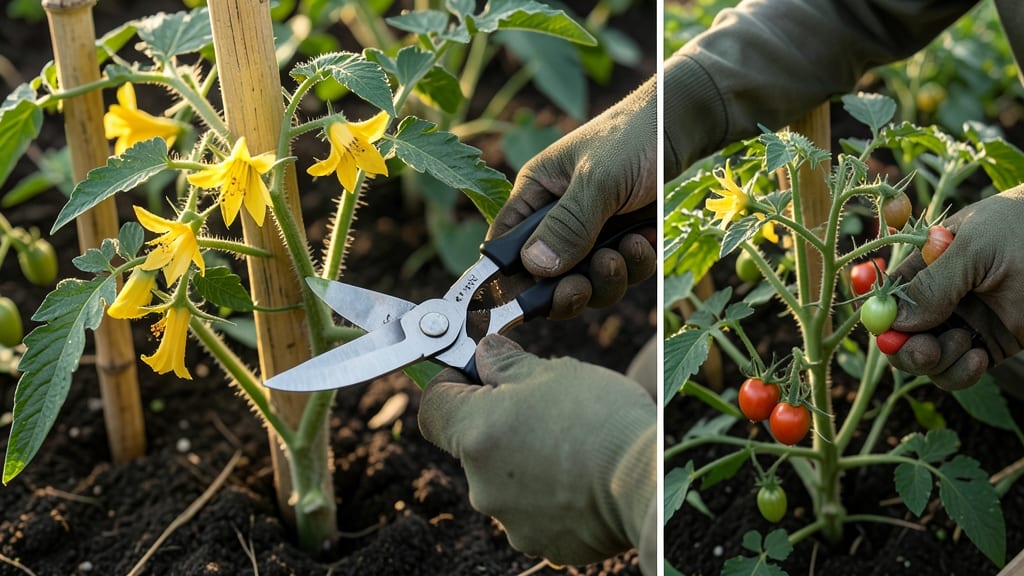
Topping indeterminate tomatoes isn’t just pruning—it’s the secret to bigger, healthier fruit and harvests that last until frost. 🌱 I learned the hard way that skipping this step means leggy plants, smaller tomatoes, and a season cut short.
The right cut redirects energy where it matters: into fruit, not just vines. You’ll need sharp pruners, clean gloves, and a sunny morning for the job. Look for the first flower cluster after the sixth or seventh leaf—that’s your stopping point.
A clean cut just above a leaf node prevents disease and encourages bushier growth below. After topping, give your plant a drink and watch for new shoots at the pruning site. These "suckers" are your next harvest boost—pinch them off unless you want extra vines.
Within weeks, you’ll see thicker stems and more clusters forming, with tomatoes ripening faster than ever. This works for cherry, beefsteak, and heirloom varieties alike. Just time it right: do it in early summer when plants are 18-24 inches tall, and repeat the process every 2-3 weeks for continuous production.
Your neighbors won’t believe the difference!
📚 In This Guide
- What you need
- Instructions
- Tips and common mistakes
- Wrapping up and next steps
What you need
- ● Indeterminate tomato seeds or seedlings: Choose heirloom or hybrid varieties like 'Sungold,' 'Brandywine,' or 'Sweet 100.' You’ll need 3–6 plants per 100 sq ft for a continuous harvest.
- ● High-quality potting mix: 1–2 cubic feet per plant (sterile, well-draining blend with compost or coconut coir). Avoid garden soil—it can harbor diseases!
- ● Containers or raised beds: 5-gallon pots or larger (minimum 12–18 inches deep for each plant).
- ● Raised beds (at least 6 inches deep) if planting in-ground.
- ● Slow-release fertilizer: 1–2 tbsp per plant (look for a balanced 10-10-10 or tomato-specific blend).
- ● Tomato cages or sturdy stakes: 6–8 ft tall to support vines (1 per plant).
- ● Pruning shears: Sharp, bypass-style for clean cuts (avoid dull blades—they crush stems!).
- ○ Mulch (optional but recommended): 2–3 inches of straw or shredded leaves to retain moisture and suppress weeds.
- ● Gloves: Heavy-duty gardening gloves to protect your hands from thorns and soil.
- ● Watering can or drip irrigation: 1–2 gallons capacity for deep watering (avoid overhead sprinklers to prevent disease).
- ● pH test kit: To ensure soil pH is 6.0–6.8 (tomatoes thrive in slightly acidic soil).
- ● Plant labels: Waterproof markers to track varieties and planting dates.
- ○ Shade cloth (optional): 30–50% coverage for seedlings if your climate gets too hot.
- ● Compost tea or liquid fertilizer: For a weekly boost during fruiting (follow package instructions).
- ● Last frost date: Know your USDA hardiness zone to time plantings (start seeds 6–8 weeks before the last frost).
- ● Sunlight: 6–8+ hours of direct sun daily (indeterminates are sun-hungry!).
- ● Succession planting schedule: Plan to stagger plantings every 2–3 weeks for a continuous harvest.
- ● Disease prevention: Rotate crops if reusing beds (avoid planting tomatoes in the same spot yearly).
How to top indeterminate tomatoes for continuous harvests
Here’s the simple method I use to keep my tomato plants producing all season long.
🌱 Step 1: Identify and Prepare the Main Stem
Indeterminate tomatoes grow continuously, so the goal is to encourage strong, productive branches rather than one long stem. Start by locating the main stem—the thickest, central vine. Use your fingers to gently feel for suckers (small shoots) that grow between the main stem and branches. These are your targets for topping.
Wait until the plant has at least 3-4 main branches before pruning. This ensures the plant has enough energy to support both growth and fruit production. If you prune too early, you risk stunting the plant’s ability to produce flowers and fruit. I always check plants in the morning when they’re fully hydrated—this makes suckers easier to spot.
✂️ Step 2: Prune Suckers Correctly
Use clean, sharp pruning shears or your fingers to pinch off suckers at their base. Never leave a stub—this prevents disease and encourages cleaner growth. Focus on removing suckers that are smaller than a pencil and growing below the first flower cluster. These are the ones that will compete with your main branches for energy.
Here’s the thing—don’t overdo it. I remove only 1-2 suckers per week to avoid shocking the plant. If you prune too aggressively, the plant may redirect all its energy into leaf growth instead of fruit production. Watch for new suckers forming and repeat the process every 7-10 days during the growing season.
☀️ Step 3: Encourage Strong Branches and Fruit
Once you’ve removed the suckers, focus on the remaining branches. These should be thick, sturdy, and spaced evenly along the main stem. If a branch is weak or growing toward the ground, gently tie it to the cage or trellis using soft plant ties. This keeps the plant upright and maximizes sunlight exposure.
After pruning, give the plant a light fertilizer (like a balanced 10-10-10) to support new growth. I also water deeply at the base to help the plant recover. You’ll notice new leaves and flowers forming within 7-10 days—this is your sign that the plant is thriving. Keep an eye out for yellowing leaves, which can signal over-pruning or nutrient deficiency.
⏰ Step 4: Monitor and Adjust Through the Season
As the season progresses, indeterminate tomatoes will keep growing and producing fruit. Continue checking for new suckers every 1-2 weeks and prune them promptly. The key is balance—you want enough branches to produce fruit but not so many that the plant becomes overcrowded or diseased.
Toward the end of the season, when temperatures drop below 50°F at night, the plant will slow down. This is the time to reduce pruning and let the plant focus on ripening existing fruit. Harvest tomatoes as soon as they turn color to encourage more production. With this method, I’ve kept my indeterminate tomatoes producing well into fall, even in cooler climates.
Tips & tricks for perfect tomato topping
Took me a while to figure these out, so here goes—these little details make all the difference with indeterminate tomato plants.
Timing Secret: The 7-10 day pruning window is your best friend. I've learned that new suckers grow fastest when temperatures are warm, so check plants every 5-7 days during hot spells. Early morning inspections work best because dew can hide suckers, but after the sun dries the leaves, they become much more visible. This consistency keeps your plant balanced without overstressing it.
Technique Tip: When pinching suckers, use your thumb and forefinger to create a clean break at the base. Leaving even a tiny stub can lead to disease or regrowth. I've ruined plants by leaving stubs—now I make sure to pinch all the way down to the main stem. For stubborn suckers, a sharp pair of pruning shears works better than fingers, especially on larger plants.
Growth Optimization: The 3-4 main branches rule is non-negotiable for first-time pruners. I've seen beginners remove too many branches early on, thinking more pruning equals more fruit. Actually, you need those initial branches to establish a strong framework. Wait until you see at least 3-4 sturdy branches before you start pruning suckers—this gives your plant the energy it needs to keep producing.
Seasonal Adjustment: That 50°F nighttime temperature is your cue to slow down. When nights drop below this, indeterminate tomatoes shift focus from growth to fruit ripening. I reduce pruning to just the essential suckers and focus on harvesting ripe tomatoes. This seasonal adjustment prevents wasted energy and ensures you get the most from your plants before frost.
Pro Tips for Topping Indeterminate Tomatoes
- Took me a while to figure these out, so here goes—these little details make all the difference with indeterminate tomato plants.
- Timing Secret: The 7-10 day pruning window is your best friend.
- Technique Tip: When pinching suckers, use your thumb and forefinger to create a clean break at the base.
Frequently asked questions
Got questions about topping indeterminate tomatoes?
You’re not alone! Here are answers to the most common queries to help you master succession planting and keep your harvest flowing.
When is the best time to top indeterminate tomatoes?
Top indeterminate tomatoes when they’re healthy and productive—usually after the first flush of fruit sets (around 6-8 weeks after transplanting). Avoid topping during heatwaves or when plants are stressed, as they need energy to recover. Late summer (before the first frost) is ideal for a final trim to redirect resources to ripening fruit.
How much can I cut off when topping?
Remove 1/3 to 1/2 of the top growth in one session, focusing on the suckers (side shoots) and the terminal bud (the topmost growth point). Use sharp pruners or your fingers—no need to go overboard! Repeat every 2-3 weeks during the growing season to maintain balance and encourage bushier growth.
Will topping delay my harvest?
Not if done correctly! Topping stimulates more flowers and fruit later in the season, but it won’t speed up existing fruit. Think of it like pruning a hedge—you’re shaping the plant for a longer, more abundant harvest. Just avoid heavy topping too early, or you might sacrifice early yields.
What if I skip topping—will my tomatoes still grow?
Yes! Indeterminate tomatoes will grow without topping, but they’ll become taller, leggier, and less productive. You’ll get fewer fruit clusters, and the plant may struggle to support its own weight. Topping keeps them compact, stronger, and more efficient at producing fruit—worth the effort for a better harvest!
Can I use topping to extend the season?
Topping in late summer (6-8 weeks before frost) helps redirect energy to ripening existing fruit while encouraging new growth. Pair this with succession planting (adding new seedlings every 2-3 weeks) to keep tomatoes producing until first frost. Just protect young plants with row covers if nights get chilly!
Wrapping up and next steps
Growing indeterminate tomatoes with succession planting is your ticket to a never-ending harvest—fresh, juicy, and full of flavor! By spacing out your plantings and following the right techniques, you’ll enjoy tomatoes from early summer well into fall, even in cooler climates.
This method isn’t just rewarding; it’s game-changing for home gardeners who love a bountiful table.
Ready to take the next step? Start small—try planting one new batch every 2-3 weeks—and watch your garden transform into a tomato powerhouse. Happy growing, and may your vine be ever fruitful! 🍅✨