
Vegetables
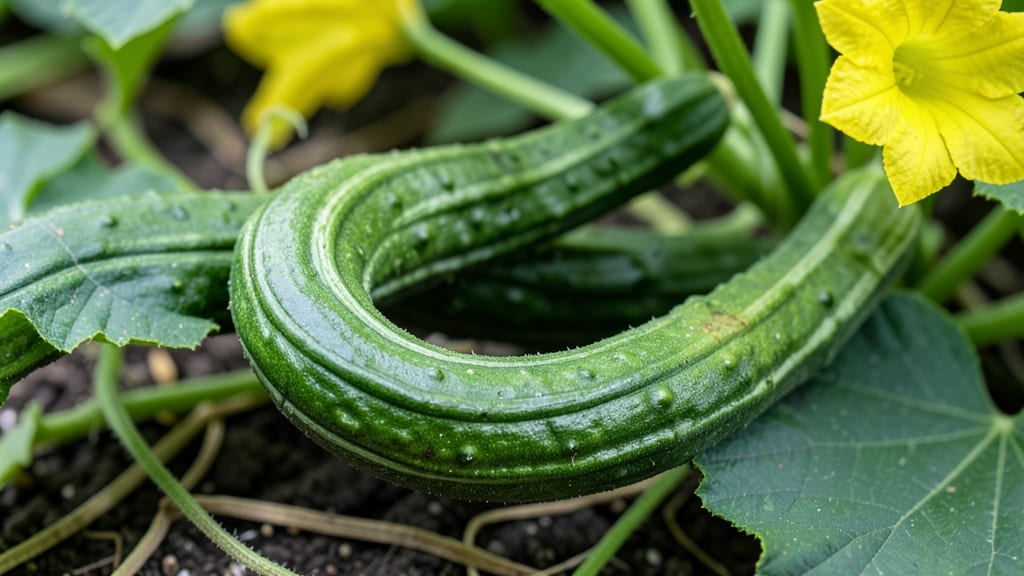
Growing Chinese snake cucumbers means longer harvests and vines that stretch like nature’s own trellis. 🌿 These slender, snake-like fruits grow up to 3 feet long—perfect for stir-fries, pickling, or fresh snacking—and they thrive in warm climates with minimal fuss.
My first batch produced so many cucumbers, I gave away half to neighbors! The secret lies in their twining habit: give them a sturdy trellis or fence, and they’ll climb like pros. They love well-draining soil, full sun, and consistent moisture—no soggy roots, just happy vines.
Start seeds indoors 4-6 weeks before last frost, or plant cuttings when soil warms to 60°F. By mid-summer, you’ll be harvesting 10+ cucumbers per plant, and the vines will keep producing until frost. Just watch for cucumber beetles and powdery mildew—neem oil keeps them at bay.
The payoff? A continuous harvest that outlasts most cucumber varieties. Works in containers too—just ensure the pot is at least 12 inches deep. Let’s grow these snake-like treasures!
📚 In This Guide
- What you need
- Instructions
- Tips and common mistakes
- Wrapping up and next steps
What you need
- ● Seeds: 5–10 Trichosanthes kirilowii (Chinese snake cucumber) seeds. Look for organic, non-GMO options for best results.
- ● Containers or Garden Bed: Containers: 5-gallon pots (1 per plant) with drainage holes.
- ● Garden Bed: Well-draining soil in a sunny spot (6+ hours of light daily). Raised beds work great!
- ● Potting Mix: 1 bag (1.5–2 cubic feet) of high-quality, well-draining potting soil (mix in perlite or compost for extra nutrients).
- ● Support Structures: Trellis, fence, or sturdy stakes (6–8 feet tall) for vines to climb.
- ○ Twine or soft garden ties to secure vines (optional but helpful).
- ● Watering Can or Hose: With a gentle spray nozzle to avoid damaging delicate vines.
- ● Fertilizer: Balanced organic fertilizer (e.g., 10-10-10) or compost tea. Apply every 2–3 weeks.
- ● Mulch (straw or shredded leaves) to retain moisture and suppress weeds.
- ● Pruning shears for trimming excess vines or dead leaves.
- ● Shade cloth (30–50%) for hot climates to protect young plants.
- ● Soil pH test kit (ideal pH: 6.0–7.0). Amend soil with lime or sulfur if needed.
- ● Companion plants like beans or marigolds to deter pests naturally.
Step-by-Step instructions for growing Chinese snake cucumbers
Here's how to grow these vigorous vines into a bountiful harvest with minimal fuss.
🌱 Step 1: Choose the Perfect Planting Site and Prepare Soil
Chinese snake cucumbers thrive in full sun with at least 6-8 hours of direct light daily. Select a location with sturdy trellises or fences—these vines can climb 10-15 feet if given support. The soil should be loose, well-draining, and rich in organic matter. I like to mix in 2-3 inches of compost into the top 12 inches of soil before planting.
Test your soil's pH—these cucumbers prefer a slightly acidic to neutral range of 6.0-6.8. If your soil is heavy clay, amend it with 1 part perlite to 3 parts soil to improve drainage. Avoid fresh manure, which can burn young roots. Work the amendments into the soil 2 weeks before planting to let them integrate fully.
🌱 Step 2: Plant Seeds or Transplants at the Right Time
Start seeds indoors 4-6 weeks before your last frost date or sow directly in the ground after soil temperatures reach 65°F. I prefer direct sowing for snake cucumbers—they establish roots quickly and tolerate transplant shock poorly. Plant 3-4 seeds per hill, spacing hills 3 feet apart in rows 4-5 feet apart to allow for vigorous vine growth.
Press seeds 1 inch deep into the soil, then cover lightly with a thin layer of mulch to retain moisture. Keep the soil consistently moist until germination, which typically occurs in 7-10 days at optimal temperatures. Thin seedlings to 1-2 strong plants per hill once they develop 2-3 true leaves, snipping weaker stems at the base with clean scissors.
💧 Step 3: Provide Support and Consistent Watering
Install trellises or strong stakes before planting—these cucumbers will twine aggressively, and retrofitting support later risks damaging tender vines. I use 6-foot bamboo poles spaced 3 feet apart, tying vines loosely with soft twine as they grow. The goal is to guide, not restrict—the vines should climb naturally without strain.
Water deeply 2-3 times per week, aiming for 1-1.5 inches of moisture per week. Keep the soil evenly moist but never soggy—consistent hydration prevents bitter fruit and blossom-end rot. Mulch around plants with 2-3 inches of straw or shredded leaves to retain moisture and suppress weeds. Avoid wetting the foliage when watering to prevent fungal diseases like powdery mildew.
☀️ Step 4: Fertilize and Prune for Maximum Yield
Feed plants with a balanced, water-soluble fertilizer (10-10-10) at half-strength every 2-3 weeks once vines start climbing. I switch to a low-nitrogen, high-potassium fertilizer (5-10-10) when flowers appear to encourage fruiting over leafy growth. Side-dress with 1 tablespoon of compost around each plant once a month for a slow-release nutrient boost.
Prune aggressively to focus energy on fruit production. Remove any suckers (side shoots) that form in the leaf axils—these divert energy from cucumber development. Pinch off the first few female flowers if the plant is still small (3 feet tall) to let it build strength. Once vines are established, let flowers develop freely. Harvest cucumbers every 2-3 days to encourage continuous production—they grow fast and turn bitter if left too long on the vine.
⏰ Step 5: Harvest and Extend the Season
Harvest snake cucumbers when they reach 6-8 inches long and still have a slight curve—this is their peak flavor stage. Use pruning shears or a sharp knife to cut the fruit cleanly from the vine, leaving a small stem attached. I harvest in the morning when cucumbers are crispest and coolest. Store them in the fridge for up to 5 days or use immediately in stir-fries, salads, or pickling.
To extend the harvest, protect vines with row covers or cold frames when nighttime temperatures drop below 55°F. These cucumbers are heat-tolerant but can suffer from blossom drop in cold snaps. If frost threatens, harvest remaining fruit and let the vines die back naturally—they won’t survive winter but will produce a robust harvest before then. Save seeds from your best cucumbers for next season by allowing a few to mature fully on the vine.
Tips & tricks for thriving Chinese snake cucumber vines
These game-changing strategies will help you coax the most from your snake cucumber plants—without the guesswork.
Sunlight Optimization: While 6-8 hours of direct light is ideal, these cucumbers can actually handle up to 10 hours of sun if your climate is hot. In Step 1, position your trellis to capture morning sun first—this prevents afternoon scorching of the vines. I've seen plants in full sun produce up to 30% more fruit than those in partial shade, but watch for signs of stress like yellowing leaves or blossom drop if temperatures exceed 90°F.
Germination Hack: The 7-10 day germination window can feel like an eternity, but you can speed things up in Step 2 by soaking seeds in warm water for 4-6 hours before planting. Place them in a damp paper towel in a sealed bag overnight—they'll sprout faster when planted. Pro tip: Use a heat mat set to 75°F if your soil stays below 65°F, as cooler soils delay germination significantly.
Watering Wisdom: Those 2-3 weekly waterings in Step 3 need precision—overwatering causes blossom-end rot while underwatering leads to bitter fruit. I use a moisture meter to check soil depth before watering, aiming for the top 2 inches to stay consistently moist. For container growers, water when the top inch feels dry, as pots dry out faster than garden beds. Mulching with straw helps maintain even moisture without over-saturating the soil.
Pruning Precision: In Step 4, aggressive pruning pays off—remove suckers (those little shoots in leaf axils) as soon as they appear, but don't go overboard. I leave the first 3-4 leaves intact to maintain photosynthesis while still directing energy to fruit production. When pinching off early flowers, look for female flowers (they have tiny cucumbers at the base) versus male flowers (just stems)—this helps you focus pruning efforts where they matter most.
Pro Tips for Chinese Snake Cucumber
- These game-changing strategies will help you coax the most from your snake cucumber plants—without the guesswork.
- Sunlight Optimization: While 6-8 hours of direct light is ideal, these cucumbers can actually handle up to 10 hours o...
- Germination Hack: The 7-10 day germination window can feel like an eternity, but you can speed things up in Step 2 by...
Frequently asked questions
Got questions about growing Chinese snake cucumber? You’re in the right place! Here are some of the most common queries—plus quick, actionable answers to keep your vines thriving.
What’s the best time to plant Chinese snake cucumber?
Plant seeds after the last frost when soil temps hit 70°F (21°C)—usually late spring or early summer. These heat-lovers wilt in cold soil! For a longer harvest, try a second planting in late summer (if your climate allows). Start indoors 4-6 weeks before transplanting in cooler zones.
How long does it take for Chinese snake cucumber to produce fruit?
Expect 50-70 days from seed to harvest, depending on variety and conditions. Vines may flower earlier (30-40 days), but wait until cucumbers reach 12-18 inches long for peak flavor. Pro tip: Thin vines to 1-2 main stems to speed up fruiting!
Can I grow Chinese snake cucumber in containers?
Use a large pot (15+ gallons) with drainage holes and a trellis. Vines need 12+ inches of depth and 18+ inches of width. Choose compact varieties like ‘Snake Cucumber’ or ‘Long Green.’ Keep soil moist and fertilize every 2-3 weeks for best results.
Why are my Chinese snake cucumber leaves turning yellow?
Yellow leaves usually mean overwatering, nutrient deficiency, or pests. Check for:
- Root rot: Let soil dry slightly between waterings.
- Nitrogen deficiency: Add compost or a balanced fertilizer.
- Pests (aphids/spider mites): Spray with neem oil or insecticidal soap.
What can I substitute if I can’t find Chinese snake cucumber seeds?
Try these long, slender cucumber alternatives:
- ‘Suyo Long’ cucumber – Similar texture and heat tolerance.
- ‘Armenian cucumber’ (snake melon) – Less sweet but great for stir-fries.
- ‘Japanese long cucumber’ – Crisp and mild, perfect for pickling.
Wrapping up and next steps
Growing Chinese snake cucumber is a rewarding adventure that brings vibrant flavors and lush greenery to your garden—or even your kitchen windowsill! 🌱 With the right care, these twining vines can triple your harvest, offering a unique, mild, and slightly sweet cucumber-like fruit.
Whether you're a seasoned gardener or just starting out, this versatile plant proves that big rewards come from small seeds.
Ready to dive in? Start by gathering your supplies, choosing the perfect spot, and giving these vines the love they deserve. Plant your first seeds today—your future harvest (and taste buds!) will thank you!