
Light Requirements
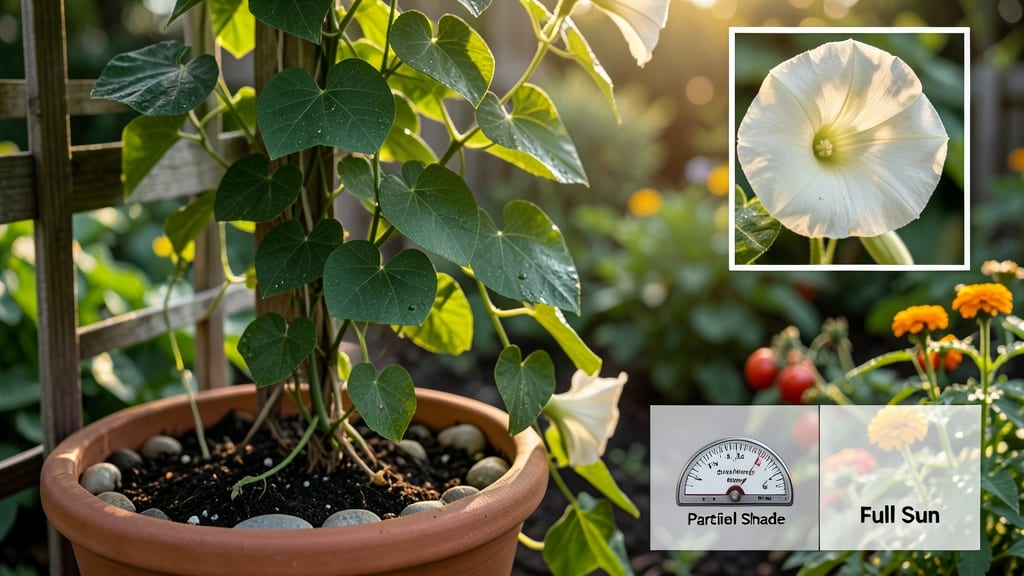
Moonflowers do need full sun—but not the way you might expect. These nocturnal bloomers thrive with 6 hours of bright, indirect light rather than harsh afternoon rays, unlocking their night-blooming magic 🌙.
If you’ve ever planted moonflowers expecting bold daytime blooms, only to watch them struggle in harsh afternoon rays, you’re not alone. These vines actually prefer a gentler touch—too much direct sun weakens their delicate stems and can scorch leaves before their evening show even begins.
In USDA Zone 6a, where I grow mine, morning sun paired with afternoon shade mimics their natural habitat in tropical forests. The key is avoiding the midday heat, which can stress the plant just as it’s gearing up for its nocturnal performance.
Below, I’ll break down exactly how to position your moonflowers—whether in garden beds, containers, or trellises—to maximize those dreamy nighttime blooms while keeping stems strong and leaves lush.

Moonflower sunlight requirements: full sun vs. partial shade breakdown
Moonflowers (Ipomoea alba) thrive under specific light conditions, but many gardeners debate whether they truly need full sun or can adapt to partial shade. The truth lies in a balance—these vines need enough daylight for strong stems and abundant blooms, but too much intensity can stress them in hot climates. Let’s break down the science behind their sunlight needs and how to optimize growth based on your location.
Moonflowers are native to tropical regions where they experience bright, indirect light with afternoon shade. This means they can tolerate partial shade (4–6 hours of direct sun daily) but perform best with 6–8 hours of sunlight in cooler climates.
The key is avoiding intense midday sun in areas with high temperatures, which can scorch leaves and reduce flowering.
Here’s the critical trade-off: Full sun fuels faster vine growth and more blooms, but it also increases water needs and risk of leaf burn. Partial shade protects delicate foliage but may result in leggier vines and fewer flowers.
Your goal is to mimic their natural habitat—bright, filtered light—while accounting for your local climate.
🌱
In hot climates (Zones 8–10), moonflowers often perform better with morning sun and afternoon shade. This protects their large leaves from heat stress while still providing enough energy for photosynthesis.
For example, in Southern California, I’ve seen moonflowers thrive when planted near a west-facing fence that blocks the harsh afternoon rays.
If you’re growing moonflowers in containers, prioritize east or south-facing locations where they can receive 4–6 hours of morning sun. Containers dry out faster, so partial shade helps retain moisture.
In cooler climates (Zones 3–6), full sun is ideal, but provide afternoon shade if temperatures exceed 85°F (29°C) to prevent leaf scorch.
One common mistake is assuming more sun = better blooms. While moonflowers need light for photosynthesis, excessive heat can actually reduce flower production by diverting energy toward leaf protection. The sweet spot is 6–8 hours of bright, indirect light, especially in regions with intense summer sun.
To test your moonflower’s light needs, observe its leaves and vines. Healthy growth includes glossy green leaves and vines that climb steadily. If leaves turn yellow or brown, it’s a sign of too much sun or heat. Conversely, pale, sparse leaves indicate insufficient light for photosynthesis.
For gardeners in urban areas with limited space, consider training moonflowers on a trellis near a south-facing window. This provides filtered sunlight while maximizing vertical growth. Pair them with fast-growing companions like morning glories or sweet peas to create a living shade screen that mimics their natural habitat.
🌿
Remember, moonflowers are annuals in most climates, so their sunlight needs are urgent during their 60–90-day growing season. Start seeds indoors in cool climates to give them a head start, then transplant to a sunny, sheltered spot after the last frost.
With the right light balance, you’ll reward yourself with dramatic nighttime blooms that last from July to frost.
How much shade is too much? Signs your moonflowers aren’t getting enough light
Moonflowers (Ipomoea alba) thrive with 6+ hours of direct sunlight daily, but too much shade can stunt their growth and reduce those magical nighttime blooms. If your vines look weak or flowers are sparse, your plants might be crying out for more light.
Understanding the subtle signs of sunlight deficiency is key to reviving your moonflowers before it’s too late.
In regions with hot summers, like the desert Southwest, afternoon shade can be beneficial, but morning sun is non-negotiable. Meanwhile, coastal gardens with mild, foggy climates often need supplemental light to prevent leggy, weak stems. Let’s diagnose the problem and find solutions tailored to your microclimate.
Moonflowers in Low Light: The Silent Growth Killer
Moonflowers NEED full sun—6+ hours daily—to produce energy for nighttime blooms. Without enough light, they’ll show these red flags:
- Limp, stretched vines (reaching for light)
- Pale, yellowing leaves (chlorosis from weak photosynthesis)
- No flowers or buds (energy diverted to survival, not blooms)
- Slow, stunted growth (less than 6 inches per week)
Action: Move plants to a sunnier spot immediately—even partial shade (3+ hours sun) can cause these issues. If relocating isn’t possible, use a reflective surface (like white walls) to bounce extra light onto the vines.
Start by observing your moonflowers’ growth patterns over a week. If vines grow toward one direction (phototropism), they’re clearly seeking more light. In coastal areas, morning sun between 8 AM–12 PM is critical, while desert gardens benefit from dappled shade in the afternoon to prevent heat stress.
Adjust trellis placement to maximize sun exposure without scorching leaves.
Seasonal changes also play a role. In summer, your moonflowers might thrive in morning sun + afternoon shade, but winter months often require full sun exposure to compensate for shorter daylight hours.
If you notice fewer blooms in winter, consider supplementing with a grow light for 4–6 hours daily to maintain their energy reserves.
For container-grown moonflowers, rotate pots weekly to ensure even light exposure on all sides.
If your balcony or patio only gets 3–4 hours of sun, choose dwarf varieties like Ipomoea alba ‘Moonlight’ or pair with fast-growing companions like morning glories (Ipomoea purpurea) to share the limited light.
Remember, moonflowers are fast growers—if they’re struggling, act quickly. Even a small increase in sunlight (from 3 to 5 hours) can transform their health and bloom production. Test different spots in your garden, and don’t hesitate to prune leggy vines to encourage bushier, stronger growth in sunnier conditions.