
Trees
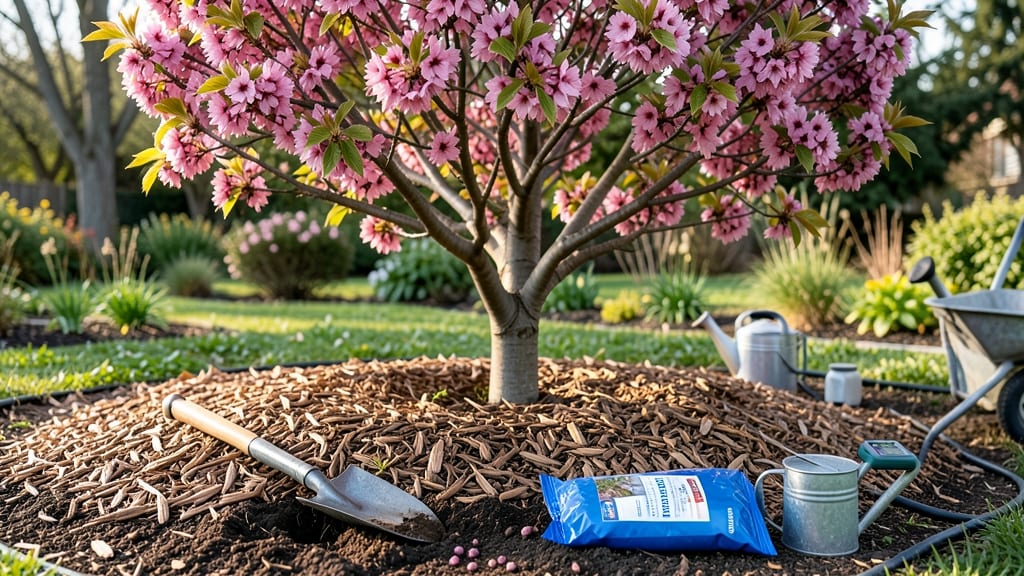
The right flowering cherry tree fertilizer is the key to keeping those showstopping spring blooms coming back year after year.
Struggling to keep your flowering cherry tree blooming as beautifully as it did when you first planted it? The secret lies in feeding it the right fertilizer—one that mimics its natural, acidic soil preferences.
Most gardeners overlook the fact that these trees thrive in slightly acidic soil, which means generic fertilizers can actually do more harm than good by throwing off the pH balance.
In this guide, I’ll walk you through the best organic and synthetic fertilizers for your flowering cherry tree, the perfect timing for feeding, and how to spot when your tree is either starving or getting too much.

Best acid-loving fertilizers for flowering cherry tree blooms
Your flowering cherry tree thrives when given the right nutrients, especially since it loves acidic soil with a pH between 5.0 and 6.5. Without the proper acid-loving fertilizer, you might see fewer blooms or weak growth.
The key is choosing a fertilizer with the right NPK ratio—one that supports both root development and vibrant blossoms—while ensuring micronutrients like magnesium and iron are included.
Most flowering cherry trees benefit from a balanced fertilizer with equal parts nitrogen, phosphorus, and potassium (like a 10-10-10 blend), but organic options can also work wonders.
The best fertilizers for your tree will not only provide essential nutrients but also help maintain that acidic soil environment your cherry tree craves. Let’s break down your top options, from organic to synthetic, so you can pick the perfect one for your tree’s needs.
⚠️ CRITICAL NOTE: Avoid high-nitrogen fertilizers (like 30-0-0 lawn foods) that can burn roots and reduce blooms. Your goal is to support flower production, not just leafy growth.
For organic gardeners, fish emulsion and cottonseed meal are my top picks. Fish emulsion provides a quick nitrogen boost, while cottonseed meal slowly releases nutrients and lowers soil pH naturally. Both are perfect for spring feeding when your tree is gearing up for bloom time.
If you prefer synthetic options, look for acid-loving tree foods labeled for azaleas or camellias—they’re formulated for the same pH range.
Don’t overlook micronutrients like iron and magnesium. Many flowering cherry trees develop yellowing leaves (a sign of iron deficiency) if these aren’t included. A chelated iron supplement can work wonders if you spot this issue.
Always pair your fertilizer with a 2-3 inch layer of mulch (like pine bark) to lock in moisture and maintain acidic conditions.
Pro Tip: Test your soil’s pH before fertilizing. If it’s already below 5.0, stick to organic amendments like sulfur or composted pine bark to avoid over-acidifying. A simple home pH test kit (available at garden centers) makes this easy!
When applying fertilizer, focus on the root zone—about 6-12 inches out from the trunk. Avoid piling fertilizer directly against the trunk, as this can cause root burn.
Water thoroughly after application to help nutrients penetrate the soil. For liquid fertilizers, dilute as directed and apply during evening watering to reduce leaf burn.
If your tree is younger than 3 years old
Step-by-step guide to fertilizing your cherry tree for maximum blooms
Your flowering cherry tree’s stunning spring blooms depend on precise fertilization timing and the right nutrients. Unlike many trees, cherry trees thrive in acidic soil with a balanced NPK ratio (like 10-10-10).
Over-fertilizing can burn roots, while under-fertilizing leads to sparse flowers. The key is feeding at the right growth stages—before buds form and after blooming ends.
Start with a soil test to confirm pH (ideal: 5.5–6.5). If your soil is alkaline, amend it with sulfur or peat moss before applying fertilizer.
For established trees, focus on seasonal feeding: a light dose in early spring to kickstart growth, followed by a stronger feed after blooms fade. Young trees need more frequent feeding to build roots.
✅ Step-by-Step Fertilizer Application
-
Step 1: Choose Your Fertilizer
- Granular: Slow-release (e.g., 10-10-10 or acid-loving blends like Miracle-Gro Azalea, Camellia & Rhododendron).
- Liquid: Fast-acting (e.g., fish emulsion or seaweed extract for micronutrients).
-
Step 2: Apply in Early Spring (March–April)
- Spread ½ cup granular (per 1-inch trunk diameter) or dilute liquid fertilizer per label.
- Work into top 2–3 inches of soil within the drip line (not the trunk).
-
Step 3: Feed After Blooming (June–July)
- Use half the spring dose to avoid late-season growth (vulnerable to frost).
- Add compost or aged manure for organic matter.
-
Step 4: Mulch & Water
- Apply 2–3 inches of mulch (pine bark or wood chips) to retain moisture and acidity.
- Water deeply (10–20 gallons) to activate nutrients.
-
Step 5: Skip Fall/Winter Feeding
- Avoid fertilizing 6 weeks before first frost to prevent tender new growth.
- Focus on watering lightly in winter if drought occurs.
For young trees (under 3 years), double the spring dose and feed every 6 weeks until established. Mature trees only need 2–3 feedings per year. Always water before applying granular fertilizer to prevent root burn.
If your tree’s leaves turn yellow between veins, it’s a sign of iron deficiency—switch to a chelated iron fertilizer.
Pro tip: Pair fertilization with pruning in late winter to remove dead wood and improve air circulation. This combo ensures your cherry tree puts energy into vibrant blooms next spring, not just foliage. With consistent care, you’ll see 20–30% more flowers in just one season!
🌸 Remember: Less is more—cherry trees store nutrients efficiently. Over-fertilizing wastes money and harms the tree. Stick to the schedule, and your tree will reward you with show-stopping blossoms year after year.