
Blooming
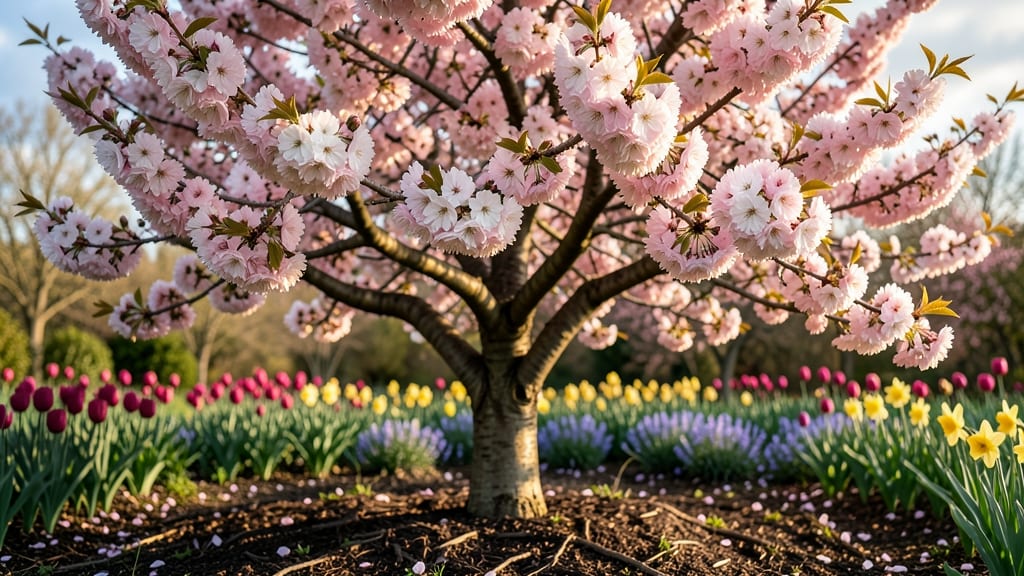
Cherry trees flower in late spring, typically between March and May, when the air turns crisp and the buds swell with promise 🍒.
If you’ve ever wondered exactly when your cherry tree will burst into bloom, the answer isn’t just about the calendar—it’s about last winter’s chill hours, your local climate, and even the tree’s variety.
Ornamental cherries like the Kwanzan often bloom first, their pink clouds signaling spring’s arrival, while tart cherries may wait until mid-April. Sweet cherries? They’re usually the last to show off, sometimes as late as May.
Below, I’ll break down the exact months by zone, plus the key signs your tree is ready to flower—so you can plan your garden (and your patience) like a pro.
Cherry tree flowering timeline by USDA climate zones
Timing cherry blossoms is like predicting the first snowfall—it varies by location, variety, and even last winter’s chill hours. Ornamental cherry trees like Yoshino or Kwanzan often bloom earlier than fruit-bearing varieties, while tart cherries (Prunus cerasus) may wait until late spring.
Your USDA zone determines the exact window, with Zone 9 trees flowering weeks before Zone 5 counterparts.
Understanding these patterns helps you plan pruning, protect blossoms from frost, and even predict fruit harvests. For example, early bloomers in Zone 7 might flower in mid-March, while late bloomers in Zone 5 could wait until late April.
Let’s break down the exact months for each zone and variety to help you anticipate that magical bloom time.
🌱 Key Tip: Most cherry trees need 500–1,000 chill hours (temperatures between 32°F–45°F) to flower. If your winters are too mild (like in Zone 9), you may need dormant-season sprays or chill-hour supplements to trigger blooms.
If you’re in Zone 9, you might see Yoshino cherry blossoms as early as mid-February, while Zone 5 gardeners should mark their calendars for late April to avoid frost damage. Sweet cherries like Bing or Lapins typically bloom 2–3 weeks after ornamental varieties, giving you a longer window to protect them from late frosts.
🌿 Pro Tip: Plant early bloomers near late bloomers to extend your blossom season. For example, pair Kwanzan cherry (early) with Montmorency tart cherry (late) for a 6-week display. Just ensure they’re 15–20 feet apart to avoid cross-pollination issues with fruit varieties.
Urban gardeners in Zone 7 or warmer may notice their trees bloom 1–2 weeks earlier than rural counterparts due to the urban heat island effect.
If your tree flowers unusually early, it might be a sign of insufficient chill hours—consider moving it to a cooler microclimate or using shade cloth in summer to reduce stress
How climate and tree variety affect flowering timing
Your cherry tree’s blooming schedule isn’t set in stone—it’s a delicate dance between chill hours, heat tolerance, and even your local microclimate.
For example, a Yoshino cherry in Zone 6 might burst into pink in early April, while the same tree in Zone 9 could wait until late February. These differences come down to how much winter cold your tree needs to "wake up" from dormancy.
Urban gardeners often face unique challenges too. Heat islands in cities can push blooms earlier by 1-2 weeks compared to rural areas, while pollution might stress trees and delay flowering.
Even the soil type plays a role—sandy soil warms faster in spring, potentially speeding up bloom time for heat-loving varieties like Stella Pink cherries.
If you’re planting in Zone 7 or warmer, choose low-chill varieties like Black Tartarian cherries, which thrive with just 400-500 chill hours. In contrast, Zone 4 gardeners should opt for high-chill varieties like Montmorency to ensure reliable blooming.
Always check the USDA zone map and your local microclimate—even a 1-mile difference can shift bloom times by a week.
Pro tip: Track your tree’s bud swell in late winter. When buds look like tiny green peanuts, blooms are just 2-3 weeks away. In urban areas, set up a bud monitoring station near your tree to compare with rural neighbors—you’ll spot those heat island effects firsthand!
Remember, frost risk is your biggest enemy. Plant late-blooming varieties (like Stella Pink) in cooler climates to avoid frost damage to blossoms. And if you’re in a warmer zone, consider fall-planted trees—they often establish roots faster and bloom more reliably the following spring.
🌳