
Vegetables
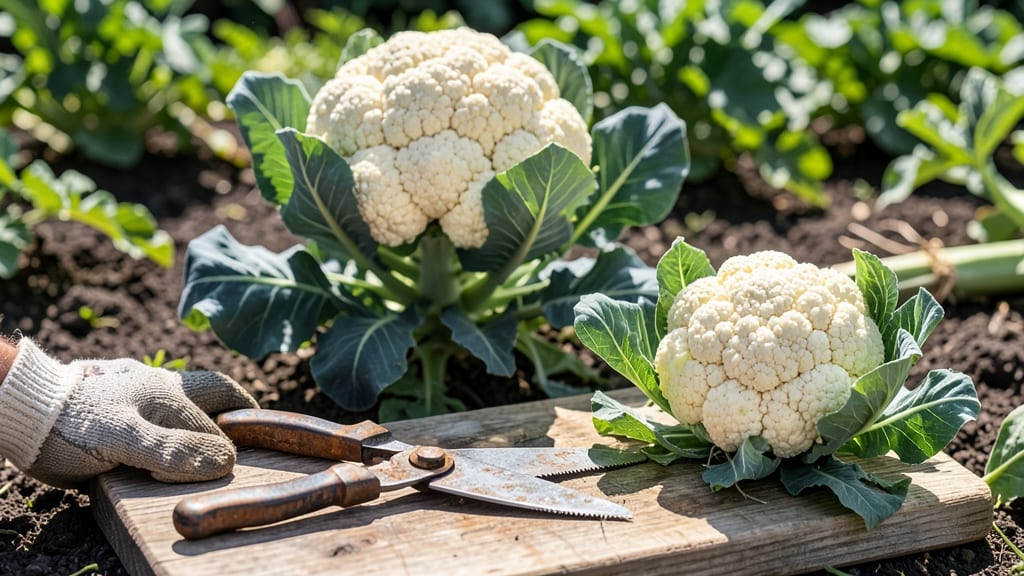
Cutting cauliflower at the perfect moment means the difference between a tender, snow-white head and a tough, yellowing mess. 🌱 The key is timing—harvest when the curd is firm but still compact, before it starts to open and turn yellow.
I’ve learned the hard way that waiting too long means bitter, stringy florets that no one wants to eat.
You’ll need just a few simple tools: a sharp chef’s knife or pruning shears, and a clean cutting board. The goal is to remove the entire head cleanly, about 1-2 inches below the base where the stem meets the plant.
This leaves the stem intact, allowing the plant to produce a second (or even third!) harvest in 6-8 weeks if you’re growing a variety like ‘Snowball Y Improved.’
For the best results, cut the main head first, then watch for smaller side shoots—these "curds" form along the stem and can be harvested the same way. Once cut, store cauliflower in the fridge for up to 5 days or blanch and freeze for long-term use.
The secret to a productive plant? Never cut into the stem itself—always harvest at the base to keep the plant healthy.
Common mistakes include harvesting too late (when florets start to separate) or using dull tools that crush the delicate heads. If you’ve ever bitten into a cauliflower that’s gone past its prime, you’ll know why timing and technique matter.
With practice, you’ll master the art of cutting cauliflower like a pro—no more tough, bitter surprises!
📚 In This Guide
- What you need
- Instructions
- Tips and common mistakes
- Wrapping up and next steps
What you need
- ● 1 medium to large head of cauliflower – Choose a fresh, firm one with tightly packed florets (about 1.5 to 2.5 lbs for most recipes).
- ● Sharp chef’s knife (8-10 inches) – A dull knife makes cutting harder and less safe. Pro tip: A serrated knife works great for stems!
- ● Cutting board (wood, plastic, or bamboo) – A stable, non-slip surface prevents accidents. Avoid glass if you’re a beginner!
- ● Kitchen towel or damp cloth – Keeps the cutting board from sliding while you work.
- ● Mixing bowl (medium size) – For rinsing or storing cut pieces.
- ● Vegetable peeler – For creating cauliflower ribbons or shaving the stem.
- ● Mandoline slicer (with guard) – If you love uniform slices for roasting or stir-fries.
- ● Spray bottle with water – Keeps florets from sticking if you’re cutting wet-style (like for coleslaw).
- ○ Glove (optional) – Some people prefer a grip for handling slippery stems.
Step-by-step guide to cutting cauliflower like a pro
Here's how I break down the process—whether you're prepping florets, stems, or ribbons.
🌿 Step 1: Prep the Whole Head
Start by rinsing the cauliflower under cool water to remove any dirt or debris stuck between the florets. Pat it dry with a clean kitchen towel or paper towels—damp cauliflower slips when cutting. Hold the head firmly with one hand and use a sharp chef's knife to trim off any tough outer leaves or stems still attached at the base.
I like to cut the stem end off first, about 1 inch down from the base, to create a flat surface. This makes it easier to stabilize the head while cutting. If the florets are tightly packed, you can also cut the head in half lengthwise for easier access to the inner florets.
✂️ Step 2: Separate the Florets
Gently pull apart the outer florets by hand—they should separate cleanly if the cauliflower is fresh. For stubborn florets, use your knife to carefully cut between them, angling the blade slightly downward to avoid slicing into the floret itself. Work your way from the outside toward the center, keeping florets whole and intact.
Save the smaller florets for salads or stir-fries—they’re just as flavorful! If you see any discolored or wilted florets, trim them off completely. The goal is to end up with 4-6 large florets for roasting or steaming, depending on the head size.
🌱 Step 3: Cut Stems and Ribbons (If Needed)
For the thick stem, slice it into ½-inch thick rounds or cut lengthwise into strips for stir-fries. If you’re making cauliflower ribbons, trim the stem into a flat rectangle and use a mandoline or sharp knife to shave off thin, even strips. Hold the knife at a 45-degree angle for wider ribbons or straight up for delicate strands.
Here’s the thing—don’t overlook the stem! It’s packed with flavor and often gets tossed. For extra prep, you can also peel the outer layer of the stem with a vegetable peeler to remove any tough fibers before cutting.
💧 Step 4: Store or Cook Immediately
If you’re not cooking right away, store the florets and stems in an airtight container lined with a paper towel to absorb moisture. They’ll keep fresh in the fridge for 3-4 days. For longer storage, wrap the whole head in plastic and freeze it—just thaw and cut as needed.
I always give florets a quick rinse again before cooking to remove any residual dirt from cutting. Whether you’re roasting, steaming, or sautéing, proper prep makes all the difference in texture and taste.
Tips & tricks for perfect cauliflower prep
Here's what nobody tells you about cutting cauliflower that'll save you time and frustration.
Knife Choice Matters: A sharp chef's knife is non-negotiable for clean cuts. I've ruined perfectly good cauliflower with a dull blade that crushes florets instead of slicing through them. For ribbons, a mandoline with a thin blade setting gives you the most precise results. If you don't have one, use a sharp knife and hold it at a consistent 45-degree angle—this is the secret to those restaurant-style ribbons.
Stabilization Secret: The 1-inch stem cut in Step 1 isn't just about creating a flat surface—it's about safety. A properly stabilized head won't slip while you're cutting, especially when you're working with the outer florets. For extra security, place the head on a cutting board and press down firmly with your non-dominant hand. This technique gives you the confidence to make clean cuts without worrying about the florets shifting.
Floret Size Strategy: When aiming for 4-6 large florets, think about your end use. For roasting, slightly larger florets (about 2-3 inches across) create a better caramelized crust. For steaming or stir-fries, smaller florets (1-2 inches) cook more evenly. The key is consistency—try to make all your florets roughly the same size so they cook uniformly. I like to save the smallest florets for salads where their delicate texture works perfectly.
Stem Upgrade: Don't toss that stem! It's packed with flavor and can be transformed into delicious additions. For stir-fries, cut it into ½-inch thick rounds—they'll hold up perfectly to quick cooking. For soups or stews, peel the tough outer layer with a vegetable peeler first, then chop finely. The peeled stem has a texture similar to potatoes, making it a great substitute in many recipes. I keep a small bowl nearby while cutting to collect all the stems—I always find a use for them.
Pro Tips for How Do You Cut Cauliflower
- Here's what nobody tells you about cutting cauliflower that'll save you time and frustration.
- Knife Choice Matters: A sharp chef's knife is non-negotiable for clean cuts.
- Stabilization Secret: The 1-inch stem cut in Step 1 isn't just about creating a flat surface—it's about safety.
Frequently asked questions
Got questions about cutting cauliflower? You’re not alone! Whether you're prepping it for roasting, stir-fries, or salads, here are answers to the most common queries to help you master the art of cauliflower prep like a pro.
Can I cut cauliflower ahead of time and store it?
Yes! Cut cauliflower stays fresh for 3–4 days in an airtight container in the fridge. For longer storage (up to 2 weeks), blanch the florets for 3 minutes, cool them, then freeze. Thaw before using to avoid a mushy texture. Pro tip: Toss cut pieces in a little lemon juice or olive oil to slow browning.
What’s the best way to remove the core from cauliflower?
The core is the tough, woody stem at the center. Use a sharp knife to slice it out lengthwise, then cut the remaining stem into thick rounds (great for stir-fries!). If your cauliflower has a small core, you can skip this step—just trim the base where the florets meet the stem.
Can I use the cauliflower stem and leaves?
The stem is edible—peel it, slice it thinly, and use it in soups or roasted dishes. The leaves (if present) can be chopped and added to salads or sautéed like greens. Fun fact: Stems are often more flavorful than the florets!
How long does it take to cut a whole head of cauliflower?
For a medium head (about 1.5 lbs), expect 5–10 minutes if you’re a beginner, or 2–3 minutes if you’re practiced. Speed up the process by:
- Using a serrated knife for cleaner cuts.
- Trimming the outer leaves first to expose the florets.
- Cutting into larger florets first, then separating them further.
What’s the easiest way to cut cauliflower for rice?
For cauliflower rice, pulse the florets in a food processor (not too finely!) or use a mandoline set to 1/8-inch slices. If you’re doing it by hand:
- Cut the florets into even quarters first.
- Slice each quarter lengthwise into thin strips.
- Stack and slice crosswise into rice-like pieces.
Why does my cauliflower turn brown or slimy after cutting?
Cauliflower oxidizes (turns brown) when exposed to air, and sliminess happens if it’s overripe or stored wet. Fix it:
- Rinse only if dirty, then pat dry thoroughly.
- Store in a paper towel-lined container to absorb moisture.
- Toss cut pieces in lemon juice or vinegar to slow browning.
Wrapping up and next steps
Mastering how to cut cauliflower opens up a world of culinary creativity—whether you're making crispy roasted florets, silky ribbons for salads, or even cauliflower rice! 🌟 With the right techniques, you’ll save time, reduce waste, and elevate your dishes effortlessly.
Start experimenting with these methods today, and don’t forget to share your favorite recipes with friends.
Next step: Grab a head of cauliflower, pick your preferred cut, and get cooking! Whether you’re a beginner or a seasoned chef, every slice is a chance to refine your skills—and enjoy a delicious, versatile veggie. Happy chopping! 🥬✨