
Flowers
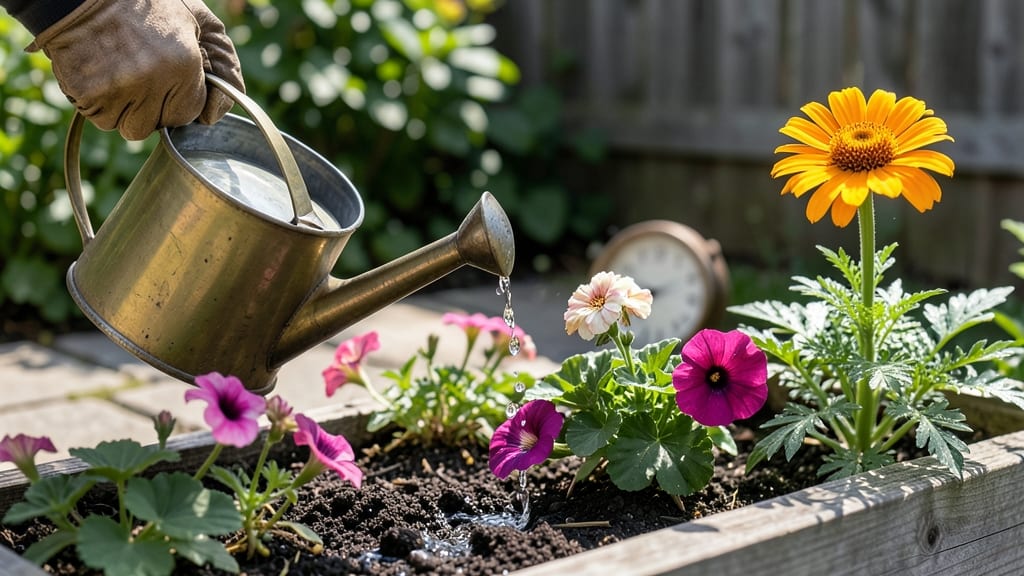
Watering your flowers for the right amount of time keeps them thriving and prevents common mistakes that kill blooms.
Overwatering or underwatering your flowers can mean the difference between vibrant blooms and wilting disappointment—but how do you know exactly how long to water them? The answer depends on your soil type, flower variety, and even the season.
For example, succulents like sedum need just 2–3 minutes of water, while thirsty annuals like petunias may require 5–7 minutes. A simple soil test or the "finger check" method can help you adjust without guessing.
In this guide, you’ll learn a soil-based watering schedule, seasonal tweaks, and how to spot over- or underwatering before it’s too late.


Soil test-based watering duration for different flower types
Determining the perfect watering duration for your flowers starts with understanding your soil type and the root depth of your plants. Different flowers have unique needs—annuals like petunias thrive in moist soil, while succulents need barely any water.
The key? Matching your watering time to your soil’s drainage and the plant’s natural moisture preferences.
Clay soil retains water like a sponge, while sandy soil drains faster than a sieve. Loamy soil, the gardener’s goldilocks, strikes a balance. But how do you translate these soil traits into actual minutes under the hose?
Let’s break it down by flower type and soil conditions to give your blooms the ideal hydration without drowning their roots.
| Soil Type | Flower Category | Recommended Watering Duration (minutes) | Signs of Proper Moisture |
|---|---|---|---|
| Clay (slow-draining) | Annuals (e.g., petunias, marigolds) | 5–7 minutes | Top 1–2 inches moist; surface feels damp |
| Sandy (fast-draining) | Succulents (e.g., sedum, aloe) | 2–3 minutes | Dry within 1 hour; no puddles |
| Loamy (balanced) | Perennials (e.g., lavender, coneflowers) | 7–10 minutes | Moist 3–4 inches deep; crumbly when squeezed |
| Peaty (acidic) | Bulbs (e.g., tulips, daffodils) | 4–6 minutes | Top 2 inches damp; no soggy spots |
| Silt (medium-draining) | Herbaceous perennials (e.g., black-eyed Susans) | 6–8 minutes | Moist 2–3 inches deep; holds shape when pressed |
For clay-heavy soils, your goal is to water deeply but infrequently. A 5–7 minute session with a gentle hose or drip irrigation ensures moisture penetrates past the compacted top layer.
Test it by sticking your finger 2 inches deep—if it’s dry, water again. Annual flowers like petunias love this consistency, but avoid letting them sit in soggy conditions, which invites root rot.
Sandy soils are the opposite challenge—they drain so quickly that even succulents and cacti can dry out in hours. Limit watering to 2–3 minutes and only when the top inch feels bone-dry. Use a soaker hose to deliver moisture slowly, or group plants with similar needs to create microclimates that retain humidity longer.
If you’re lucky enough to have loamy soil, congratulations—you’ve got the perfect canvas for perennials like lavender and coneflowers. These plants thrive with 7–10 minutes of watering, which should moisten the soil 3–4 inches deep.
The finger test works wonders here: press your finger into the soil; if it feels like a damp sponge, you’re golden. If it’s dry, water until it reaches that ideal moisture level.
Don’t forget about root depth—shallow-rooted plants like pansies need frequent, light watering, while deep-rooted daylilies can handle longer, less frequent sessions. Adjust your watering duration based on the mature size of the plant: bigger roots mean deeper water penetration.
For example, a 6-foot hydrangea might need 10–12 minutes to satisfy its thirsty roots.
Pro tip: Use a moisture meter or the old-fashioned screwdriver test—twist a screwdriver into the soil. If it slides in easily up to 3 inches, you’ve got the right moisture. If it feels like dry sand, it’s time to water.
This method takes the guesswork out of overwatering or underwatering, ensuring your flowers get just the right amount of hydration for their soil type.
Finally, remember that mulch is your best friend. A 2–3 inch layer of organic mulch (like shredded bark or straw) helps retain moisture in sandy soils and prevents evaporation in clay.
It also regulates soil temperature, keeping roots happy year-round. Pair your soil-appropriate watering duration with mulch, and you’ll have flowers that bloom like they’re on a tropical vacation—without the jet lag.
🌱
Seasonal adjustments: how climate affects flower watering time
Your flower watering schedule isn’t set in stone—it shifts with the seasons. In spring, for example, I start with shorter sessions (3–5 minutes) as the soil warms up, but by summer, I double that time to keep roots hydrated.
The key is adapting to temperature changes and rainfall patterns to avoid stressing your plants.
Climate plays a huge role in how long you should water. A heatwave can dry out soil in minutes, while fall rains might mean you barely need to touch the hose.
Even mulch thickness affects retention—thicker layers mean less frequent but deeper watering. Let’s break down the exact adjustments for each season.
4 Seasonal Watering Rules for Flowers
- Spring: Gradually increase watering to 3–5 minutes as soil warms and roots grow. Monitor for consistent moisture at 1–2 inches deep.
- Summer: Double duration to 10–15 minutes but water early morning or late evening to cut evaporation. Check soil hourly during heatwaves.
- Fall: Reduce by 30% (5–7 minutes) as growth slows. Focus on root hydration before dormancy sets in.
- Winter: Minimal watering (2–3 minutes max) unless in frost-free zones. Let mulch protect soil moisture naturally.
For summer watering, I’ve learned to time it right—midday sun turns water into steam, wasting resources. Instead, I water at 6 AM or 6 PM when temperatures are cooler.
If you’re dealing with a drought, consider drip irrigation to deliver water slowly at the roots where it’s needed most.
Rainfall tracking is another game-changer. After a heavy downpour, I skip watering entirely and check soil moisture with my finger. If the top 1 inch feels damp, hold off until it dries slightly.
A rain gauge helps me adjust—if we’ve had 1 inch of rain in a week, I cut watering by half.
Mulch is my secret weapon for retaining moisture. A 3-inch layer of organic mulch (like shredded bark) reduces evaporation by up to 30%, so I can water less frequently. In winter, mulch also insulates roots, preventing freeze-thaw cycles that can damage delicate stems.
Don’t forget to adjust for local microclimates. A shady spot stays moist longer than a sunny bed, so I water shady flowers 20–30% less. And if you’re in a container garden, pots dry out faster—double your usual watering time for potted flowers in summer.
With these seasonal tweaks, your flowers will thrive year-round! 🌸