
Flowers
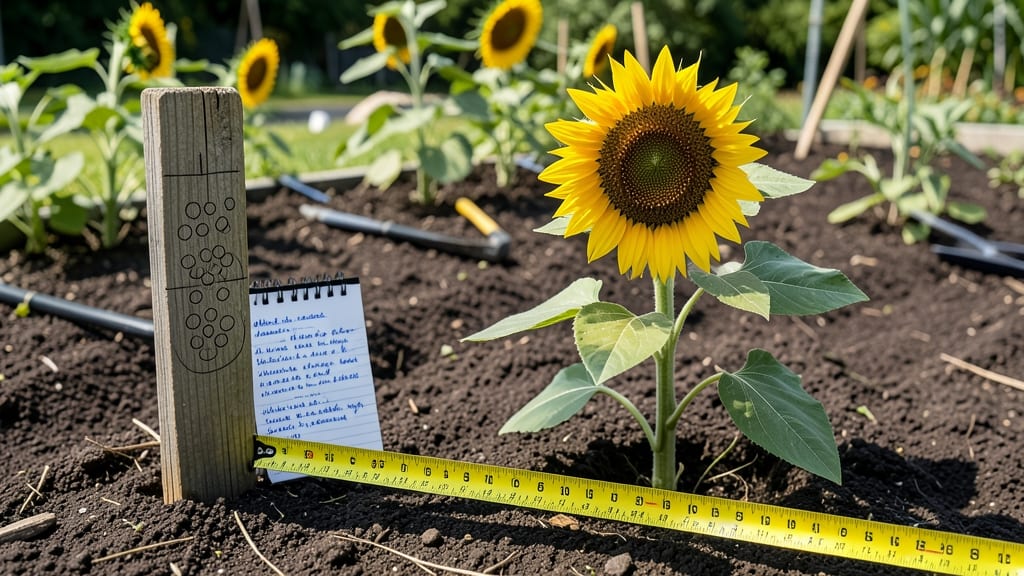
To get the most sunflowers per square foot, you’ll need to balance their size and sunlight needs—because packing too many 🌻 in tight spaces backfires with weak stems and fewer blooms.
Picture this: You’ve spent weeks waiting for those towering sunflowers to bloom, only to end up with a forest of spindly stalks fighting for space. The right spacing isn’t just about aesthetics—it’s the difference between a showstopping garden and a disappointing yield.
Sunflowers vary wildly in size, from dwarf varieties that fit neatly in containers to giants that need room to stretch toward the sky. A single miscalculation can mean wasted space or stunted growth, so knowing the exact square-foot ratio for your type is the key.
In this guide, I’ll break down the science of spacing—from dwarf sunflowers packed 4 per square foot to giants that need just 1 per square foot—plus pro tips for adjusting based on your climate and garden layout.
Optimal sunflower spacing by variety: dwarf vs. giant vs. tall types
Not all sunflowers are created equal—and neither are their spacing needs. Dwarf varieties like 'Teddy Bear' max out at 2-3 feet, while giant types such as 'Mammoth' can tower over 12 feet.
Cramming 10-foot giants into the same space as 2-foot dwarfs guarantees competition for sunlight, water, and nutrients, resulting in weak stems and fewer blooms. The key is matching plant maturity and height potential to your garden’s square footage.
Sunflowers thrive when their roots and foliage aren’t competing for resources. Overcrowding leads to pale stems, smaller blooms, and even toppling in tall varieties. Meanwhile, underutilizing space wastes your garden’s potential.
The solution? Variety-specific spacing ensures every plant gets the 6-8 hours of sunlight it craves while maximizing your garden’s visual impact.
Here’s the golden rule: Measure mature height and spread of each variety, then multiply by 1.5x for ideal spacing. For example, a 4-foot dwarf needs 6 inches of space, while a 10-foot giant requires 2-3 feet between plants.
This prevents root competition and ensures each sunflower can photosynthesize efficiently.
Let’s break it down by category. Dwarf sunflowers (12–24 inches tall) are perfect for container gardens or small spaces, while tall varieties (6–10 feet) need room to stabilize their stems. Giant sunflowers (10+ feet) demand the most space but reward you with showstopping blooms.
Below, see how many sunflowers fit per square foot for each type.
For dwarf sunflowers, you can fit 9–16 plants per square foot—ideal for container gardens or window boxes. These compact varieties are also great for companion planting with herbs or shallow-rooted veggies.
Meanwhile, giant sunflowers like 'Mammoth' need at least 1 square foot per plant to avoid shading neighbors and ensure sturdy stems.
If you’re growing mixed varieties, group dwarfs together and place tall types at the back of your garden. This prevents shading issues and creates a natural height gradient.
For example, plant Teddy Bear (dwarf) in the front row and Mammoth (giant) in the back row, with 18 inches between rows.
Pro tip: Use stakes or cages for tall varieties to prevent toppling, especially in windy areas. This also saves space by reducing the need for extra spacing to accommodate leaning stems.
For container growing, choose dwarf or semi-dwarf varieties and use 5-gallon pots with 1 plant per container.
Remember, soil quality and watering consistency play a role too. Well-draining soil with compost added helps roots spread efficiently, while deep watering (1–1.5 inches per week) ensures even growth. Overwatering can cause root rot, so always
How to calculate sunflower spacing for square-foot gardening
Square-foot gardening transforms how we think about plant density, especially for sunflowers. Most guides recommend 18-24 inches apart for standard varieties, but converting this to square-foot grids unlocks precision.
For example, a 24-inch spacing translates to just 1 sunflower per square foot—but that’s only for giants! Dwarf varieties can handle 4 plants per square foot without crowding.
Here’s the key: sunflowers need space to access sunlight, nutrients, and airflow. Overestimating density (like planting 2 per square foot) leads to stunted growth and fewer blooms.
The solution? Use a grid system that matches your sunflower’s mature size and your garden’s layout—whether it’s a raised bed, containers, or in-ground plots.
| Sunflower Type | Mature Height | Spacing (inches) | Sunflowers/Sq Ft | Notes |
|---|---|---|---|---|
| Dwarf (e.g., 'Teddy Bear') | 2–4 ft | 12–18" | 4–9 | Ideal for containers/raised beds |
| Semi-Dwarf (e.g., 'Moulin Rouge') | 4–6 ft | 18–24" | 1–4 | Best for borders or small plots |
| Standard (e.g., 'Russian Giant') | 8–14 ft | 24–36" | 1 | Requires deep roots; avoid containers |
| Companion Planting (e.g., with beans) | Varies | 18–24" | 1–2 | Interplant with nitrogen-fixers |
For container gardening, dwarf varieties thrive in 5-gallon pots with 1 plant per container. Use a 12-inch spacing for semi-dwarfs in larger pots (like 15-gallon). Pro tip: Mulch heavily to retain moisture and reduce competition for nutrients in small spaces.
In raised beds, divide your bed into 1-foot squares and mark planting zones with stakes. For example, a 4'x8' bed has 32 squares—plant 1 giant sunflower per square or 4 dwarfs. Leave 6-inch borders around edges to avoid overcrowding at the perimeter.
Avoid these common mistakes: planting sunflowers too densely for their variety, ignoring mature height (e.g., cramming giants in a 4’x4’ bed), or skipping thinning seedlings. Thin to recommended spacing 2–3 weeks after germination to prevent root competition and ensure stronger stems.
Remember: less is more with sunflowers. Fewer, well-spaced plants yield bigger blooms and healthier stems. Start with a test square—plant 1 giant sunflower per foot, then adjust based on your garden’s sunlight and soil. Your sunflowers will thank you with towering, vibrant displays all season! 🌻