
Companion Plants
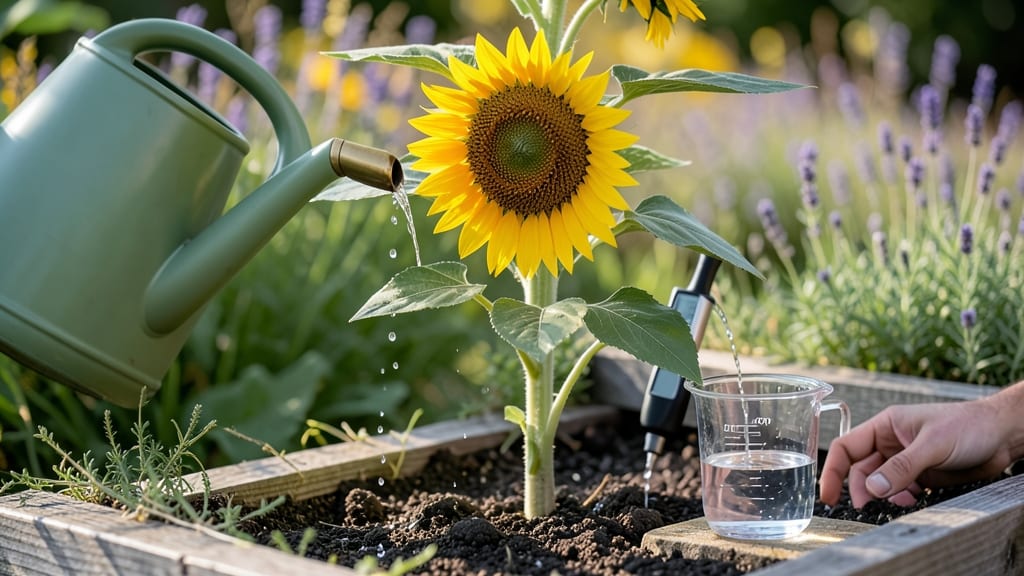
Sunflower plants need about 1 to 2 inches of water per week once established, but their thirst changes dramatically from seedling to towering bloom.
Picture this: your 🌻 sunflower seedlings wilt within days if you overwater, while mature plants can handle drought—until they suddenly drop their petals when stressed. The key is matching their water needs to their growth stage, not just guessing.
In USDA Zone 6, where most gardeners grow them, spring seedlings demand consistent moisture, while summer blooms need deep soaks every 2-3 days. Skip the daily sprinkle—sunflowers hate soggy soil, and their roots need room to breathe.
Below, I break down the exact watering schedule by stage, plus how to spot over- or under-watering before it’s too late. No more guesswork—just science-backed tips to keep your giants thriving.


Sunflower watering needs by growth stage: seedling to flowering
Sunflowers start life as delicate seedlings with shallow roots, but they mature into towering plants with deep taproots that need consistent moisture. The key to success? Adjusting your watering schedule as your plants grow. Overwatering early on can drown tender sprouts, while underwatering later stages stunts bloom production.
Let’s break down exactly how much water sunflowers need at each stage—plus how to tell when they’re thirsty or overwatered.
Most gardeners make the mistake of treating sunflowers like drought-resistant desert plants once they’re established. While mature sunflowers can handle dry spells, their root development and flower production depend on steady moisture during critical growth phases.
Think of watering as a three-phase investment: nurturing seedlings, fueling vegetative growth, and supporting blooms. Skip a phase, and you’ll see the consequences in stunted stems or small, weak flowers.
Here’s the science-backed breakdown you need to know. The summary table below distills the essentials, but we’ll dive deeper into why each stage demands different care—and how to spot when your sunflowers are sending SOS signals.
Let’s start with the seedling stage, where sunflowers are most vulnerable. During the first 2 weeks, your seeds will sprout into tiny plants with shallow root systems. This is when you’ll water every 2-3 days, giving them just ¼ inch of water per session.
The goal? Keep the top 1-2 inches of soil moist—like a wrung-out sponge. Use a spray bottle or gentle watering can to avoid dislodging seeds. Overwatering now can cause seed rot, while underwatering leads to weak, leggy seedlings that flop over.
By week 3, your sunflowers enter the vegetative growth phase, where they’ll focus on building leafy stems and deep roots. This is when you’ll increase water to ½ inch every 3-5 days.
The trick here is deep watering: aim for the root zone (about 6 inches down) to encourage those taproots to grow. Check moisture by sticking your finger 2 inches into the soil—if it’s dry, it’s time to water.
Mulching with straw or grass clippings helps retain moisture and keeps roots cool.
When buds begin to form (around 6-8 weeks), your sunflowers enter the budding stage, where water needs shift again. Now, you’ll water every 5-7 days, delivering 1 inch of water per week.
This is critical for flower development: too little water now, and your blooms will be small and sparse. Too much, and you risk blossom end rot or fungal issues. Look for wilting leaves in the afternoon—a sign your plants need a drink.
If the soil feels dry just below the surface, water thoroughly.
Finally, during the flowering stage (10+ weeks), mature sunflowers become more drought-tolerant, but they still need 1-2 inches of water per week. This is when you can space waterings to every 7-10 days, unless you’re in a heatwave or sandy soil.
Pay attention to the flower heads: if they droop in the heat, give them a deep soak. Avoid wetting the petals to prevent mildew. Once seeds form, reduce watering further to prevent cracking of the seed heads.
Pro tip: Morning watering is non-negotiable. Watering in the early hours (before 10 AM) gives foliage time to dry, reducing fungal diseases like powdery mildew. If you must water in the evening, do so at least 3 hours before sunset to avoid damp leaves overnight.
And always water at the base of the plant, not the leaves, to keep stems strong and upright.
How do you know if you’re nailing it? Healthy sunflowers have deep green leaves, sturdy stems, and firm buds. Yellowing leaves or wilting in the heat? That’s your cue to adjust.
Overwatered plants may develop mushy stems or leaf spots. The key is consistency: sunflowers hate moisture swings. Stick to this schedule, and you’ll
Common sunflower watering mistakes and how to fix them
Sunflowers may look sturdy, but their root systems are surprisingly sensitive to watering extremes. Overwatering smothers roots by cutting off oxygen, while underwatering causes wilting and stunted growth.
The key is consistency—keeping soil evenly moist but never soggy. Let’s fix the most common mistakes before they turn your towering blooms into sad, shriveled stems.
One of the biggest errors is watering on a schedule rather than checking soil moisture. Sunflowers need 1-2 inches of water per week, but this varies by climate and soil type.
For example, sandy soil drains faster than clay, so you’ll need to water more frequently. Always stick your finger 1-2 inches deep—if it feels dry, it’s time to water.
🌱 PROS-CONS BOX: Sunflower Watering Do’s and Don’ts
✅ DO THIS
- Water deeply (1-2 inches per week) to encourage deep root growth.
- Water in the early morning to reduce fungal risks.
- Use drip irrigation or soaker hoses to avoid wetting leaves.
- Check soil moisture before watering—stick your finger 1-2 inches deep.
❌ AVOID THIS
- Shallow watering (just the top inch) leads to weak roots.
- Watering at night or late afternoon increases disease risk.
- Letting soil dry out completely between waterings causes stress.
- Overwatering without drainage leads to root rot.
Watch for visual stress signals like yellowing leaves or drooping stems. Yellow leaves often mean overwatering or poor drainage, while crispy, brown edges signal underwatering or high heat stress.
If your sunflower’s stem feels soft or mushy, it’s likely rotting from too much water. Act fast by reducing water and improving drainage with organic mulch or perlite.
Another mistake is ignoring container vs. in-ground differences. Sunflowers in pots dry out 3x faster than in-ground plants. If growing in containers, water every 2-3 days and ensure pots have drainage holes.
For in-ground plants, water deeply every 5-7 days once established. Always water at the base of the plant, not the leaves, to prevent fungal diseases like powdery mildew.
To fix underwatered sunflowers, give them a deep soak and mulch around the base to retain moisture. For overwatered plants, hold off on watering until the top 2 inches of soil dry out.
If the soil is waterlogged, mix in compost or sand to improve drainage. Remember, sunflowers are drought-tolerant once mature, but they need consistent moisture during their first 6-8 weeks of growth.
Pro tip: Group sunflowers with companion plants like beans or marigolds to improve soil health and reduce watering needs. These plants help retain moisture and deter pests, making your watering job easier.
With the right balance, your sunflowers will reward you with vibrant blooms and towering heights—not wilting disappointments. 🌻