
Watering
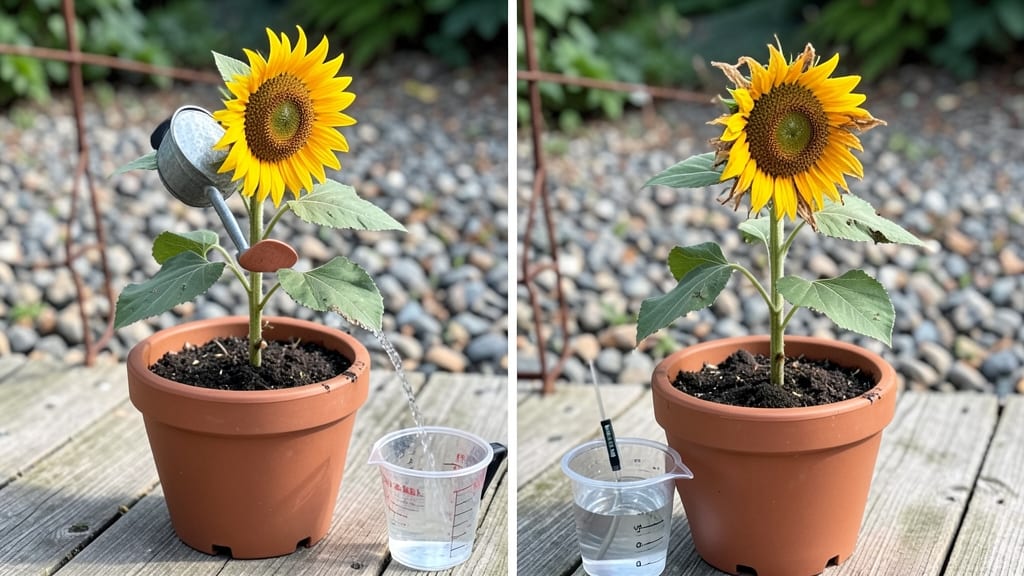
To water sunflowers in pots the right way, check soil moisture every 2-3 days—but adjust for heat, pot size, and drainage to keep those towering 🌻 stems sturdy.
Sunflowers in pots can reach towering heights—but inconsistent watering turns vibrant blooms into wilted disappointments. Mastering the perfect watering schedule keeps your sunflowers thriving all season long.
Most gardeners overlook how fast potted soil dries out compared to in-ground beds. A 5-gallon pot in full sun may need water twice daily in summer, while a larger container holds moisture longer. The key? A simple finger test at the soil’s base.
Below, I’ll break down the exact watering intervals by climate, how to spot over- or underwatering, and the one drainage trick that saves root rot. No guesswork—just lush, happy sunflowers from seedling to bloom.
The ideal watering frequency for potted sunflowers based on climate
Potted sunflowers thrive on consistency, but their water needs shift dramatically with climate and season. Unlike in-ground plants, containers dry out 30-50% faster due to limited soil volume and heat exposure.
Understanding these science-backed intervals prevents both wilting and root rot while maximizing your sunflower's towering growth potential.
Sunflowers in pots require 1-2 cups of water per watering, but frequency depends entirely on your local climate zone. In hot/dry regions, I water mine daily in summer—sometimes twice—while in cool/moist climates, every 3-4 days suffices. The key is soil moisture testing, not guesswork.
For hot/dry climates, I prioritize morning watering to prevent evaporative loss during peak sun. In my Zone 9 garden, sunflowers wilt by noon if watered at night, so I set a 6 AM reminder during summer months.
The 1-2 inch soil test becomes critical here—dry soil at this depth means it's time to water.
In cool/moist regions, overwatering is the bigger risk. I've seen root rot develop within 48 hours of excessive watering in clay pots with poor drainage.
The solution? Terracotta pots (which wick moisture) and well-amended soil with perlite. Always check for dampness at 3 inches deep before adding more water.
Pot size and material also alter watering needs. A 5-gallon fabric pot dries out faster than a 10-gallon ceramic container—I adjust my schedule accordingly. For black plastic pots, which absorb heat, I water 15% more frequently than terracotta.
The soil type matters too: Sandy soil drains quickly, while clay holds moisture longer.
Seasonal shifts require proactive adjustments. When temperatures drop below 60°F, I reduce watering to every 3-4 days, even in dry climates. Sunflowers enter a dormancy-like state in fall, and
How to perform the finger test for perfect sunflower watering
Potted sunflowers need consistent moisture, but guessing how often to water can lead to soggy roots or parched plants. The finger test is my go-to method for checking soil moisture at the right depth.
Unlike surface checks that miss deeper dryness, this technique reveals what your sunflower's roots are actually experiencing.
Here's why this test works so well: sunflower roots extend 12-18 inches deep, and surface soil often stays moist while deeper layers dry out. By testing at the root zone depth, you'll catch moisture issues before they stress your plant.
This method also helps prevent overwatering in pots, which is the #1 killer of container-grown sunflowers.
- Step 1: Wait until morning after sunrise when soil has settled. Avoid testing after watering or heavy rain for 24 hours to get accurate readings.
- Step 2: Insert your index finger 2-3 inches deep into the soil (about knuckle depth). This matches the depth where sunflower roots actively absorb water.
- Step 3: Gently squeeze the soil between your finger and thumb. If it feels dry and crumbly, it's time to water. If it's cool and damp, wait 1-2 more days.
- Step 4: For small pots (under 5 gallons), check moisture daily during peak summer heat. Larger containers can go 2-3 days between tests when temperatures are moderate.
- Step 5: Water thoroughly until you see moisture draining from the bottom of the pot. Empty the saucer afterward to prevent root suffocation from standing water.
Common mistakes I see gardeners make include testing at the surface only (which shows false moisture) or watering on a fixed schedule instead of checking soil conditions. Another pitfall is using the finger test in very hot afternoons when surface soil appears dry but deeper layers still hold moisture.
If your sunflower's leaves start yellowing at the bottom or the soil smells musty, you're likely overwatering. For underwatering, watch for wilting that doesn't recover by evening or crispy leaf edges. Adjust your watering frequency based on these visual cues combined with your finger test results.
Remember that potted sunflowers dry out faster than in-ground plants because containers have less moisture retention. During summer, I often water mine every morning in small pots, while larger containers might only need water every 24-48 hours. Always prioritize deep watering over light sprinkles to encourage strong root growth.