
Flowers
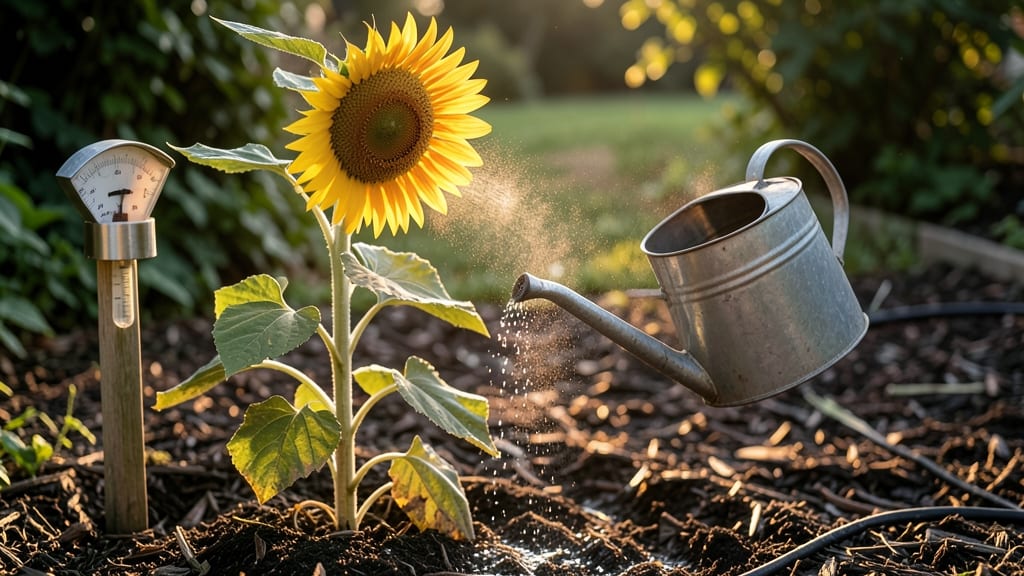
Watering sunflowers the right way keeps those towering 🌻 stalks strong and blooming—without drowning their roots or leaving them parched.
Sunflowers may seem low-maintenance, but overwatering or neglecting their hydration can turn your towering dream plants into droopy disappointments. The key isn’t just how much you water but when—and it changes as your plants grow.
Young sunflowers need consistent moisture to establish roots, while mature plants thrive on deep, infrequent watering. Below, I’ll break down the exact schedule for each stage, plus how to adjust for containers, drought, or heavy rain.
You’ll also learn the simple soil-check method to avoid common mistakes—like yellowing leaves or wilting—that rob your sunflowers of their full potential.
The perfect sunflower watering schedule by growth stage
Sunflowers thrive on consistency, but their water needs change dramatically from seedling to full bloom. Too little water stunts growth, while too much causes root rot and weak stalks. The key is monitoring soil moisture 1-2 inches deep—this ensures strong roots and massive blooms.
I’ve grown sunflowers from 1-foot dwarf varieties to 12-foot giants, and this schedule works for all.
Young sunflowers need frequent but shallow watering to keep soil moist without drowning their delicate roots. Once they reach vegetative stage (3-4 weeks old), you’ll gradually increase depth and spacing between waterings.
During flowering, the goal shifts to maintaining moisture without overwatering—too much can split stalks or reduce bloom size. Let’s break it down by stage.
🌱 Pro Tip: Always water at soil level, not the leaves, to prevent fungal diseases like powdery mildew. Use a drip irrigation or soaker hose for even distribution.
During the seedling stage, your sunflowers need daily attention to prevent drying out. Use a spray bottle or gentle watering can to keep the soil evenly moist—never soggy. I once lost an entire tray of seedlings because I let them dry out for just 48 hours.
Once they sprout their first true leaves, switch to shallow watering (½ inch deep) every 2-3 days.
When sunflowers hit the vegetative stage (around 3-4 weeks old), their roots deepen rapidly. This is when you’ll see explosive growth—stalks can shoot up 2 feet in a week!
Water deeply 1-2 inches down every 5-7 days, letting the top inch of soil dry slightly between waterings. This encourages strong root development and prevents weak, floppy stalks.
At the flowering stage, your sunflowers are energy-hungry giants. They need consistent moisture but not constant wetness. Water every 7-10 days, soaking 2 inches deep each time. Let the topsoil dry out completely between waterings—this prevents bacterial rot and ensures larger, healthier blooms.
I’ve seen 18-inch flowers on plants that followed this schedule, while overwatered ones produced small, wilted blooms.
Once your sunflowers are fully mature (after 12 weeks), they become drought-tolerant. Reduce watering to every 10-14 days, focusing on keeping the root zone damp rather than the entire soil profile.
This helps preserve stalk strength and prevents premature wilting. If you’re growing dwarf varieties, they’ll need slightly more frequent watering than standard giants.
🌻 Container Growers: Sunflowers in pots dry out 3x faster than in-ground plants. Water every 3-5 days during hot weather, and always use pots with drainage holes to prevent root rot.
One mistake I see often is watering on a schedule without checking soil moisture. Instead, use the finger test: Stick your index finger 1-2 inches deep—if it feels dry, water; if it’s damp, wait.
This method saves water and prevents overwatering damage. Pair this with mulching (2-3 inches of straw or shredded leaves) to retain moisture and reduce evaporation by up to 30%.
How to check soil moisture like a pro: the finger test method
Mastering the finger test method for sunflower soil moisture is the secret weapon every gardener needs. Unlike guesswork, this simple technique helps you determine exactly when to water—preventing both overwatering and underwatering that can stunt your plants' growth.
Sunflowers thrive with consistent moisture, but their deep roots need well-draining soil to avoid rot.
Start by inserting your index finger about 1-2 inches deep into the soil near your sunflower's base. This depth mimics where the roots actively absorb water. If the soil feels dry but crumbly, it's time to water.
If it's damp or sticky, hold off for another day or two. This method works for both container-grown and in-ground sunflowers.
For arid climates, check soil moisture daily during peak summer heat. Sunflowers in containers dry out faster than those in the ground, so monitor them more frequently. In humid regions, reduce watering to every 10-14 days to prevent fungal diseases like powdery mildew, which thrives in soggy conditions.
Look for visual cues beyond the finger test: yellowing leaves or wilting stalks signal underwatering, while mushy stems or leaf spots indicate overwatering. Mulching with straw or wood chips helps retain moisture and regulate soil temperature, reducing your need to check as often.
Pro tip: Water sunflowers in the early morning (before 10 AM) to allow foliage to dry quickly, preventing fungal growth. Aim for a deep soak that reaches 6-8 inches deep, encouraging roots to grow downward for stability.
This method works year-round, but adjust your schedule based on seasonal changes—summer demands more frequent watering than spring or fall.
With practice, you'll develop an intuition for your sunflowers' needs. Remember, consistency is key—sunflowers hate moisture swings. Use this finger test method to keep your plants happy, healthy, and reaching for the sky! 🌻