
Flowers
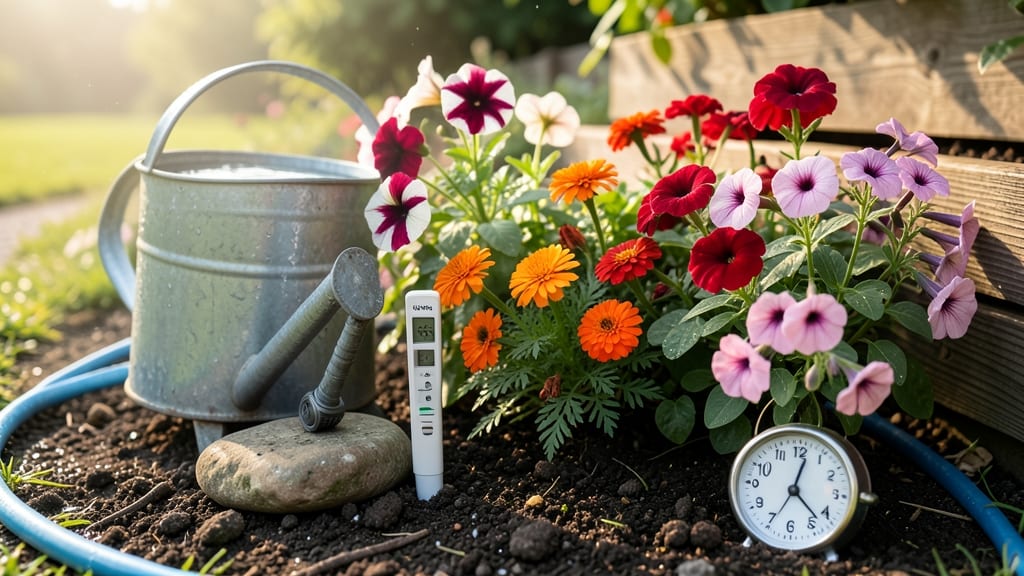
To water flowers the right way means checking soil moisture and adjusting for plant type, climate, and season—because one size never fits all.
Struggling to keep your flowers alive despite your best efforts? The answer lies in mastering the art of watering—because too much or too little can mean the difference between vibrant blooms and wilted stems.
Some varieties, like succulents, thrive on a weekly soak followed by dry spells, while roses demand daily moisture in summer heat.
Humidity, rainfall, and even your local soil type throw off generic schedules, which is why I’ll break down the exact rhythms for 12 common flowers—plus how to tweak them for your climate.
You’ll learn the 3 signs your watering routine is failing (yellow leaves, anyone?), plus a foolproof method to track soil moisture without a fancy meter. Ready to stop guessing?
Watering frequency for different flower types: a complete guide
Not all flowers thrive on the same watering schedule—some annuals need daily hydration, while succulents can survive on weekly waterings. Understanding your flower types is the first step to keeping them vibrant and healthy.
I’ve grown everything from thirsty petunias to drought-resistant lavender, and the difference in care is night and day.
Your watering routine should match your flower’s natural habitat. Tropical hibiscus love moisture, while desert blanket flowers store water in their leaves. Below, I’ve broken down the watering needs for the most common flower categories so you can give each plant exactly what it craves.
⚠️ Pro Tip: Always water at the base of the plant (not the leaves) to prevent fungal diseases like powdery mildew. Early morning is ideal—it gives foliage time to dry before evening humidity sets in.
For annual flowers like petunias or geraniums, consistency is key. These plants grow quickly and need daily watering during heatwaves. I once killed a bed of petunias by letting them dry out—now I set a reminder on my phone for morning watering during summer!
Perennial flowers, such as roses or black-eyed Susans, have deeper roots and can handle slightly less frequent watering. Aim for deep soakings 2-3 times per week rather than light sprinkles. This encourages roots to grow downward, making them more resilient during droughts.
If you’re growing succulents or cacti, resist the urge to water often. These plants store water in their leaves and stems, so overwatering is their biggest threat.
Stick your finger 1-2 inches into the soil—if it’s dry, it’s time to water. I’ve had echeveria plants last years with just monthly waterings!
Tropical houseplants like orchids or hibiscus mimic their rainforest homes by needing high humidity and frequent watering. Let the top inch of soil dry out between waterings, but never let them sit in water.
I use a pebble tray under my orchid pot to boost humidity—it’s made a world of difference!
Bulbs like daffodils and tulips are tricky because their water needs change with the seasons. Water weekly when they’re actively growing in spring, but reduce to monthly once foliage yellows.
This helps them store energy for next year’s blooms. I mark my calendar for late summer to stop watering—it’s easy to forget!
Remember, soil type plays a huge role. Sandy soil drains quickly, while clay holds moisture longer. If you’re unsure, do the finger test: poke your finger 2 inches into the soil. If it’s dry, water; if it’s damp, wait. Over time, you’ll learn your garden’s rhythm.
Adjust your schedule based on weather conditions. During heatwaves, increase frequency, and in rainy seasons, reduce watering. I once had lavender wilt because I didn’t adjust for a sudden downpour—now I check the forecast daily!
🌱
How climate and season affect your flower watering schedule
Your flower watering schedule isn't one-size-fits-all—it changes dramatically with climate and season. What works for tropical hibiscus in Florida won't save your desert succulents in Arizona. Even in your own garden, summer's 90°F heat demands different care than spring's 60°F mornings.
Understanding these shifts prevents root rot or wilting while keeping your blooms thriving.
Let's break down how temperature, humidity, and rainfall rewrite your watering rules—plus region-specific hacks to simplify the process. The key? Observing your plants' soil moisture and adjusting before problems appear.
For example, temperate climates like the Pacific Northwest might need morning watering in summer, while arid zones like Phoenix thrive with deep, infrequent soakings.
🌡️ Climate-Specific Watering Adjustments
- Desert Climates (e.g., Arizona, Nevada): Water deeply 2-3x/week at dawn to reduce evaporation. Use drip irrigation to target roots directly—50% less water than surface sprinklers.
- Tropical Climates (e.g., Florida, Hawaii): Water daily in containers, every other day in ground. Focus on leaf surfaces to mimic humidity—mist succulents lightly if temps drop below 75°F.
- Temperate Climates (e.g., Pacific Northwest, Midwest): Morning watering prevents fungal growth. Reduce to 2x/week in winter unless soil is sandy. Mulch heavily (3" depth) to retain moisture.
- Mediterranean Climates (e.g., California, Spain): Deep water every 10-14 days in summer. Pause watering in winter unless planted in microclimates with frost risk.
- Seasonal Shifts: Spring = increase frequency as growth speeds up. Fall = reduce gradually to prep for dormancy. Winter = water only if soil is dry 2" below surface.
Seasonal transitions are where most gardeners trip up. For instance, roses in Zone 5 might need daily watering in July but only weekly in October.
The trick? Check soil moisture with your finger—if the top 1-2 inches are dry, it's time to water. Container plants dry out faster, so monitor them twice daily in peak heat.
Don't ignore rainfall either. A 1-inch rain can satisfy ground-planted perennials for a week, but potted petunias still need supplemental water. Install a rain gauge to track precipitation—aim for 1-1.5 inches/week total (rain + irrigation). In high-humidity areas, reduce watering by 30% to avoid bacterial leaf spot.
Pro tip: Group plants by water needs. Place thirsty annuals like geraniums near your hose bib and drought-tolerant perennials like lavender in the back. This zonal watering saves time and ensures no plant gets neglected. Adjust your schedule every 2-4 weeks—your garden's needs change faster than you think!
Remember, overwatering is just as deadly as underwatering. If your soil stays soggy for more than 24 hours, you're drowning your roots. The goal? Consistent moisture, not a swamp.
Start with these climate rules, then fine-tune by watching your plants' leaves and growth patterns—they’ll tell you exactly what they need.