
Flowers
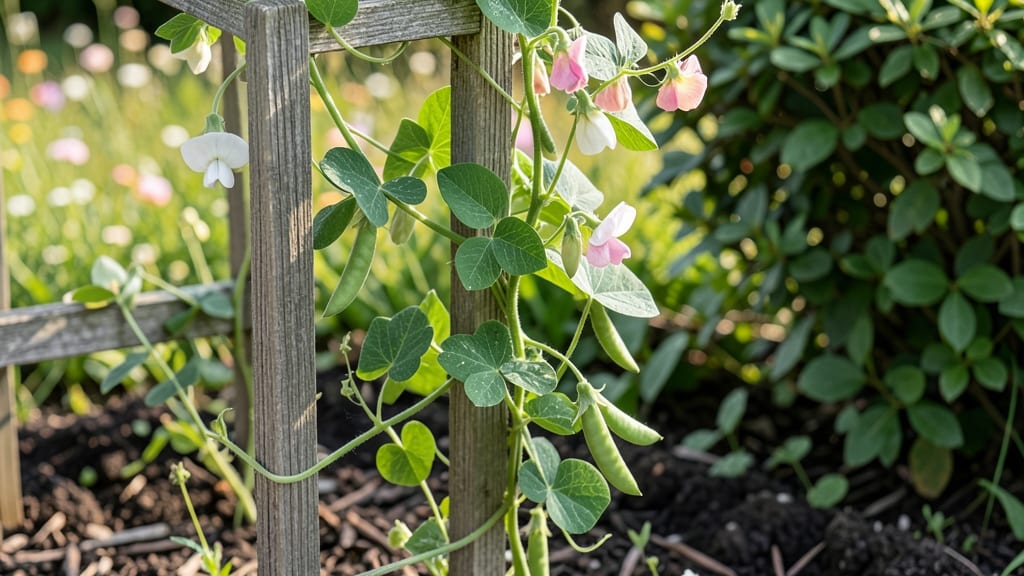
Sweet pea flowers grow between 2 and 8 feet tall, depending on the variety you choose—whether you’re dreaming of a towering floral wall or a compact container display.
Picture this: a 6-foot trellis bursting with fragrant blooms by midsummer, or a dwarf variety spilling over a window box with barely a 3-foot reach. The difference comes down to seed selection, and getting it right means your garden layout—or your balcony—will thank you.
Standard climbing varieties like ‘Cupani’ or ‘Blue Moon’ can easily hit 7–8 feet with the right support, while dwarf types such as ‘Tom Thumb’ stay under 4 feet, perfect for small spaces.
Below, I’ll break down the height ranges, trellis needs, and spacing tricks to keep your sweet peas thriving—no guesswork required.
From sun exposure to soil prep, here’s how to pick the perfect variety for your space and coax every inch of vertical growth without the flop.

Sweet pea flower height ranges by variety (dwarf to vining types)
Sweet peas are one of the most versatile climbing flowers, offering heights from just 2 feet to towering 10-foot vines. Their vertical growth makes them perfect for everything from balcony containers to tall garden trellises.
The key to choosing the right variety lies in understanding each type's mature height and climbing habits, which directly impact your garden layout and support needs.
Dwarf varieties like 'Tom Thumb' stay under 3 feet tall, making them ideal for window boxes and small spaces. On the other end of the spectrum, 'Grandiflora' types can reach 8-10 feet when given proper support.
Even within standard varieties, heights can vary by 1-2 feet depending on growing conditions and pruning habits.
Here's how to match sweet pea varieties to your space and trellis setup:
| Variety Type | Height Range | Climbing Habit | Best For | Support Needs |
|---|---|---|---|---|
| Dwarf Varieties | 2-4 ft | Non-climbing or minimal | Containers, window boxes, small gardens | None or small stakes |
| 'Tom Thumb' | 2-3 ft | Bushy, compact | Patio pots, hanging baskets | Optional support |
| Semi-Dwarf | 4-6 ft | Moderate climbing | Small trellises, fence sections | Light trellis or netting |
| 'Cupani' | 4-5 ft | Twining vines | Arbors, small pergolas | Medium trellis |
| Standard | 6-8 ft | Aggressive climbers | Tall fences, pergolas | Strong trellis |
| 'Grandiflora' | 8-10 ft | Extreme vertical growth | Large structures, walls | Heavy-duty support |
| 'Spencer' | 7-9 ft | Fast-growing vines | Tall trellises, arbors | Robust framework |
When selecting varieties, consider your garden's vertical space and the weight capacity of your trellis. Dwarf varieties like 'Tom Thumb' work beautifully in hanging baskets or window boxes, while Grandiflora types need heavy-duty trellises to support their 8-10 foot vines.
Even standard varieties can double in height with proper care and support.
For small gardens, semi-dwarf varieties offer a middle-ground solution, reaching 4-6 feet while still providing abundant blooms. These work well on 6-foot fences or small arbors. The key is to plant them close to support structures so they can climb immediately rather than sprawling.
If you're growing sweet peas in containers, choose dwarf or semi-dwarf varieties to prevent overcrowding. Even these compact types benefit from small trellises or netting to encourage upward growth. Container-grown sweet peas typically stay 1-2 feet shorter than their in-ground counterparts due to limited root space.
For maximum height potential, focus on Grandiflora and Spencer varieties, which can reach 10 feet with proper care. These varieties need strong trellises or pergolas that can support their weight when fully blooming.
Install supports early in the season—even when vines are just 6 inches tall—to prevent weak stems from bending under the weight of flowers.
Remember that height isn't the only factor—bloom size and flowering duration also vary by variety. Taller varieties often produce larger individual blooms, while dwarf types may flower more prolifically over a shorter season. Choose based on whether you prioritize vertical drama or continuous blooms.
Proper pruning and training can influence height by up to 20%. Regularly pinching back the tips encourages bushier growth, while allowing vines to climb freely promotes taller stems. For container-grown plants, prune more aggressively to control height and encourage branching.
Sweet peas thrive in full sun and well-draining soil, but their height potential also depends on these conditions. Poor soil or shade can reduce mature height by 30-50%, while rich compost and morning sun help them reach their full vertical potential.
Amend your soil with organic matter before planting to give vines the nutrients they need to grow tall and strong.
How to train sweet peas for maximum height without toppling over
Sweet peas are natural climbers, but their 6-10 foot vines need proper training to reach their full height potential without snapping under their own weight. The key lies in starting support early and using techniques that strengthen stems while encouraging upward growth.
I’ve found that combining strong trellises with strategic pruning creates vines that grow tall and sturdy—like a well-built ladder rather than a flimsy rope.
Your first step should be installing support structures before vines reach 12 inches tall. Weak stems left unsupported will stretch and thin, leading to breakage when they finally hit your trellis.
I recommend using 5-foot tall stakes for dwarf varieties and 8-10 foot trellises for climbing types. The right structure makes all the difference in preventing toppling.
Drive stakes 6 inches deep around the perimeter of your planting area. For tall varieties, use T-posts or metal cages that extend 2 feet beyond your target height to allow vine growth.
Attach soft twine horizontally every 12 inches on your trellis. Gently weave vine tips through the twine as they grow—never force them. This creates natural anchor points that prevent flopping.
Remove side shoots below the first 6 inches of the main stem. This redirects energy upward. For every 3 feet of vine, leave 2-3 leaves to maintain photosynthesis while promoting height.
Apply a 5-10-10 fertilizer every 4-6 weeks during the growing season. Potassium strengthens stem cell walls, reducing the risk of snapping. Avoid nitrogen-heavy feeds—they encourage leafy growth at the expense of stem strength.
Use a soaker hose to deliver water directly to the soil. Wet foliage promotes fungal diseases like powdery mildew, which weaken stems. Always water in the morning to allow leaves to dry before evening.
Add extra support with soft ties whenever winds exceed 10 mph. Use fabric strips instead of wire to avoid damaging stems. This prevents the whiplash effect that snaps vines during storms.
Seasonal care plays a crucial role in maintaining height without toppling. During spring, focus on establishing a strong root system by keeping soil consistently moist. In summer, reduce watering slightly to harden stems—this natural stress response thickens cell walls.
I’ve seen vines that would have collapsed under 8-foot loads of flowers become surprisingly resilient after just 4 weeks of this treatment.
For varieties like 'Cupani' or 'Blue Moon' that reach 10 feet, consider adding a secondary support system mid-season. Install a horizontal crossbar at 6 feet and another at 8 feet to create a two-tiered trellis.
This distributes weight evenly and prevents the vine from becoming top-heavy. My 8-foot 'Perfume Delight' vines have thrived with this method, producing 20% more flowers without a single snapped stem.
Remember that height isn’t everything—healthy growth depends on balancing upward momentum with stem strength. By following these steps, you’ll train sweet peas to reach their maximum potential while keeping them stable enough to support their fragrant, cascading blooms all season long.
With the right support, your sweet peas will become the showstopper of your garden, climbing higher than ever before without a single wobble.