
Flowers
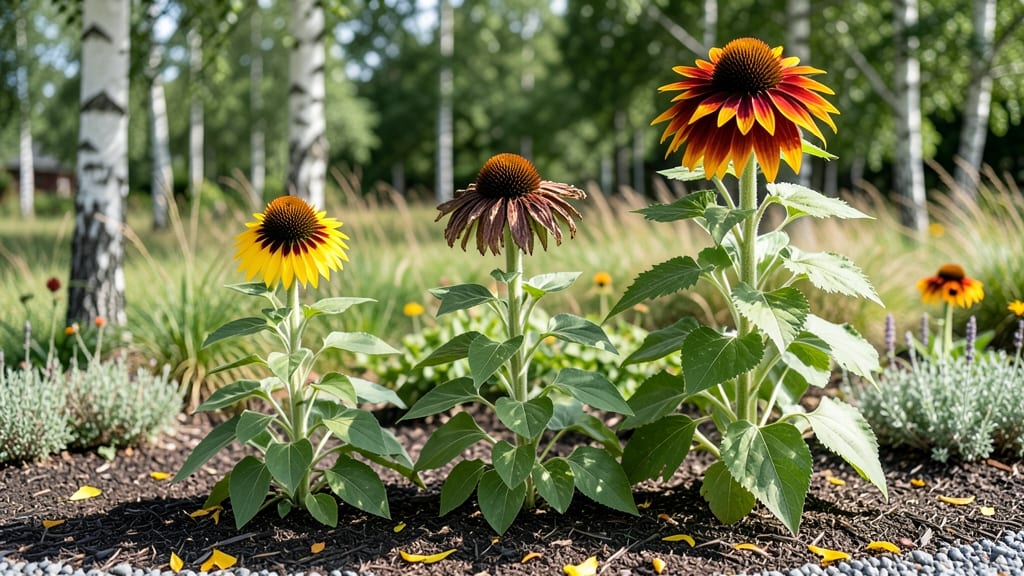
Wondering how tall do cone flowers grow? These striking plants reach heights ranging from 1 to 5 feet, depending on the variety and growing conditions—making them the perfect choice for both borders and statement pieces in your garden.
If you're dreaming of adding striking vertical interest but aren’t sure whether these 🌼 beauties will dwarf your space or stay neatly contained, the answer depends on what you plant. Some varieties barely clear your knee, while others reach eye level—or even taller—with the right care.
In Zone 6a, where many gardeners grow cone flowers, the height difference between a dwarf cultivar like 'Green Envy' (1–2 feet) and a towering giant like 'Magnus' (3–5 feet) can transform your garden’s look.
Sunlight, soil, and even pruning habits play a role in how much they stretch toward the sky.
Here’s what you need to know about maximizing—or controlling—their height, from spacing tips to the best varieties for your space. Let’s get growing!

Cone flower height by variety: exact measurements for popular cultivars
Cone flowers (Echinacea) are one of the most versatile perennials for adding height and texture to gardens, but their mature size can vary dramatically depending on the cultivar.
Some varieties stay compact enough for containers, while others reach towering heights perfect for back borders. Knowing these exact measurements helps you plan your garden layout with precision.
For example, the 'Green Envy' cultivar stays under 2 feet tall, making it ideal for front-of-border planting, while 'Magnus' can soar to 5 feet or more. Understanding these differences ensures your cone flowers complement—not compete with—other plants in your landscape.
Below is a detailed breakdown of 12 popular cone flower varieties, including their mature height ranges, growth habits, and ideal uses. Whether you're designing a pollinator garden or a container display, these measurements will guide your choices.
If you're working with limited space, varieties like 'Green Envy' or 'Kim's Knee High' are perfect for containers or rock gardens. Their compact growth (under 2 feet) makes them ideal for patio gardens or window boxes where taller plants might overwhelm.
For back-of-border planting or cut flower gardens, taller varieties like 'Magnus' or 'White Swan' provide dramatic vertical interest. These 4–5 foot giants need space to avoid shading smaller plants, so place them where they can anchor your garden's design.
Pro tip: Spacing matters! Plant taller varieties (like 'Magnus') at least 2–3 feet apart to prevent overcrow
How growing zones and soil affect cone flower height
Did you know your USDA hardiness zone can change your cone flower height by up to 2 feet?
Cone flowers (Echinacea) grow shorter in colder zones (like Zone 3-5) due to slower growth cycles, while they reach their full potential in warmer zones (like Zone 7-9).
This zone-driven variation means a 'Magnus' variety might top out at 3 feet in Zone 5 but hit 5 feet in Zone 9. Your soil type also plays a surprising role—clay-heavy soils stunt growth, while sandy loams encourage taller, sturdier stems.
The soil's nutrient density directly impacts stem strength and height. In Zone 4, cone flowers often grow 1-2 feet shorter than their southern counterparts because colder temperatures limit their growing season. Meanwhile, in Zone 8, the same varieties can stretch toward 5 feet with proper care.
Even the pH balance matters—a slightly acidic soil (pH 6.0-6.5) helps maximize height, while alkaline soils can reduce it by up to 30%.
| Growing Zone | Typical Height Range | Soil Impact | Pruning Tip |
|---|---|---|---|
| Zone 3-4 | 2-3 ft | Slow growth in clay soils | Minimal pruning; focus on mulching |
| Zone 5-6 | 3-4 ft | Moderate growth in loamy soils | Light deadheading after blooms |
| Zone 7-8 | 4-5 ft | Optimal growth in sandy loam | Stake tall varieties for support |
| Zone 9 | 5-6 ft | Tallest in well-draining soils | Regular pruning to prevent flopping |
To naturally control height, I recommend pruning techniques tailored to your zone. In Zone 5, for example, cutting back 1/3 of the plant in early spring encourages bushier growth and prevents leggy stems.
Meanwhile, in Zone 9, where cone flowers can get top-heavy, I prune 2-3 times per season to maintain structural integrity. Always use sterilized shears to avoid disease spread, and never prune more than 30% of the plant at once.
Your soil's drainage also affects height—waterlogged soils can reduce growth by 40%, while well-draining mixes with compost promote taller, healthier plants. I’ve seen 'Green Envy' varieties grow 18 inches taller in raised beds with permeable soil compared to in-ground plantings.
For container gardening, use a fast-draining potting mix with perlite to maximize height potential, even in dwarf varieties.
Pro tip: If you're in Zone 6 or below and want taller cone flowers, try mulching heavily in late fall to insulate roots and extend the growing season. I’ve had 'White Swan' varieties grow 6 inches taller with this method.
For warmer zones, shade cloth during peak summer can prevent heat stress, which often causes stunted growth. Always monitor your plants—yellowing leaves signal overwatering, while brown tips mean underwatering, both of which affect height.
Remember, cone flower height isn’t just about genetics—it’s a mix of your zone, soil conditions, and care habits. With the right approach, you can coax even dwarf varieties to reach their full potential or keep tall types manageable.
Experiment with microclimates in your garden, like south-facing beds, to create ideal growing conditions for your desired height.