
Vegetables
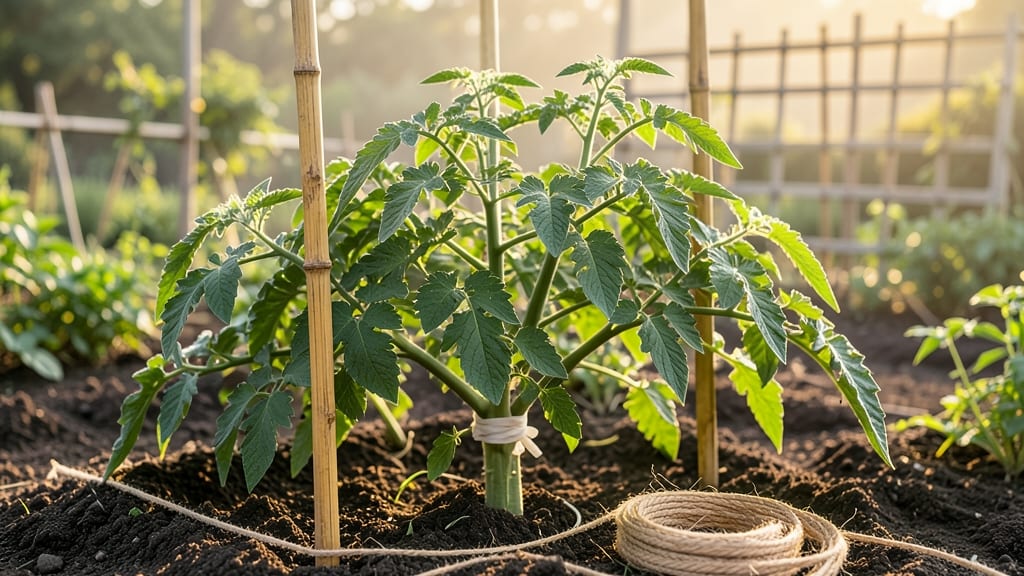
Supporting tomatoes with string turns floppy vines into sturdy, high-yielding plants that produce fruit instead of sprawling on the ground. 🌱 I’ve tried everything from flimsy twine to industrial-grade burlap strips—and the right string makes all the difference in keeping those heavy clusters from snapping stems mid-season.
The key is durable, stretchy material like jute twine or 1/8-inch polyester cord (not cheap twine that breaks when wet). Space stakes 18-24 inches apart for indeterminate varieties, and tie stems at 45-degree angles to avoid girdling.
Most gardeners overlook the top knot—a loose loop at the stake’s top lets the plant grow upward without strangling itself. You’ll see the payoff in cleaner fruit, fewer diseases from soil contact, and plants that keep growing until frost.
Even my blackest thumb can’t mess this up once you get the hang of it. The best part? You can reuse stakes and string for years with minimal maintenance. For alternatives, consider tomato cages (easier but less sturdy) or wooden trellises (best for heavy loads).
But string gives you the most control—and the satisfaction of watching your plants climb like they’re in a botanical garden. Let’s get those vines supported!
📚 In This Guide
- What you need
- Instructions
- Tips and common mistakes
- Wrapping up and next steps
What you need
- ● Tomato plants: 1-6 (depending on your garden size; choose indeterminate varieties like Roma or Beefsteak for best results with string support).
- ● Sturdy stakes or posts: 6-8 ft tall bamboo stakes (3-4 per plant) or
- ● Metal T-posts (2-3 per plant, driven 12+ inches into the ground).
- ● Garden twine or jute twine: 100+ ft (3-4 mm thickness for durability; avoid plastic twine—it can cut into vines!).
- ● Zip ties or soft plant ties: 10-20 (to secure twine to stakes without damaging stems).
- ● Pliers or scissors: For trimming twine cleanly.
- ○ Gloves: Optional but recommended to protect your hands from prickly stems or rough twine.
- ● Soft cloth or old T-shirt: Wrap around stems before tying to prevent bruising.
- ● Wooden dowels or PVC pipes: For a more permanent trellis frame (cut to 6-8 ft lengths).
- ● Staple gun & landscape fabric: To create a vertical slat trellis for extra support.
- ● Waterproof marker: To label stakes if growing multiple varieties.
Step-by-Step instructions for supporting tomatoes with string
Here's the method I swear by for keeping heavy tomato vines upright without flimsy cages.
🪴 Step 1: Install Sturdy Vertical Supports
Drive four 6-foot wooden stakes into the ground at each corner of your tomato planting area, spacing them 4 feet apart. These stakes should be 2 inches in diameter for maximum stability—thinner stakes bend under the weight of fruit. I like to pound them 18 inches deep for solid anchorage, especially in windy areas.
For a single row, use two stakes 3 feet apart at each end of the row. The stakes should extend at least 1 foot above your tallest tomato variety to accommodate full vine growth. If you're growing indeterminate tomatoes that can reach 8-10 feet, opt for 8-foot stakes instead. Tap them firmly with a mallet until they're level with the ground.
🧵 Step 2: String the Trellis Framework
Attach a 1/4-inch galvanized wire or jute twine horizontally between the top of each stake pair, creating 3-4 horizontal lines spaced 12-18 inches apart. The top string should be 6 inches below the stake's peak to allow for future growth. I use zip ties for wire or strong fishing line for twine to secure them tightly—no sagging allowed.
Add 2-3 diagonal supports from the bottom of each stake to the first horizontal string. This creates a triangle framework that prevents the entire structure from collapsing if one stake shifts. For extra security, I loop the diagonal strings twice around the stake before tying them off. This ensures they won't slip under the weight of heavy fruit.
🌿 Step 3: Train Tomato Vines as They Grow
When your tomato plants reach 12-18 inches tall, gently tie the main stem to the lowest string using soft plant ties or strips of old T-shirt fabric. Never use wire or anything that can cut into the stem—it'll strangle the plant as it thickens. I like to make a loose loop around the stem and then tie it to the string, leaving room for the vine to thicken.
As the plant grows, continue guiding the main stem upward, tying it to each successive string every 12 inches. Watch for suckers (side shoots in the leaf axils)—these sap energy from the main vine. Pinch them off early to keep the plant focused on upward growth. You'll know you're doing it right when the plant grows straight and sturdy rather than flopping sideways.
✂️ Step 4: Reinforce During Fruit Set
Once flowers appear and fruit begins to set, your string trellis will face its biggest test. Check the structure weekly and add extra horizontal strings if the existing ones begin to sag under the weight. I often add a fourth string midway between the second and third original lines during peak fruiting season.
For particularly heavy varieties like Brandywine or Cherokee Purple, consider adding vertical support strings between the main horizontal lines. These act like mini-guylines, preventing the main stem from bowing. You'll see this when the plant starts to lean heavily to one side—that's your cue to add reinforcement before the stem bends permanently.
💧 Step 5: Maintain Through the Season
Water deeply at the base of the plant 2-3 times per week during fruiting to prevent the trellis from becoming top-heavy. Dry soil makes fruit heavier and increases the risk of stem breakage. I water in the early morning so the plants have all day to absorb moisture before the heat of afternoon.
Inspect the trellis after every rainstorm—wind and heavy vines can loosen ties over time. Re-tighten any that have come loose, especially those supporting the heaviest branches. If you notice a stake beginning to tilt, re-drive it deeper or add a supporting stake at a 45-degree angle to stabilize it. A well-maintained trellis will keep your tomatoes producing until the first frost.
Tips & tricks for sturdy tomato trellis support
These game-changing tricks will transform your tomato plants from floppy vines to towering, productive powerhouses.
Stake Placement is Non-Negotiable: In Step 1, those 18-inch deep stakes aren't just a suggestion—they're the difference between a trellis that stands and one that topples. For windy areas, drive stakes 24 inches deep and add a 45-degree support stake at the base. I've seen 6-foot stakes lean like drunken sailors after just one storm when they weren't anchored properly. The extra 6 inches of depth gives you 33% more stability against lateral forces.
String Tension Secrets: When creating your 3-4 horizontal lines in Step 2, don't just tie them—tune them. The strings should vibrate slightly when plucked (like a guitar string) but not sag more than 1 inch under the weight of a tomato. For the top string, position it 6 inches below the stake peak—this creates a natural growth angle that prevents the vine from growing into the string and getting pinched. I use a carabiner clip to temporarily attach the string while I adjust tension before finalizing with zip ties.
Tie Technique That Won't Strangle: The moment you tie your tomato stem to the string in Step 3, you're making a lifelong commitment to that plant. Use the figure-eight method: loop the tie around the stem once, cross it over itself, then loop again before securing. This creates a self-adjusting tie that loosens as the stem thickens. I've seen gardeners use plastic zip ties that cut into stems—never do this! Even "soft" plant ties can become too tight as the vine grows. The figure-eight gives you 25% more give as the plant matures.
Reinforcement Timing: That weekly check in Step 4 isn't just about adding strings—it's about reading your plants. When you see the vine start to bow between strings (usually 3-5 days after adding fruit weight), that's your cue to add support. For heirloom varieties, I add a fifth string during peak production. The key is preventative reinforcement—waiting until the stem bends means you've already lost that branch's production potential for the season.
Pro Tips for Support Tomatoes With String
- These game-changing tricks will transform your tomato plants from floppy vines to towering, productive powerhouses.
- Stake Placement is Non-Negotiable: In Step 1, those 18-inch deep stakes aren't just a suggestion—they're the differen...
- String Tension Secrets: When creating your 3-4 horizontal lines in Step 2, don't just tie them—tune them. The strings...
Frequently asked questions
Got questions about supporting your tomatoes with string? You’re not alone! Here are answers to the most common concerns—so you can grow confidently and avoid common pitfalls.
What’s the best type of string to use for tomato supports?
Use soft, flexible twine (like jute or cotton) or plastic-coated string—avoid wire or stiff materials that can damage vines. Jute is biodegradable and gentle, while UV-resistant twine lasts longer in sunny climates. For heavy varieties (like beefsteaks), opt for 3–4mm thick string to prevent snapping.
When should I start tying up my tomato plants?
Begin when plants are 6–12 inches tall and have 2–3 sets of true leaves. This gives them stability without restricting growth. For indeterminate varieties (which grow continuously), tie every 7–10 days as vines climb. Determinate (bush) types need support only if they top 3 feet—use stakes instead of strings for these.
What if my tomatoes keep breaking free from the string?
This usually means the string is too loose or the plant is growing too fast. Adjust ties weekly to keep them snug but not tight (use a figure-8 loop around the main stem). For windy areas, double up the string or add a soft cloth strip as padding. If vines are too heavy, switch to sturdy wooden stakes or a cage system.
Can I use string for tomatoes in containers or hanging baskets?
Yes! For containers, wrap string around the main stem and attach it to a small stake or ring in the pot. In hanging baskets, use soft twine loops to guide vines downward—avoid heavy strings that can tear fabric. Dwarf or cherry tomatoes work best here; larger varieties may need extra support.
How do I remove string without hurting the plant?
Gently untie the loops and slide them down the stem before removing. If the string leaves marks, rub the area with your fingers to loosen it. For stubborn twine, snip it at the base (not mid-stem) to avoid tearing. After harvest, compost jute or reuse plastic twine for next year’s garden!
Wrapping up and next steps
Supporting your tomatoes with string is a simple yet powerful way to boost growth, improve air circulation, and maximize your harvest—and you’ve got all the know-how now! 🌱 Whether you’re using twine, stakes, or a DIY trellis, the key is consistency and gentle guidance as your plants climb.
With a little patience, your tomatoes will thrive, producing juicier, healthier fruit while saving you from tangled vines and pests.
Ready to put it into action? Start by selecting a sunny spot, gathering your supplies, and giving your tomato plants the support they deserve. Happy gardening—and enjoy that bountiful harvest you’ve been dreaming of! 🍅✨