
Blooming
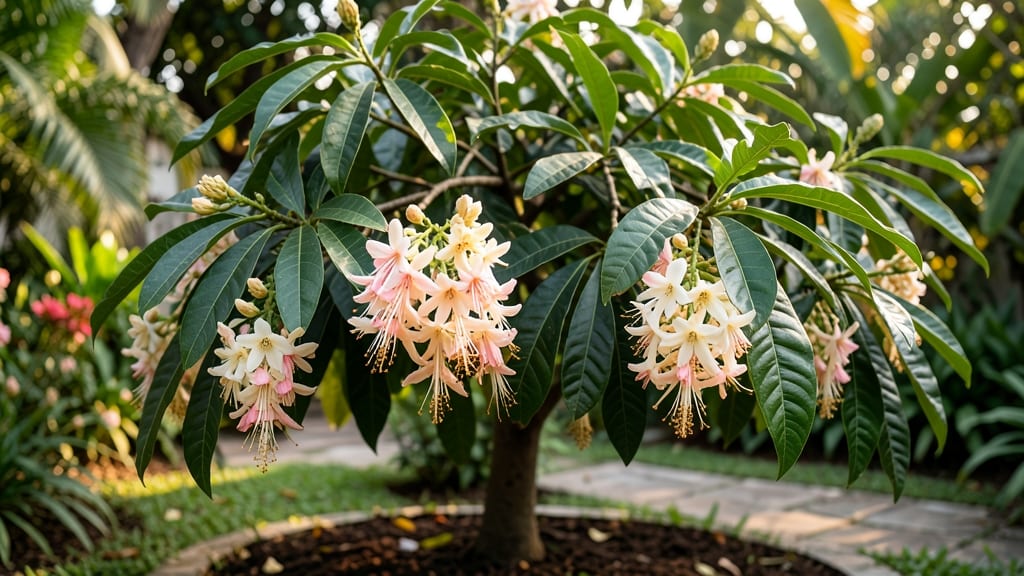
Understanding the mango tree flowering stages is your roadmap to a bountiful harvest, because what happens in those delicate weeks determines whether your 🥭 will bear fruit—or just pretty blossoms.
Picture this: your tree bursts into clusters of tiny pink and white flowers, only to drop them days later, leaving you wondering what went wrong. That’s a common frustration, but it’s also a sign your tree needs the right conditions—or a little extra help.
Each stage—from bud formation to fruit set—reveals clues about your tree’s health. Too much nitrogen? Fewer flowers. Not enough sunlight? Weak blooms. I’ll walk you through every phase, what to watch for, and how to give your mango tree the best shot at turning those blossoms into sweet, juicy fruit.
By the end, you’ll know exactly when to adjust your watering, fertilizing, and even pruning to maximize fruit production. No more guesswork—just a clear, step-by-step guide to flowering success.
5 Stages of mango tree flowering: timeline and visual clues
Understanding the mango tree flowering stages helps you predict fruit production and troubleshoot issues early. In tropical climates, this process typically begins in late winter or early spring, but timing varies by USDA Zone 9b-11 and variety.
Each stage—from bud formation to fruit set—offers visual clues about your tree’s health and potential yield. For example, pinkish buds signal readiness for blooming, while dropping flowers may indicate stress.
Mango trees are monoecious, meaning they produce both male and female flowers on the same tree, though they may not bloom simultaneously.
Pollination relies heavily on insects like bees and wasps, so a healthy ecosystem around your tree is crucial. Dwarf varieties may flower earlier (as young as 3 years), while standard trees can take 5+ years.
Paying attention to these stages helps you intervene if something goes wrong, like nutrient deficiencies or pest damage.
Duration: 2-4 weeks before buds appear. Leaves may darken slightly, and new growth slows as the tree prepares for flowering. Visual clue: Small, greenish swellings at leaf axils (where leaves meet branches).
Duration: 1-2 weeks. Pinkish buds emerge in clusters (panicles) along branches. Buds are tight and compact; avoid pruning during this time. Visual clue: Buds resemble tiny roses and may have a slightly waxy coating.
Duration: 5-7 days. Flowers open in pale yellow or cream hues, with 5 petals and a sweet fragrance. Peak blooming occurs in morning hours. Visual clue: Clusters of flowers (panicles) hang downward like miniature chandeliers.
Duration: 24-48 hours after blooming. Bees and wasps transfer pollen between flowers. Visual clue: Flowers wilt slightly post-pollination; some may drop naturally. Unpollinated flowers turn brown and crispy.
Duration: 4-6 weeks. Green, pea-sized fruits form where pollination occurred. Visual clue: Fruits may drop prematurely if the tree lacks nutrients or water. Healthy sets grow rapidly and develop a smooth skin.
During the pre-flowering stage, your mango tree is essentially recharging. This is the ideal time to fertilize lightly with phosphorus-rich compost to support bud development. Look for leaf axils (the junction where leaves meet the stem) to spot the first signs of bud swellings.
These tiny bumps are your first warning that the tree is gearing up for blooming. If you notice no buds after 4 weeks, check for nutrient deficiencies or environmental stress.
The bud formation stage is when your tree’s future harvest becomes visible. These pinkish buds are delicate and should not be disturbed. If you prune during this phase, you risk removing potential flower clusters.
Instead, focus on watering deeply (15-20 gallons for young trees) and ensuring the tree receives full sun exposure. Dwarf varieties may produce buds more densely, so monitor for overcrowding, which can lead to poor fruit development.
When the blooming stage arrives, your mango tree will be a spectacle of color and fragrance. Flowers open in pale yellow or cream hues, and the tree may attract bees and butterflies in droves.
This is the most critical time for pollination, so avoid using pesticides that could harm pollinators. If your tree is indoors (like a dwarf variety in a container), you may need to hand-pollinate using a small brush to transfer pollen between flowers.
The pollination phase is often overlooked, but it’s where fruit set success is determined. After flowers open, they typically wilt within 24-48 hours. If pollination was successful, you’ll see tiny green fruits forming where the flowers were.
If not, the flowers will turn brown and drop. To encourage pollination, plant bee-friendly flowers nearby like sunflowers or marigolds. In low-pollinator areas, consider artificial pollination for better fruit yield.
Finally, the fruit set stage is where you’ll see whether your efforts paid off. Healthy fruits will grow rapidly and develop a smooth, green skin. However, premature fruit drop
How to support healthy flowering: watering, fertilizing, and pruning tips
To encourage your mango tree to produce abundant, healthy blooms, focus on three key areas: watering consistency, balanced fertilization, and strategic pruning. Each plays a critical role in transforming your tree from a leafy giant into a fruiting powerhouse.
The right watering schedule ensures roots absorb nutrients efficiently, while the correct fertilizer balance—especially phosphorus—supports flower development. Meanwhile, pruning removes overgrowth that competes with blossoms for energy.
Start by adjusting your watering routine to match the tree’s needs during each flowering stage. Young trees require 15-20 gallons weekly, while mature specimens need 30-50 gallons during peak bloom.
Water deeply in the morning (6-9 AM) to prevent fungal diseases like powdery mildew, which can devastate delicate flowers. Avoid wetting the foliage, and always check soil moisture by inserting your finger 2 inches deep—if it’s dry, it’s time to water.
Fertilization is your secret weapon for encouraging mango tree blooms. Mango trees thrive on a balanced NPK ratio (6-6-6), but shift to a phosphorus-heavy formula (e.g., 3-9-6) when buds appear.
I recommend organic options like composted manure or bone meal, which release nutrients slowly and improve soil structure. Feed your tree every 6-8 weeks during the growing season (February through July), but reduce frequency in fall and winter when the tree rests.
Pruning might seem counterintuitive when you’re eager for flowers, but it’s essential for promoting healthy blooms. Remove dead, diseased, or crossing branches first, then thin out overcrowded areas to improve airflow. Focus on light pruning in late winter (just before buds swell) to stimulate new growth.
Avoid heavy pruning during active flowering, as this stresses the tree and can cause buds to drop. Use sterilized pruners to prevent bacterial infections, and seal larger cuts with pruning sealant.
Don’t forget to mulch around your mango tree with 2-3 inches of organic mulch (like wood chips or straw) to retain moisture and regulate soil temperature. Mulch also suppresses weeds, which compete for nutrients. Replenish mulch annually, keeping it 6 inches away from the trunk to prevent rot.
For container-grown mango trees, ensure pots have drainage holes and use a well-draining potting mix to prevent root rot, which can stunt flowering.
By combining these watering, fertilizing, and pruning strategies, you’ll create the perfect conditions for your mango tree to burst into vibrant blooms year after year. Pay attention to your tree’s responses—adjust watering if leaves yellow (overwatering) or curl (underwatering), and tweak fertilization if new growth is sparse or leggy.
With patience and care, your efforts will be rewarded with a bountiful harvest of juicy, sweet mangoes. 🌱