
Shrubs
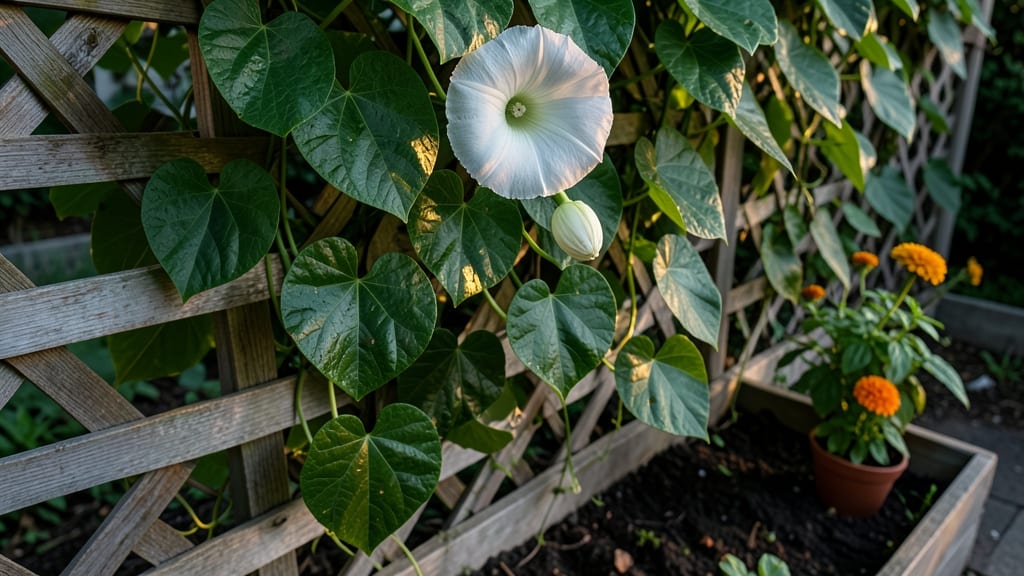
A moonflower thrives in sun or shade—but only if you get the balance right, or those stunning night-blooms will never appear.
Picture this: you’ve planted your 🌙 moonflower in full sun, watered it religiously, and waited for those dreamy white flowers to open under the moon. But instead of a magical evening display, you’re left with leggy vines and sparse blooms.
The problem? Too much direct sun can scorch the delicate leaves, while too little shade slows growth and weakens the plant.
Here’s the good news: moonflowers are flexible. They’ll grow in partial shade—especially in hot climates like Zone 6a—where they avoid midday heat stress. But if you want maximum blooms, morning sun with afternoon shade is the sweet spot.
Below, I’ll break down exactly how to set up your moonflower for success, from soil prep to seasonal tweaks.
You’ll learn how to spot the signs of over- or under-exposure, adjust care based on your local climate, and keep your vine thriving from spring planting through summer blooms. No more guesswork—just lush, fragrant evenings every time.
 Best Window Placement
Moonflower sun vs shade requirements: finding the perfect balance
The moonflower (Ipomoea alba) thrives on a delicate balance of light—too much sun can scorch its delicate blooms, while too little shade may stunt its growth. Native to tropical regions, this night-blooming vine naturally adapts to partial shade during intense midday heat.
Understanding your microclimate is key to replicating its ideal conditions, whether you're in a humid southern garden or a cooler northern zone.
Moonflowers need 4-6 hours of morning sun followed by afternoon shade to prevent wilting. In hot climates (Zones 8-11), they prefer filtered light through sheer curtains or nearby trees.
Meanwhile, in cooler regions (Zones 6-7), they can handle more direct sunlight without stress. The secret lies in light intensity, not just duration.
🌱 Light intensity matters more than duration—moonflowers hate harsh afternoon rays. Think of it like tea steeping: too strong (direct sun) and it burns; too weak (deep shade) and it never blooms. Your goal? Mimic dappled forest light where possible, especially in containers where heat builds up faster.
| Condition | Full Sun (6+ hrs) | Partial Shade (3-6 hrs) | Deep Shade (<3 hrs) |
|---|---|---|---|
| Growth Rate | ⚡ Fast (but risk of scorch) | 🌿 Moderate (ideal balance) | 🐢 Slow (leggy, few blooms) |
| Bloom Quality | 🔥 Small, weak stems | ⭐ Large, fragrant blooms | ❌ Minimal/no flowers |
| Leaf Health | 🌡️ Yellow/brown edges | 💚 Vibrant green | 🟢 Pale, thin leaves |
| Best For | Cooler climates (Zones 6-7) | Most regions (Zones 8-11) | North-facing walls |
| Adjustments Needed | ✂️ Prune afternoon sun | 🌳 Provide afternoon shade | 💡 Grow lights (optional) |
Note: "Partial Shade" = morning sun + afternoon shade is ideal for most moonflower varieties.
If you're growing moonflowers in containers, prioritize east-facing positions to capture gentle morning rays while avoiding the harsh afternoon sun. A 5-gallon pot with well-draining soil and mulch on top helps regulate temperature swings.
For ground plantings, position them near trees with sparse canopies or use a trellis with a shade cloth for afternoon protection.
In hot climates (Zones 9-11), moonflowers often perform best with only 3 hours of morning sun and the rest in shade. The key is avoiding midday heat stress, which causes buds to drop before opening.
I once grew moonflowers in Arizona's 110°F summers—they thrived under a 30% shade cloth with daily misting in the afternoon.
For cooler climates (Zones 6-7), you can push the limits to 6 hours of full sun, especially if your summers are short. Just monitor for wilting leaves by noon and provide afternoon shade if needed.
A simple trick? Train vines to climb a lattice near a north-facing wall—this naturally filters the harshest rays while still providing light.
Your local microclimate plays a huge role. Urban areas with heat islands may need more shade, while rural spots with cooler breezes can handle more sun. Pay attention to how your moonflowers respond in the first
How to grow moonflowers in sun or shade: step-by-step care guide
The moonflower (Ipomoea alba) thrives with flexibility, but its care shifts dramatically between sun and shade conditions. In full sun, it produces larger blooms and more vigorous vines, while partial shade extends its lifespan in hot climates.
My step-by-step guide covers everything from soil prep to seasonal adjustments to ensure your moonflower flourishes year after year.
Start by choosing the right location—morning sun with afternoon shade is ideal for most climates. If you're in a hot, dry region, prioritize afternoon shade to prevent leaf scorch.
Moonflowers also appreciate well-draining soil mixed with compost, whether planted in sun or shade. Let’s break down the essential steps to maximize your plant’s potential.
- 🌱 Soil Prep: Amend soil with 2-3 inches of compost and a 5-10-10 fertilizer for balanced nutrients. Moonflowers prefer slightly acidic to neutral pH (6.0-7.0).
- 💧 Watering Schedule: Water deeply every 3-5 days in sun, but reduce to weekly in shade. Always water at soil level to avoid fungal issues.
- ☀️ Sun Exposure: Provide 4-6 hours of morning sun in hot zones or full sun in cooler climates. Avoid harsh afternoon rays in USDA Zones 8-10.
- 🌿 Pruning Tips: Trim dead or leggy vines in spring to encourage bushier growth. Prune after blooming to redirect energy to new flowers.
- ✂️ Seasonal Adjustments: In summer heat, mulch with straw or wood chips to retain moisture. Reduce watering in fall/winter as growth slows.
For sun-exposed moonflowers, I recommend installing a lightweight trellis to support rapid vine growth. In shadier spots, opt for a stronger lattice since vines may grow slower but need extra support.
Always monitor for pests like spider mites, which thrive in dry, sunny conditions—treat with neem oil if spotted.
Adjust your care routine based on seasonal shifts. In spring, focus on fertilizing every 4-6 weeks to boost blooms, while in fall, reduce watering and stop fertilizing entirely. Moonflowers are annuals in most climates, so save seeds from your best blooms for next season!
With these sun or shade-specific tips, your moonflower will reward you with stunning evening blooms and lush foliage. Remember, the key is observation—adjust as needed based on your plant’s response to its environment. Happy gardening! 🌙