
Vegetables
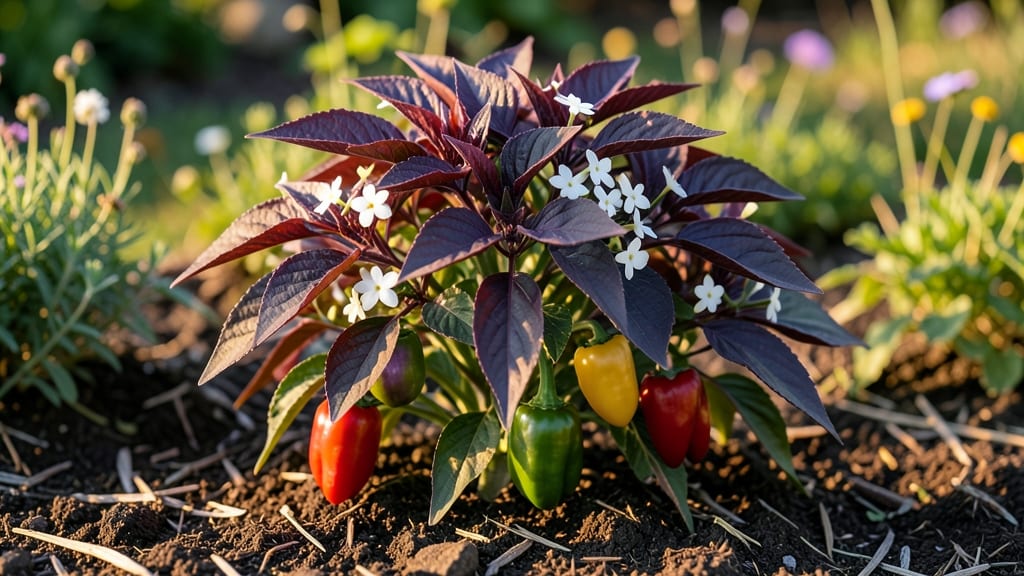
Growing purple leaf peppers transforms your garden into a vibrant edible art piece. 🌿 These striking plants produce deep purple foliage that stays bold all season, plus sweet, mild peppers perfect for fresh eating or preserving.
I've grown them for years, and they're the one plant that doubles as both a conversation starter and a kitchen staple.
The secret to their dramatic color and productivity starts with full sun—at least 6-8 hours daily—and well-draining soil with a pH between 6.0 and 6.8. They thrive in containers or garden beds, making them perfect for small spaces or urban balconies.
Start seeds indoors 8-10 weeks before your last frost, or buy sturdy transplants in spring when nighttime temperatures stay above 50°F.
With proper care, you'll harvest year-round in warm climates or until frost hits in cooler zones. The peppers ripen from green to red but keep their sweet flavor—great for stuffing, pickling, or snacking fresh.
Prune regularly to encourage bushier growth and better air circulation, which prevents common diseases like powdery mildew.
Common mistakes? Overwatering (let soil dry slightly between waterings) and fertilizing too heavily (stick to balanced 10-10-10 once a month). These plants are foolproof once you get the basics right, and their ornamental value makes them a standout in any garden. Ready to grow yours?
📚 In This Guide
- What you need
- Instructions
- Tips and common mistakes
- Wrapping up and next steps
What you need
- ● Purple leaf pepper seeds or seedlings: Choose heirloom or hybrid varieties like 'Purple Beauty' or 'Purple Flash.' Start with 2–3 seeds or 1–2 seedlings if space is limited.
- ● Well-draining potting mix: A blend of 50% peat moss or coconut coir, 30% perlite/vermiculite, and 20% compost works best. Avoid heavy garden soil.
- ● Containers (if not planting in-ground): 5–7 gallon pots for mature plants (ensure drainage holes!)
- ● Seedling trays (72–128 cell) for starting seeds indoors.
- ● Fertilizer: A balanced, water-soluble fertilizer (10-10-10 or 5-5-5) or organic options like fish emulsion or compost tea.
- ○ Support structure (optional but helpful): Cage or trellis for vining varieties (e.g., 3–4 ft tall). Stakes for bushier types (2–3 ft stakes).
- ● Basic gardening tools: Trowel, pruning shears, gloves, and a spray bottle (for misting seedlings).
- ● pH testing kit: Aim for a soil pH of 6.0–7.0 (slightly acidic to neutral).
- ● Sunlight access: 6–8 hours of direct sunlight daily (south-facing window or grow lights for indoors).
- ● Watering can or hose with gentle spray nozzle: Avoid soggy soil—water when the top 1–2 inches are dry.
- ○ Row cover or shade cloth (optional): For young plants in hot climates (30–50% shade to prevent stress).
- ● Self-watering pot to maintain moisture.
- ● Grow lights (LED or fluorescent) for indoor setups.
- ● Mulch (straw or shredded leaves) to retain soil moisture.
- ● Pest control: Neem oil or insecticidal soap (preventative measure!).
Step-by-Step guide to growing purple leaf pepper plants
Here's how to cultivate this stunning edible ornamental that thrives indoors and out.
🌱 Step 1: Select and Prepare the Right Growing Space
Purple leaf peppers need 6-8 hours of direct sunlight daily—a south-facing window or grow light works best. I always start mine in 6-inch pots filled with well-draining potting mix (never garden soil). The vibrant foliage fades without enough light, so supplement with a full-spectrum LED grow light if natural light is insufficient.
For outdoor planting, choose a spot with afternoon shade in hot climates to prevent leaf scorch. The purple hues intensify with more sun exposure, but too much direct afternoon sun can bleach the leaves. Test your location by placing a plant outdoors for a few hours and watching for color changes.
🪴 Step 2: Plant Seeds or Transplants at the Right Time
Sow seeds indoors 8-10 weeks before your last frost date or transplant mature plants in spring after soil warms to 60°F. I prefer buying established plants because purple leaf peppers are slow to germinate—sometimes taking 2-3 weeks to sprout. Plant seeds ¼ inch deep in moist soil, spacing them 12 inches apart for mature plants.
If transplanting, handle the root ball gently—purple leaf peppers are sensitive to root disturbance. Water deeply after planting to settle the soil and encourage root growth. Mulch with 1-2 inches of organic mulch to retain moisture and protect roots from temperature swings.
☀️ Step 3: Maintain Consistent Light and Watering
Water when the top inch of soil feels dry, but avoid soggy conditions—purple leaf peppers are prone to root rot. I use a moisture meter to check soil levels, especially in containers where drying happens faster. Fertilize every 4-6 weeks with a balanced, water-soluble fertilizer (10-10-10) diluted to half strength during the growing season.
Rotate pots weekly to ensure even growth and prevent leggy stems. You’ll notice the purple foliage deepening as the plant matures—this is a sign of healthy, thriving plants. Prune leggy growth to encourage bushier, more compact plants. Harvest peppers when they reach 3-4 inches long for the best flavor and color.
✂️ Step 4: Prune and Harvest for Continuous Production
Pinch back the tips of new growth in early spring to promote branching and more abundant foliage. Purple leaf peppers produce peppers year-round in warm climates, so regular harvesting encourages continuous production. Use clean, sharp pruners to avoid damaging stems—this prevents disease and speeds up healing.
Harvest peppers by twisting gently or cutting with pruners, leaving a small stem attached. Store fresh peppers in the refrigerator for up to 2 weeks or dry them for long-term storage. The more you harvest, the more the plant produces—this is one of my favorite traits of purple leaf peppers.
🌿 Step 5: Overwinter for Year-Round Growing
In colder climates, bring potted plants indoors before temperatures drop below 40°F. Place them near a bright window or under grow lights to maintain production. Purple leaf peppers are perennial in USDA zones 9-11, but in cooler zones, treat them as annuals or overwinter indoors with reduced watering.
Reduce watering in winter but keep the soil slightly moist. You’ll still get peppers in mild winters, but growth slows significantly. Prune lightly in early spring to remove dead growth and encourage fresh, vibrant foliage before the growing season resumes.
Tips & tricks for growing stunning purple leaf pepper plants
These practical insights will help you cultivate vibrant, productive purple leaf peppers that stand out in any garden.
Light Optimization: The 6-8 hours of direct sunlight in Step 1 is non-negotiable for maintaining those striking purple hues. I've found that supplementing with a full-spectrum LED grow light for just 4-6 hours daily can make all the difference in low-light conditions. Position your light about 6-12 inches above the plants and adjust as they grow. The deeper the purple color, the healthier your plant—this is your visual cue that you're meeting the light requirements perfectly.
Seed Starting Strategy: When sowing seeds indoors 8-10 weeks before your last frost date, use a heat mat set to 75°F to speed germination from the 2-3 weeks it might otherwise take. The warmth mimics outdoor conditions and prevents the "waiting game" that can be frustrating. Once sprouts appear, move them to a sunny windowsill or under grow lights immediately to prevent leggy seedlings. I've had success with a simple DIY setup using a shop light with fluorescent bulbs for this critical early stage.
Root Care Technique: Purple leaf peppers are particularly sensitive to root disturbance during transplanting, as mentioned in Step 2. To minimize shock, water the plant thoroughly the day before transplanting. This helps maintain root integrity and encourages faster establishment. When handling the root ball, support the base rather than gripping the stems—this prevents unnecessary damage that can stress the plant for weeks. The 12-inch spacing you'll use gives roots plenty of room to establish without competing for nutrients.
Year-Round Production Hack: For continuous harvests, implement a staggered planting schedule in warm climates. Start with your first batch in early spring, then add successive plantings every 4-6 weeks throughout the growing season. This ensures you always have mature plants producing peppers. I've found that plants in USDA zones 9-11 can produce year-round with minimal care, while those in cooler zones benefit from this staggered approach even when overwintered indoors.
Pro Tips for Purple Leaf Pepper Plant
- These practical insights will help you cultivate vibrant, productive purple leaf peppers that stand out in any garden.
- Light Optimization: The 6-8 hours of direct sunlight in Step 1 is non-negotiable for maintaining those striking purple hues.
- Seed Starting Strategy: When sowing seeds indoors 8-10 weeks before your last frost date, use a heat mat set to 75°F to speed germination from the 2-3 weeks it might otherwise take.
Frequently asked questions
How long does it take for a purple leaf pepper plant to produce peppers?
A purple leaf pepper plant typically takes 60–90 days from transplanting to produce its first peppers, depending on your climate and growing conditions. In warmer regions, you might see peppers as early as 70 days, while cooler areas may need a little extra time. Patience pays off—once established, these plants can keep producing for months!
Can I grow purple leaf peppers indoors, or do they need outdoor conditions?
Yes! Purple leaf peppers thrive indoors with 6–8 hours of sunlight daily—a sunny windowsill or a grow light works well. Just ensure your pot has drainage holes, and use a well-draining potting mix. If grown indoors, you might see slightly smaller yields, but they’ll still pack bold flavor. Pro tip: Rotate the plant weekly for even growth!
Are purple leaf peppers hotter than regular bell peppers?
Not necessarily! While they’re technically mild (like bell peppers), their deep purple hue and unique flavor make them a standout. The heat level depends more on the variety—some stay sweet, while others develop a very mild kick when left to ripen fully. Try them fresh, roasted, or pickled for a flavor twist!
Why are my purple leaf pepper leaves turning yellow or brown?
Yellowing leaves often signal overwatering or poor drainage, while brown edges can mean underwatering or low humidity. Check the soil—it should stay lightly moist but never soggy. If pests like aphids are present, use neem oil or insecticidal soap. Bonus fix: Mulch around the base to retain moisture and reduce stress!
Can I save seeds from purple leaf peppers for next year?
Let a few peppers fully ripen (they’ll turn deep purple or red), then slice them open to scoop out the seeds. Rinse, dry, and store in a cool, dark place. Note: Seed viability drops after 1–2 years, so plant fresh seeds for best results. Happy saving—and growing!
Wrapping up and next steps
Growing a purple leaf pepper plant is a rewarding way to add vibrant color, flavor, and nutrition to your garden—while enjoying a year-round harvest! Whether you’re a seasoned gardener or just starting, these striking plants thrive with minimal effort and deliver delicious rewards.
Now that you’re armed with the right knowledge, why not take the next step? Start with a single plant, experiment with varieties, or share your harvest with friends. Your garden—and taste buds—will thank you! 🌱✨