
Vegetables
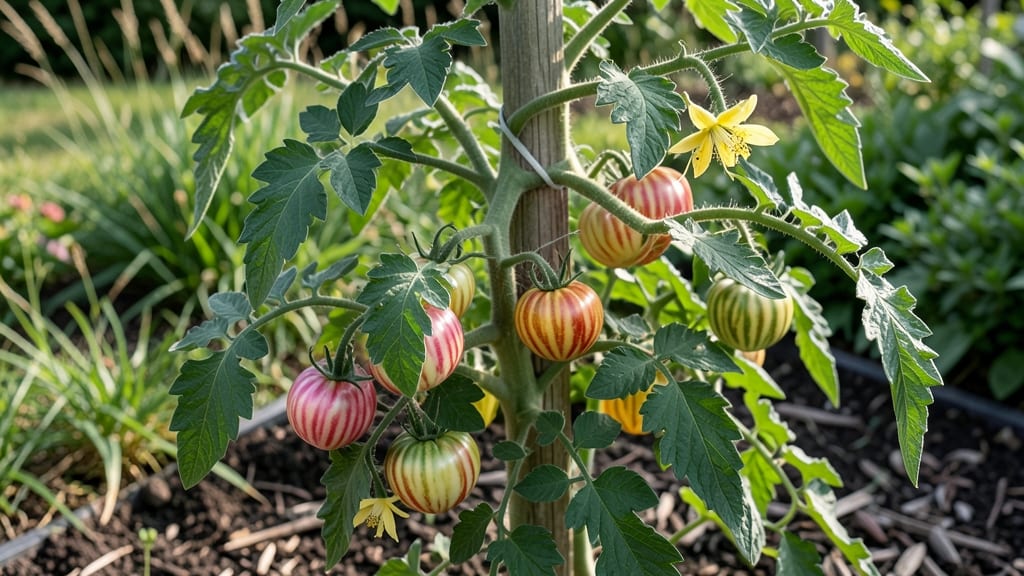
Growing striped heirloom tomatoes means waking up to plants that look like edible art—bold pink-and-white stripes, disease-resistant vines, and flavors that put store-bought tomatoes to shame. 🌱 I’ve grown over a dozen varieties, and these striped beauties consistently outperform even my favorite beefsteaks, with fewer blight issues and sweeter fruit.
The secret isn’t complicated: it’s matching their needs to their quirks, from soil to sunlight.
These tomatoes thrive in full sun (6-8 hours daily) and rich, well-draining soil with a pH between 6.0 and 6.8—think compost-heavy beds or raised containers. They’re fussier about watering than standard varieties, so drip irrigation or deep watering 1-2 times per week keeps them happy without cracking the fruit.
Pruning isn’t just for aesthetics; it’s how you prevent disease and direct energy into those showstopping striped fruits.
By midsummer, you’ll be harvesting tomatoes that taste like summer in every bite—sweet, complex, and packed with juice. The stripes aren’t just pretty; they’re a sign of genetic resistance to common diseases like early blight.
Plus, saving seeds from your best plants ensures next year’s harvest is even more spectacular. No greenhouses or fancy tools required—just patience and a little know-how.
Whether you’re a first-time gardener or a seasoned pro, striped heirlooms reward attention with unmatched beauty and flavor. Start with one variety, like ‘Indigo Rose’ or ‘Brandywine Stripes,’ and let these tomatoes steal the show in your garden—and your kitchen.
The payoff? Tomatoes so stunning, your neighbors will ask for cuttings.
📚 In This Guide
- What you need
- Instructions
- Tips and common mistakes
- Wrapping up and next steps
What you need
- ● Seeds: 3–5 striped heirloom tomato seeds (varieties like 'Tigerella' or 'Striped Roman' work beautifully).
- ● Seed-starting mix: 1–2 quarts of sterile, well-draining potting soil (avoid garden soil—it’s too dense!).
- ● Seed trays or small pots: 2–4 biodegradable or plastic cell trays (2–3 inches deep).
- ○ Grow lights or sunny windowsill: A seedling heat mat (optional but helpful) for warmth (70–75°F).
- ● Fertilizer: A balanced, water-soluble fertilizer (5-10-5 ratio) or compost tea for seedlings.
- ● Transplant containers or garden space: Containers: 5-gallon pots with drainage holes (1 per plant).
- ● Garden beds: Full sun (6–8+ hours daily), well-draining soil amended with compost.
- ● Support structures: Cages (5–6 ft tall) or stakes (6 ft) for indeterminate varieties.
- ● Mulch: Straw or shredded leaves to retain moisture and suppress weeds.
- ● Basic tools: Pruners, trowel, watering can with a fine rose, and gloves.
- ● Pest control: Neem oil or insecticidal soap (preventative measure).
- ○ Disease prevention: Copper fungicide (optional) for powdery mildew-prone areas.
- ● Harvesting: Small knife or pruning shears for clean cuts.
Step-by-step instructions for cultivating striped heirloom tomatoes
These vibrant varieties thrive with the right balance of sun, support, and care—here's how to grow them from seed to harvest.
🌱 Step 1: Start Seeds Indoors 6-8 Weeks Before Last Frost
Fill 2-3 inch deep biodegradable pots with sterile seed-starting mix and plant 2 seeds per cell at ¼ inch depth. I always use a heat mat set to 75-85°F to speed germination—striped heirlooms often take 7-14 days to sprout, depending on the variety. Cover with plastic wrap to retain moisture until germination begins.
Once seedlings emerge, remove the cover and place under grow lights 2-4 inches above for 14-16 hours daily. Watch for leggy growth (thin, stretched stems)—this means your light is too far away. Strong seedlings will have thick stems and dark green leaves spaced 1 inch apart.
🪴 Step 2: Transplant Seedlings After Hardening Off
Two weeks before your last frost date, begin hardening off seedlings by placing them outside in a sheltered spot for 1-2 hours daily. Gradually increase exposure over 10-14 days, ending with full sun. Choose a garden spot with full sun (8+ hours daily) and well-draining soil—striped heirlooms hate soggy roots.
Transplant seedlings into the garden when nighttime temperatures stay above 55°F. Bury stems ⅔ of the way up to encourage stronger root growth. Space plants 24-36 inches apart—crowding leads to poor air circulation and disease. Water deeply at planting to settle soil around roots.
☀️ Step 3: Provide Support and Prune for Optimal Growth
Install cages or stakes at planting—striped heirlooms can grow 4-6 feet tall and need support. I use 5-foot tomato cages for stability. Prune suckers (the small shoots growing between the main stem and branches) to focus energy on fruit production. Remove any leaves touching the soil to prevent disease.
Fertilize with a balanced organic fertilizer (10-10-10) when flowers appear, then switch to a low-nitrogen, high-phosphorus feed (5-10-10) to boost flowering and fruiting. Water at the base 1 inch per week, avoiding wetting leaves to prevent fungal issues like early blight.
✂️ Step 4: Harvest at Peak Ripeness for Best Flavor
Striped heirlooms ripen unevenly—check plants every 2-3 days starting 60-80 days after transplanting. Gently twist fruits from the vine when fully colored; they should yield slightly without resistance. Overripe tomatoes bruise easily, so harvest promptly.
Store at room temperature until fully ripe, then refrigerate for up to 2 weeks. The bold stripes intensify with ripeness—wait for deep color before slicing. Save seeds from your best fruits by fermenting them in water for 3-5 days to remove gelatinous coatings before drying.
Tips & tricks for cultivating striped heirloom tomatoes
Real talk: Growing striped heirloom tomatoes from seed to harvest requires patience and precision—but these tips will help you sidestep the most common pitfalls and grow tomatoes that look like they came from a specialty nursery.
Germination Secret: The 75-85°F heat mat isn't just about speed—it's about consistency. I've seen striped heirlooms take up to 14 days to sprout, especially if your home is cooler. If you don't have a heat mat, place pots on top of your fridge (not inside) to create a warm microclimate. The plastic wrap trick works too, but remove it as soon as you see moisture droplets forming to prevent mold.
Lighting Technique: That 14-16 hour daily light requirement is critical for sturdy seedlings. If your grow lights aren't powerful enough, you'll end up with leggy stems that flop over. I use LED grow lights because they're energy-efficient and produce less heat than fluorescent bulbs. Keep them 2-4 inches above seedlings and adjust as they grow—too close causes burning, too far causes stretching.
Hardening Off Strategy: The gradual 10-14 day hardening process is where most beginners fail. Start with just 1-2 hours in morning sun, then increase by 1 hour each day. Watch for wilting—the plant's way of saying "I'm not ready yet." A pro move: Harden off in the evening too for 1-2 hours in the last 3 days. This mimics natural temperature fluctuations and toughens up seedlings for transplant.
Pruning Precision: When pruning suckers in Step 3, aim to keep just 3-4 main stems. The goal is to direct energy to fruit production, not foliage. I use sharp pruning shears and make clean cuts at a 45-degree angle to prevent disease entry points. For disease prevention, always prune in the morning so wounds have time to dry before evening moisture sets in.
Pro Tips for Striped Heirloom Tomatoes
- Germination Secret: The 75-85°F heat mat isn't just about speed—it's about consistency.
- Lighting Technique: That 14-16 hour daily light requirement is critical for sturdy seedlings.
Frequently asked questions
Got questions about growing striped heirloom tomatoes?
You’re not alone! Here are answers to the most common queries to help you cultivate these stunning, flavorful gems with confidence.
When is the best time to plant striped heirloom tomatoes?
Striped heirloom tomatoes thrive in warm soil—plant them 2-3 weeks after your last frost date when temperatures consistently stay above 50°F (10°C). For cooler climates, start seeds indoors 6-8 weeks before transplanting. These varieties often need a longer growing season (80-90 days), so plan accordingly!
How do I prevent diseases like blight in striped heirloom tomatoes?
While striped heirlooms are more disease-resistant than many heirlooms, they still need care! Use mulch to keep soil moist (not soggy), space plants 18-24 inches apart for airflow, and avoid overhead watering. Prune suckers and remove diseased leaves immediately. For extra protection, rotate crops yearly and choose resistant varieties like 'Black Krim' or 'Brandywine.'
How big do striped heirloom tomato plants get, and do they need cages?
Most striped heirlooms grow 4-6 feet tall with sprawling vines, so cages or sturdy stakes are a must! Use 5-foot-tall cages (or trellises) to support their weight and improve airflow. For indeterminate varieties (like 'Striped Roman'), prune aggressively to focus energy on fruit production. Pro tip: Tie stems gently with soft plant ties to avoid damage!
Can I grow striped heirloom tomatoes in containers, and what size pot do I need?
These tomatoes do well in containers if given enough space. Opt for a 5-gallon pot (18-24 inches deep) with drainage holes and fill it with light, well-draining potting mix. Choose determinate varieties (like 'Striped Ace') for smaller pots, as they stay more compact. Place pots in full sun (6+ hours/day) and fertilize weekly with a balanced liquid feed.
What’s the best way to harvest and store striped heirloom tomatoes?
Harvest when tomatoes are fully colored and slightly soft to the touch—usually 70-85 days after transplanting. Gently twist or cut stems to avoid damaging the plant. Store at room temperature (not in the fridge!) for 1-2 weeks. For longer storage, refrigerate whole tomatoes (they’ll soften but retain flavor). Fun fact: Their stripes fade slightly when ripe, so pick early for vibrant color!
What are some easy alternatives if striped heirlooms are hard to find?
If striped heirlooms are unavailable, try these disease-resistant, flavorful alternatives:
- 'Cherokee Purple' – Deep purple-black with sweet, rich flavor.
- 'Solar Fire' – Bright orange-red, heat-tolerant, and crack-resistant.
- 'Mountain Merit' – A hybrid with striped potential and blight resistance.
- 'Green Zebra' – Striped green tomatoes (turns red when ripe!) with tangy flavor.
Seed swaps or local nurseries are great places to hunt for striped varieties!
Wrapping up and next steps
Growing striped heirloom tomatoes isn’t just about adding vibrant color to your garden—it’s a rewarding journey that yields delicious, disease-resistant fruit with minimal fuss. 🌱 Whether you’re a seasoned gardener or a curious beginner, these bold beauties prove that stunning harvests are well within reach.
Now that you’re armed with the right tips, roll up your sleeves and plant those seeds! Start small, experiment with varieties, and soon, you’ll be savoring homegrown tomatoes that taste like sunshine.
Next step: Mark your calendar for planting season and get ready to enjoy the sweet rewards of your labor—one striped slice at a time! 🍅✨