
Vegetables
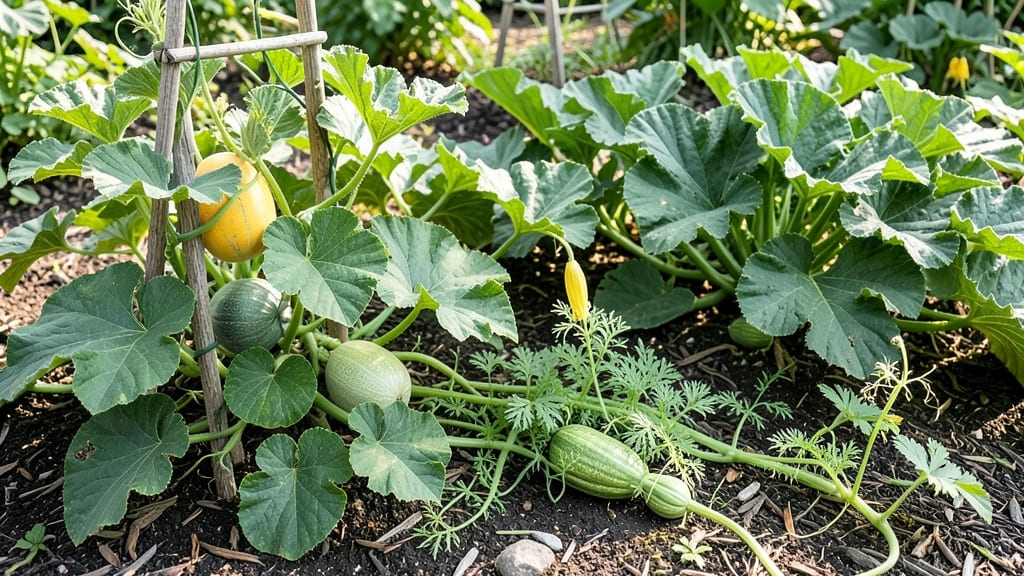
The types of melons your patch could grow range from striped-rind watermelons to golden-skinned honeydews—each variety brings its own unique flavor and growing quirks. 🌱 I’ve grown everything from classic cantaloupes to heirloom muskmelons, and the right choice depends on your space, climate, and taste for sweetness.
Some varieties need trellises, while others sprawl happily across the ground.
Watermelons thrive in warm soil and need plenty of space, while cantaloupes prefer well-draining beds and a shorter growing season. Honeydews, with their smooth rinds, do best in cooler climates and ripen later than other melons.
The key is matching the variety to your growing zone and sunlight—most need full sun and consistent moisture to develop that signature sweetness.
By the end of summer, you’ll be harvesting melons with bursting flavors—some crisp and juicy, others creamy and fragrant. The best part? Each type has its own ripening cues, from thump tests to color changes.
With the right variety, you’ll have melons ready to share by late July or August, depending on your region.
Whether you’re planting in a backyard plot, raised beds, or containers, melons add excitement to any garden. Start with one or two varieties to test what grows best in your space—then expand next season. The possibilities are as sweet as the harvest itself.
📚 In This Guide
- What you need
- Instructions
- Tips and common mistakes
- Wrapping up and next steps
What you need
- ● Melon Seeds or Seedlings: Choose from Cantaloupe, Honeydew, Galia, Casaba, or Watermelon varieties based on your preference. Start with 3–5 seeds per plant (or 1–2 seedlings per pot if container-growing).
- ● Potting Soil or Garden Soil: Well-draining, nutrient-rich mix (e.g., 50% topsoil + 50% compost). For containers, use 10–15 gallons per plant.
- ● Containers or Garden Space: Containers: Large pots (minimum 12–18 inches deep) with drainage holes.
- ● Garden Beds: Full sun (6–8 hours/day) and space 2–3 feet apart for vining types (e.g., Cantaloupe, Honeydew).
- ● Fertilizer: Balanced organic fertilizer (e.g., 10-10-10 NPK) or compost tea. Apply every 3–4 weeks after planting.
- ● Watering Can or Hose: With a gentle spray nozzle to avoid damaging delicate vines.
- ● Mulch: Straw or shredded leaves to retain moisture and suppress weeds.
- ● Trellis or Cages: For vertical growth (great for small spaces!). Use 4–6 ft tall stakes for vining melons.
- ● Row Covers: Lightweight fabric to protect seedlings from pests or frost (early season only).
- ● pH Test Kit: Ideal soil pH for melons: 6.0–6.8. Adjust with lime (to raise pH) or sulfur (to lower).
- ● Pruning Shears: To trim excess vines and encourage fruit production.
- ● Harvesting Knife: A sharp knife or pruners for clean cuts when melons are ripe.
How to identify and grow the most popular sweet melon varieties
Here’s how to recognize and cultivate four of the sweetest melons—from vine training to ripeness cues.
🌱 Step 1: Select Your Melon Type Based on Growing Conditions
Cantaloupes thrive in hot, dry climates with full sun and sandy soil, while honeydews prefer moderate heat and slightly richer soil. Galia melons, a hybrid, adapt well to cooler regions and shorter seasons, making them ideal for northern gardeners. Plant seeds ½ inch deep after the last frost when soil reaches 70°F—cold soil delays germination and weakens seedlings.
Watermelons, the largest of the group, demand longer growing seasons (90+ days) and deep, well-draining soil. I always plant them in raised beds to prevent rot, especially in heavy clay. Space vines 3-5 feet apart—crowding reduces fruit size and increases disease risk. Watch for first true leaves (two round cotyledons followed by jagged serrated leaves) before thinning to the strongest plant per hill.
☀️ Step 2: Master Vine Training and Support for Optimal Fruit Development
Melons need strong airflow to prevent powdery mildew, so avoid dense trellising. Cantaloupes and honeydews benefit from light trellis support—train vines upward with soft twine tied to stakes, but let the fruit hang free. Watermelons, however, must sprawl: their heavy fruits break stems if unsupported. Use black plastic mulch to warm soil and suppress weeds, which speeds up vine growth by 10-14 days.
Here’s the thing—prune aggressively after the first 4-6 weeks. Remove all side shoots (suckers) except the top 2-3 leaves on the main vine. This redirects energy to 1-2 primary fruits per vine, ensuring sweeter, larger melons. I snip with clean shears just above a leaf node to avoid tearing stems. If you see yellowing leaves, it’s usually overwatering—melons hate soggy roots.
💧 Step 3: Water Strategically for Sugar Development
Consistent moisture is critical during flowering (7-10 days after pollination), but cut back watering as fruits swell. Deep water once weekly (1-2 inches per week) until fruits form, then reduce to every 10-14 days. Overwatering dilutes sugars and splits fruit—look for dry soil 2 inches deep before watering again. Drip irrigation under vines prevents wetting leaves, which reduces fungal diseases like gummy stem blight.
Pollination is the secret to sweetness. Hand-pollinate in cool or rainy climates by transferring pollen with a small paintbrush from male to female flowers (female flowers have tiny melon-shaped ovaries at their base). Watermelons self-pollinate easily, but cantaloupes often need a helping hand. I pollinate early morning when flowers are fully open and dew is present—this mimics natural bee activity.
⏰ Step 4: Determine Ripeness Using Color, Texture, and Scent
Cantaloupes are ready when the stem slips easily from the vine and the beige netting near the blossom end darkens. Give the melon a gentle squeeze—softness at the blossom end (not the opposite side) signals ripeness. Honeydews release a sweet, musky aroma near the stem, and the rind turns from pale green to creamy white. Tap the fruit: a deep, hollow sound means it’s ripe.
Watermelons are trickier. Look for a creamy yellow spot where the melon rested on the ground—this indicates full sun exposure and sugar development. The tendril nearest the fruit should turn brown and dry. For black-seeded varieties, the rind darkens to a deep green or black, while yellow-fleshed types stay lighter. Cut one open if unsure—bright red flesh with black seeds is the gold standard for sweetness.
🌿 Step 5: Harvest and Store for Maximum Sweetness
Use a serrated knife to cut melons from the vine, leaving a 1-inch stem to prevent bruising. Cantaloupes and honeydews ripen fastest at 70-75°F—store them at room temperature until fully ripe, then refrigerate for 3-5 days. Watermelons last 2-3 weeks in a cool, dry place (50-55°F). Never refrigerate until fully ripe—cold temperatures convert starches to sugars too slowly, leaving them bland.
Real talk: overripe melons are the worst. They develop fermented, alcohol-like odors and mushy flesh. If the skin feels slimy or the stem rots, compost it immediately. For long-term storage, freeze cubed watermelon (it loses texture but retains sweetness) or pickle cantaloupe rinds. I’ve kept honeydews in the fridge for up to 2 weeks without losing flavor—just slice them thinly to preserve texture.
Tips & tricks for perfectly sweet melon cultivation
Sweet melons are worth the effort, and these pro tips will help you grow the juiciest, most flavorful varieties every season.
Soil Temperature Matters: The 70°F soil temperature mentioned for planting seeds is non-negotiable. Use a soil thermometer to confirm—cold soil below 65°F will delay germination by weeks. For cooler climates, consider using black plastic mulch 1-2 weeks before planting to warm the soil faster. This simple trick can shave 10-14 days off your growing season, especially for watermelons which need that head start.
Pruning Strategy: That aggressive pruning after 4-6 weeks might seem drastic, but it's the secret to larger, sweeter melons. Focus on removing all side shoots (suckers) except the top 2-3 leaves—this forces the plant to direct its energy to 1-2 primary fruits instead of producing multiple small ones. I use sharp, clean shears to avoid damaging the main stem, and always prune in the morning when the plant is hydrated and less stressed.
Ripeness Cues: The visual cues for ripeness—like the stem slipping easily for cantaloupes or the creamy yellow spot on watermelons—are your best friends. For honeydews, that sweet musky aroma near the stem is foolproof. Pro tip: Combine these visual cues with the "thump test"—a deep, hollow sound when tapped means perfect ripeness. I've found that cantaloupes often ripen 2-3 days earlier when grown in hotter climates, so check them daily during peak season.
Storage Wisdom: The 70-75°F storage recommendation for cantaloupes and honeydews is about more than just temperature—it's about allowing the ripening process to complete naturally. Once fully ripe, refrigeration extends shelf life to 3-5 days, but don't refrigerate before ripeness. For watermelons, that 50-55°F range in a cool, dry place preserves their moisture content. I've found that wrapping watermelon halves in plastic wrap and storing them cut-side down actually extends their freshness by 1-2 extra days while keeping the flesh crisp.
Pro Tips for Types Of Melons
- Sweet melons are worth the effort, and these pro tips will help you grow the juiciest, most flavorful varieties every season.
- Soil Temperature Matters: The 70°F soil temperature mentioned for planting seeds is non-negotiable.
- Pruning Strategy: That aggressive pruning after 4-6 weeks might seem drastic, but it's the secret to larger, sweeter melons.
Frequently asked questions
Got questions about melons? You’re not alone! Whether you’re picking the perfect one at the store or trying to grow your own, here are some of the most common queries—and their answers—to help you navigate the world of melons like a pro.
What’s the difference between cantaloupe and honeydew?
Cantaloupe
has a rough, netted rind, a sweet, musky aroma, and orange flesh. Honeydew, on the other hand, has a smooth, pale green rind, milder flavor, and pale green flesh. Cantaloupe is usually sweeter and more fragrant, while honeydew is crispier and less aromatic. Try both to see which you prefer!
When is the best time to buy or harvest melons?
Melons are at their peak from late spring to early fall, depending on the variety. Store-bought melons should ripen at room temperature (place them in a paper bag for 2–3 days). If growing your own, harvest when the stem slips easily from the vine and the melon feels heavy for its size. A sweet smell near the stem is another ripe signal!
Can you eat melon rinds? Are they safe?
Most melon rinds—like those of cantaloupe or honeydew—are edible and packed with fiber and nutrients. However, they’re tough and bitter, so many people peel them. If you’re curious, try blanching and pickling them for a tangy crunch! Just avoid the waxy coating on store-bought melons, as it’s not food-safe.
How do I store melons to keep them fresh longer?
Store uncut melons in a cool, dry place (like a pantry) for up to a week. Once cut, wrap them in plastic or store in an airtight container in the fridge for 3–5 days. For whole melons, avoid refrigeration until ripe—cold temperatures can dull their flavor. Pro tip: Place a ripe melon near unripe ones to speed up ripening!
What should I do if my melon tastes bland or sour?
A bland melon is often underripe, while a sour one may be overripe or stored improperly. Check the stem: if it’s still green, the melon needs more time. If the flesh is mushy or fermented-smelling, it’s past its prime. For underripe melons, try letting them sit at room temperature for another day or two. Bonus: Pairing melon with salty snacks (like prosciutto) can enhance its natural sweetness!
Wrapping up and next steps
From the juicy sweetness of cantaloupes to the refreshing crunch of honeydews, melons bring a burst of flavor and nutrition to any table! Whether you’re a gardener, a foodie, or just someone who loves a ripe, sun-kissed bite, there’s a melon variety perfect for you. 🍈✨
Now that you’ve explored the diverse world of melons, why not take the next step? Try growing your own, experiment with new recipes, or simply enjoy a slice of summer’s finest. The possibilities—and the flavors—are endless!