
How To
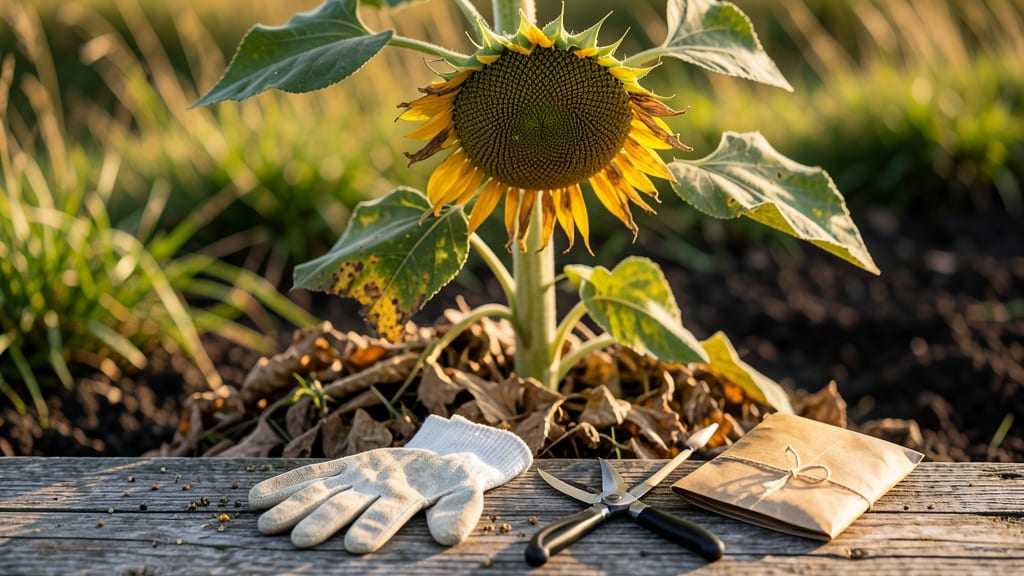
Picking sunflower seeds at the right time ensures you get plump, flavorful seeds instead of shriveled or moldy ones—so knowing when to pick sunflower seeds is the key to a successful harvest.
Picture this: you’ve waited all summer for your towering 🌻 to bloom, only to realize the seeds are either still green or already falling apart. Timing matters more than you think, and missing the window means wasted effort.
In this guide, I’ll walk you through the exact visual cues—like seed color, stem dryness, and the telltale rattle—to know when your sunflowers are ready for harvest, plus how to handle them afterward for long-term storage.
Whether you’re growing sunflowers in Zone 6a or further south, these tips will help you harvest at peak maturity, every time.


How to identify sunflower seed maturity by head color
Sunflower seed maturity is all about color cues—specifically, the transition from yellow to brown on the flower head. When you spot these changes, you know your seeds are nearing harvest. The back of the head darkens first, followed by the outer petals, signaling it's time to act.
Ignoring these visual clues can lead to seeds that either don’t fully develop or spoil before harvesting.
Most sunflower varieties follow a predictable pattern: the yellow petals wilt and drop off first, revealing the brown seed head underneath. This shift happens when the plant redirects energy from blooming to seed production.
The darker the back, the closer your seeds are to being ready. For example, Russian Mammoth varieties turn a deep chocolate brown, while Autumn Beauty hybrids develop a muted bronze hue.
Here’s the key: the outer edges of the seed head should be fully brown, but the center may still look greenish. This is normal—don’t harvest too early! The center will darken over the next 3-5 days, completing the ripening process.
Regional variations matter too: in hotter climates, this process speeds up, while cooler zones may take 10-14 days longer.
| Stage | Head Color | Back of Head | Petals | Harvest Ready? |
|---|---|---|---|---|
| Early Maturity | Yellow-green | Light green | Attached | No |
| Mid Maturity | Brown edges | Darkening | Dropping | Wait 3-5 days |
| Full Maturity | Uniform brown | Deep brown | Fully gone | Yes! |
Hybrid sunflowers can throw a curveball. For instance, bicolored varieties like Teddy Bear may show striped brown and gold heads, while black oil sunflowers turn a dark, almost blackish-brown.
Always check the seed head’s underside—if it’s dry and papery, your seeds are ready. Pro tip: Shake the head gently; if seeds rattle loudly, they’re harvest-ready.
Regional differences play a role too. In Southern states, sunflowers mature 2-3 weeks earlier than in Northern climates due to longer daylight hours. For example, a Texas-grown Mammoth might be ready by mid-September, while a Minnesota plant could still be ripening in October.
Adjust your timeline by 2 weeks if you’re in a shorter growing season.
Watch for overripe signs too—if the seed head splits open or birds start pecking, you’ve missed the window. Overripe seeds lose germination rates and flavor quality. To avoid this, monitor your plants daily in the last 2 weeks of growth.
Use a small notebook to track color changes and note when the back of the head turns fully brown.
One common mistake? Harvesting based on petal drop alone. While it’s a good initial indicator, some petals linger even after seeds are ready. Always double-check the head’s color and stem dryness (we’ll cover that in the next section!).
For large varieties, the outer rows may mature first—pick these first to avoid overripening.
If you’re growing multiple sunflower types, prioritize smaller varieties like Teddy Bear first—they mature 1-2 weeks earlier than giants like <
Stem dryness and seed harvesting: the 3 critical tests
Determining the perfect moment to harvest sunflower seeds goes beyond just checking the flower head color. The stem dryness and seed maturity play crucial roles in ensuring you collect high-quality seeds. When stems begin to dry and seeds reach full ripeness, your sunflowers are ready for harvesting.
These three critical tests will help you avoid picking too early or too late, both of which can ruin your seed yield.
First, focus on the stem snap test, which reveals whether the plant has fully allocated its energy to seed production. Next, assess leaf drop—healthy leaves falling naturally signal maturity.
Finally, the seed rattle method confirms internal seed readiness. Mastering these tests ensures you harvest at peak quality, maximizing both quantity and viability for future planting or consumption.
⚠️ callout warning
Harvesting sunflower seeds too late causes them to shatter and lose viability. If the back of the seed head turns completely brown but the stem is still green, wait 1-2 more days. Conversely, green stems with brown seed heads often mean seeds are overripe. Always double-check with the seed rattle test—if seeds don’t rattle, they’re not ready yet.
Start with the stem snap test. Gently grasp a sunflower stem near the base and bend it slightly. If it snaps cleanly with minimal resistance, the plant has redirected its nutrients to the seeds, signaling maturity.
A flexible stem means the plant is still actively growing, and seeds need more time. This test is especially useful for tall varieties, where visual cues can be harder to spot from the ground.
The leaf drop assessment is your second checkpoint. As sunflowers mature, their lower leaves naturally yellow and fall off. While some leaf drop is normal, watch for a patterned progression—leaves closest to the ground should drop first, followed by those higher up.
If leaves are still vibrant green, the plant isn’t ready. However, if leaves wilt suddenly or fall due to disease or pests, harvest may be compromised.
For the final confirmation, use the seed rattle method. Hold the seed head over a paper bag and give it a firm shake. If seeds rattle loudly inside, they’re dry and ready for harvest. A dull thud or silence means seeds are still moist and need more time.
This test is foolproof—if seeds don’t rattle, they’re not mature yet, even if the head looks brown. Pro tip: Test multiple heads to account for uneven ripening in larger sunflower patches.
Timing is everything when harvesting sunflowers. Use these three tests together to avoid common mistakes like premature harvesting (seeds won’t store well) or overripe seeds (they’ll shatter or spoil).
Once you’ve confirmed maturity, cut the seed heads with 6-12 inches of stem and hang them upside down in a dry, well-ventilated area for 1-2 weeks to finish drying before shelling.
With practice, these tests become second nature, ensuring you always harvest sunflower seeds at their peak. Happy harvesting—your future garden (or pantry) will thank you! 🌻