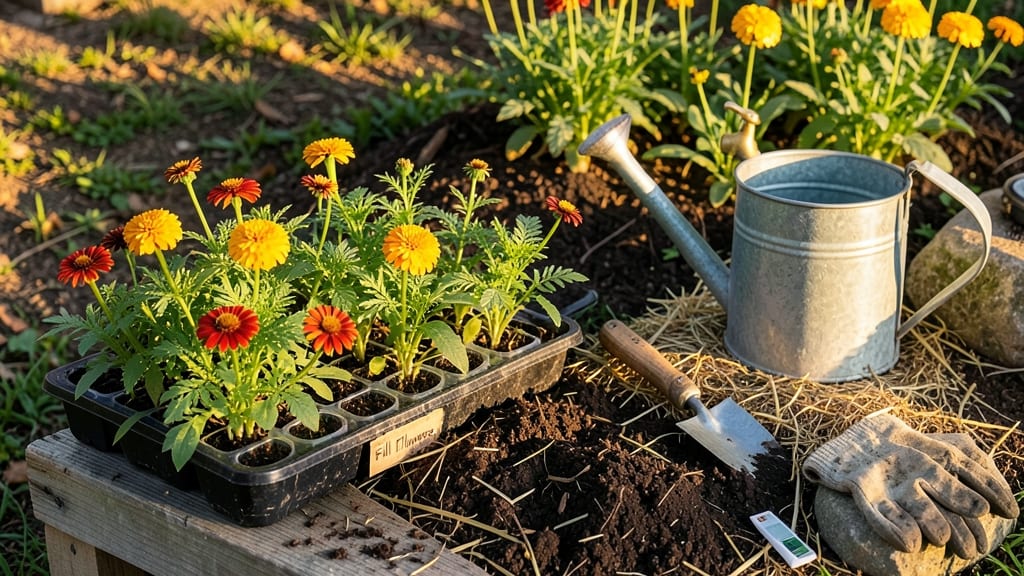
To plant fall flowers in Texas, start between mid-August and early October—but the exact timing depends on your zone, soil warmth, and the flower’s heat tolerance.
Texas gardeners know the fall season can transform your yard into a vibrant, fragrant paradise—but timing your plantings wrong means wilted dreams before winter.
Whether you’re in the Hill Country or the Gulf Coast, getting this window right isn’t just about avoiding frost; it’s about leveraging the Lone Star State’s unique microclimates to extend your blooms until spring.
Too early, and your seedlings will fry in September’s lingering heat; too late, and they’ll struggle to root before the first frost. The key?
Matching your choices to your zone—Zones 8-10 (like Houston or San Antonio) can handle August plantings, while Zones 7-8 (like Dallas or Fort Worth) need to wait until September.
Below, I break down the exact dates by region, the best drought-resistant flowers for Texas soil, and how to prep your garden for a showstopping fall display that lasts well into December.
🌱
When to Plant Fall
Jan
❄️
Feb
❄️
Mar
🌱
Apr
🌱
May
🌱
Jun
🌱
Jul
☀️
Aug
☀️
Sep
🍂
Oct
🍂
Nov
🍂
Dec
❄️
Texas planting Zones & ideal dates for fall flowers by region
Texas gardeners know the fall season can transform your yard into a vibrant, fragrant paradise—but timing your plantings wrong means wilted dreams before winter. The Lone Star State spans 10 USDA planting zones (A-D, East vs. West), each with unique first-frost averages and heat patterns.
Understanding these zones helps you plant heat-tolerant annuals like salvia and gaillardia at the perfect moment to avoid frost damage while maximizing blooms.
Unlike northern states, Texas fall planting isn’t just about avoiding frost—it’s about escaping late-summer heat spikes that can stress seedlings. In Zone 10 (South Texas), you might plant as late as October, while Zone 7 (North Texas) demands earlier action in September.
Let’s break down the ideal windows by region so your fall flowers thrive until spring.
💡 Pro Tip: Always check your local frost dates (available via The Old Farmer’s Almanac)—they can vary 1-2 weeks from USDA averages. For example, Dallas (Zone 8a) averages its first frost on November 15, while Houston (Zone 9a) rarely sees frost before December 15.
🌱 Comparison Table: Below are the exact planting windows for Texas’ 10 zones, including heat-tolerant varieties and frost-sensitive alternatives.
| Zone |
Region |
Planting Window |
First Frost Avg. |
Heat-Tolerant Picks |
Frost-Sensitive Picks |
| Zone 6a |
North Texas (Panhandle) |
September 15–October 15 |
November 1–15 |
Salvia, Coreopsis, Gaillardia |
Marigolds, Snapdragons |
| Zone 7a |
North Texas (Dallas/Fort Worth) |
September 1–October 10 |
November 15–December 1 |
Mexican Sunflower, Blanket Flower |
Asters, Pansies |
| Zone 7b |
Central Texas (Austin) |
August 20–September 20 |
November 20–December 5 |
Lantana, Zinnias |
Calendulas, Sweet Alyssum |
| Zone 8a |
East Texas (Tyler) |
August 15–September 15 |
November 25–December 10 |
Verbena, Portulaca |
Cosmos, Dianthus |
| Zone 8b |
Central Texas (San Antonio) |
August 1–September 10 |
December 1–15 |
Mexican Bush Sage, Firewheel |
Stocks, Sweet Peas |
| Zone 9a |
Gulf Coast (Houston) |
July 20–August 30 |
December 15–January 5 |
Vinca, Pentas |
Dahlias, Begonias |
| Zone 9b |
South Texas (Corpus Christi) |
July 1–August 20 |
January 10–20 |
Plumbago, Lantana |
Petunias, Impatiens |
| Zone 10a |
Rio Grande Valley |
June 15–July 30 |
January 25–February 10 |
Portulaca, Zinnias |
Mums, Snapdragons |
Zone 10b
Top 10 fall flowers for Texas gardens & their planting secrets
Fall in Texas is your golden opportunity to plant flowers that thrive in cooler weather while still holding their own against the occasional heat wave. The key is selecting drought-resistant varieties that bloom prolifically from October through December.
My top picks focus on native plants and heat-tolerant annuals that won’t wilt when temperatures dip—but still need that Texas sun to shine.
Before you dig, remember: soil prep is everything in our clay-heavy state. Amend your beds with compost to improve drainage, and always plant after a good rain or in the early morning to reduce transplant shock.
These flowers will reward you with color when many gardeners are packing up for winter.
🌱 Fall Flower Care Ratings
*Ratings based on Texas-specific growing conditions (Zones 7-10)
Let’s start with Mexican sunflower (Tithonia rotundifolia), a showstopper that thrives in full sun and handles our late-summer heat like a champ. Plant seeds directly in the garden after mid-August in South Texas or wait until early September in North Texas.
Space them 18-24 inches apart—they’ll grow 3-5 feet tall and pack a punch with fiery orange blooms that attract hummingbirds until frost.
For a native Texas beauty, try blackfoot daisy (Melampodium leucanthum). This drought-proof perennial blooms from fall through spring and loves our alkaline soils. Plant in full sun to partial shade after September 1st, spacing 12-18 inches apart.
Deadhead spent blooms to encourage nonstop flowering—it’s a zero-maintenance superstar that even deer usually avoid.
Don’t overlook fall asters (Symphyotrichum) for their late-season color. These hardy perennials need well-draining soil and thrive in Zones 7-9. Plant divisions or seeds in early fall (September-October) for spring blooms, or sow seeds in late summer for fall color.
Pair them with Texas bluebonnets for a native Texas palette that lasts until December.
Pro tip: Mulch heavily after planting to retain moisture and regulate soil temperatures. Use 2-3 inches of shredded bark or straw—just avoid piling it against stems.
Water deeply once a week after establishment (except during rain), and watch your fall garden transform into a Texas-sized masterpiece that outshines any winter-bare yard.
★★★★★4.8(8 reviews)
|