
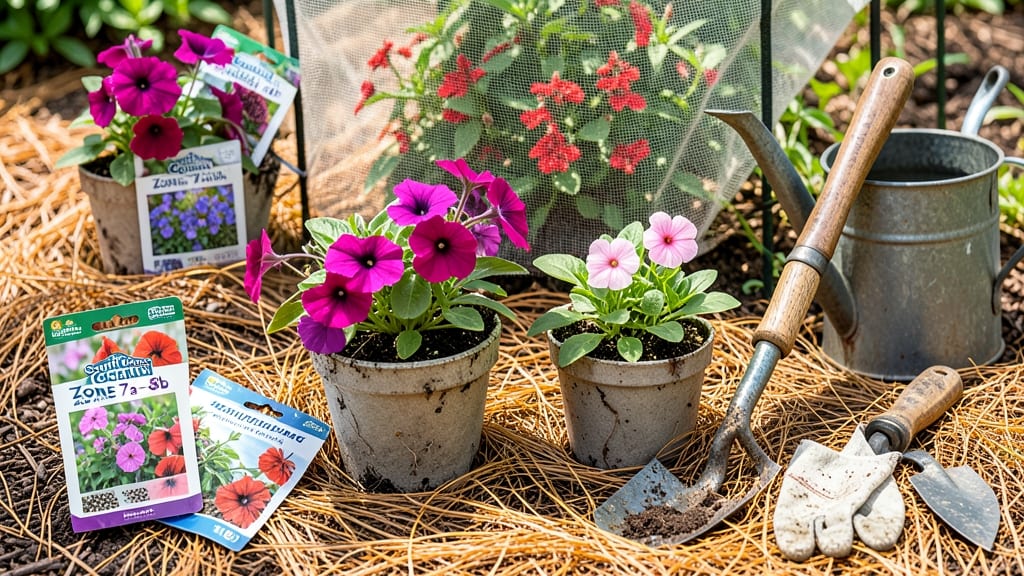
When to Plant Flowers in South Carolina: Zone 8A/B Timing for Year-Round Color

Flowers

When to Plant Flowers in South Carolina: Zone 8A/B Timing for Year-Round Color

Planting flowers in South Carolina at the right time means the difference between a garden bursting with color and one that fades before it begins.

South Carolina’s mild winters and long growing season let you enjoy vibrant flowers year-round—but planting at the wrong time can mean wilted dreams instead of blooming success. Timing is everything, especially in Zone 8A/B, where frost dates shift from coastal Charleston to Piedmont’s hills.

If you’ve ever watched a tender annual crisp in a late spring frost or seen summer blooms wilt under sudden heat, you know how quickly things can go wrong.

The key is matching your flowers to the 210-240 frost-free days in your region, whether you’re in the humid Lowcountry or the slightly cooler Upstate.

Here’s your month-by-month guide to planting for maximum blooms, from frost-resistant perennials in fall to heat-loving annuals in spring—plus the native flowers that thrive without extra fuss.

🌸 When to Plant Flowers
Jan ❄️
Feb ❄️
Mar 🌱
Apr 🌱
May 🌸
Jun ☀️
Jul ☀️
Aug 🌱
Sep 🌸
Oct 🌸
Nov 🌸
Dec 🌱
Ideal Time
Also Good

South Carolina flower planting calendar: month-by-month zone 8A/b guide

Timing your flower plantings in South Carolina’s Zone 8A/B means the difference between lush blooms all season and wilting disappointment.

With last frost dates ranging from mid-March in Charleston to late March in Greenville, and first frosts arriving mid-November, you’ve got a 210-240 day frost-free window to work with—plenty of time for vibrant gardens! The key is matching each flower type to its ideal planting window.

In this guide, I’ll break down exactly when to plant flowers in South Carolina by month, covering annuals, perennials, bulbs, and warm-season favorites.

I’ll also highlight microclimate differences between coastal areas (like Charleston) and inland regions (like Columbia and Greenville), where humidity and heat can shift planting timelines by weeks.

Month Plant Type Best Flowers Planting Time Notes
January Bulbs Tulips, Daffodils, Crocus Late Jan (Zone 8B) Plant after ground thaws; mulch heavily.
February Perennials Black-Eyed Susans, Coneflowers Early Feb (Zone 8B) Start hardy perennials 4-6 weeks before last frost.
March Annuals & Warm-Season Marigolds, Zinnias, Petunias Mid-March (after frost) Wait until soil reaches 60°F for annuals.
April Vegetative Perennials Daylilies, Lavender, Salvia Early April Divide overcrowded perennials in spring.
May Heat-Tolerant Annuals Sunflowers, Lantana, Vinca Late May Plant after Memorial Day for best heat tolerance.
June Succession Planting Cosmos, Snapdragons, Nasturtiums Every 2-3 weeks Replace spent blooms for continuous color.
August Fall Bulbs Dahlias, Gladiolus, Canna Late August Plant tender bulbs 6-8 weeks before frost.
September Cool-Season Annuals Pansies, Sweet Alyssum, Stock Early Sept Ideal for fall color before frost.
October Spring-Blooming Bulbs Tulips, Hyacinths, Daffodils Mid-October Plant 6-8 weeks before last frost for spring blooms.
November Winter-Blooming Hellebores, Winter Jasmine,

Best flowers for South Carolina’s climate: fast-blooming picks for each season

South Carolina’s humid subtropical climate rewards gardeners with long bloom seasons, but not all flowers thrive in our hot summers and mild winters. The key is choosing heat-tolerant annuals, frost-resistant perennials, and native species that match each season’s demands.

Whether you’re chasing summer color or winter blooms, these picks will keep your garden vibrant year-round.

For summer heat, focus on drought-tolerant annuals like celosia and portulaca, which flourish when temperatures soar. In fall and winter, frost-hardy perennials such as black-eyed Susan and coreopsis shine, while winter jasmine adds early-season color.

Native wildflowers like purple coneflower also thrive with minimal care, attracting pollinators while adapting to SC’s clay-heavy soils.

When planting flowers in South Carolina, timing matters just as much as selection. Spring-bloomers like azaleas and camellias should go in late fall or early winter, while summer annuals like zinnias and marigolds wait until after the last frost (typically mid-March in Zone 8A/B). Below are my top picks for each season, along with care tips to ensure fast, reliable blooms.

🌱 Top Flowers for South Carolina by Season

  1. 🌞 Summer (June-August): Celosia (heat-tolerant, thrives in full sun), Portulaca (drought-resistant, blooms all season), Sunflowers (fast-growing, attracts pollinators).
  2. 🍂 Fall (September-November): Black-Eyed Susan (perennial, blooms until frost), Coreopsis (drought-tolerant, bright yellow flowers), Mums (annuals for late-season color).
  3. 🌿 Winter (December-February): Winter Jasmine (early blooms, frost-hardy), Camellias (evergreen, thrives in shade), Pansies (cool-season annuals, vibrant colors).
  4. 🌸 Spring (March-May): Azaleas (native, fragrant blooms), Daffodils (bulbs for early color), Sweet Alyssum (fast-growing, attracts bees).
  5. 🌿 Year-Round Native Picks: Purple Coneflower (pollinator magnet), Butterfly Weed (drought-resistant, attracts butterflies), Virginia Bluebells (spring blooms, woodland shade).
Pro Tip: Mulch with 3 inches of pine straw to retain moisture and regulate soil temperature—critical for SC’s humid summers.

For summer heat, prioritize deep watering schedules—give annuals like celosia 1-2 inches of water weekly and mulch heavily to lock in moisture. Portulaca, a succulent-like annual, is my go-to for low-maintenance summer color because it stores water in its leaves, making it nearly drought-proof once established.

In fall and winter, shift to frost-resistant perennials that handle mild freezes without fuss. Black-eyed Susans and coreopsis are low-maintenance workhorses—they rebloom yearly with minimal care, even in clay soils. For winter interest, camellias and winter jasmine deliver structure and color when most gardens are dormant.

Don’t overlook native wildflowers like purple coneflower—they’re pollinator powerhouses and thrive in SC’s conditions without chemical fertilizers. Plant them in meadow-style gardens for effortless beauty that supports local ecosystems. Pair them with butterfly weed for a sun-loving duo that blooms from summer into fall.

To maximize blooms, feed perennials in early spring with a balanced 10-10-10 fertilizer and annuals every 4-6 weeks during their growing season. Deadhead spent blooms regularly to encourage continuous flowering, and prune back perennials in late winter to stimulate new growth.

With these seasonal picks and care tips, your South Carolina garden will be a year-round paradise.

★★★★★4.7(9 reviews)
Categories Flowers