
Plants
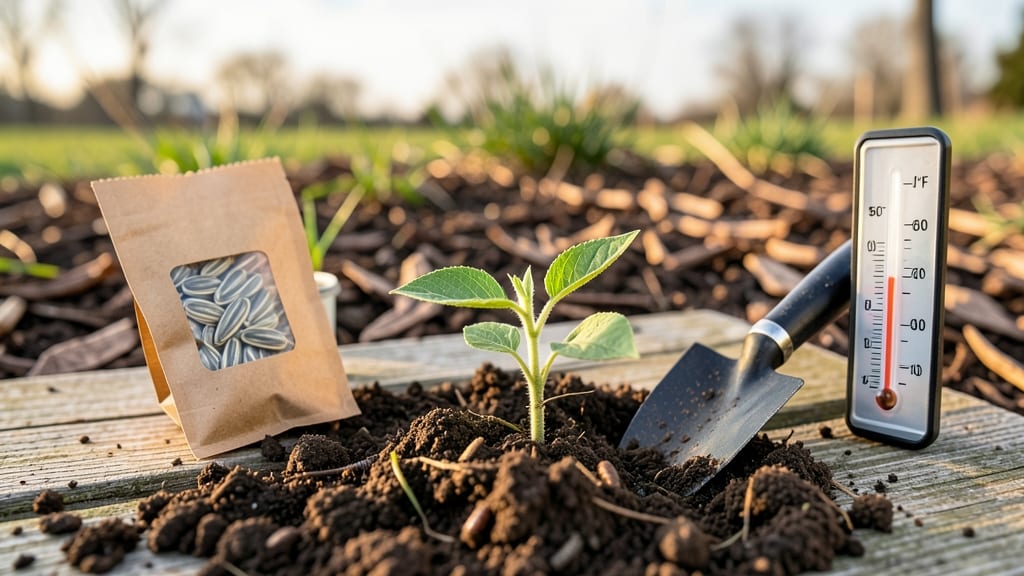
Planting sunflower seeds in Michigan after the last frost date—typically mid-April to late June—sets the stage for a summer of towering 🌻 blooms that rival your neighbors' best efforts.
Here’s the catch: Michigan’s 5b-6b climate means a late spring frost can still sneak in, turning your eager seedlings into sad, stunted plants.
But don’t let that stop you—with the right timing and a few pro tips, you can outsmart the weather and grow sunflowers that reach 10 feet tall by August.
In this guide, I’ll break down the exact frost-date windows for Detroit, Grand Rapids, and the Upper Peninsula, plus soil temperature tricks to jumpstart germination.
Whether you’re aiming for dwarf varieties in containers or giant sunflowers in your garden beds, you’ll learn how to plant for peak bloom timing—no guesswork required.
Ready to turn your backyard into a sunflower paradise? Let’s dive into the step-by-step frost-date guide that’ll have your seeds sprouting strong and your blooms stealing the show.
Michigan sunflower planting dates by region: frost-date calculator guide
Michigan’s USDA hardiness zones 5-7 create a diverse planting landscape for sunflowers, where timing directly impacts bloom size and maturity. Unlike warmer climates, Michigan’s short growing season demands precise frost-date calculations to ensure your sunflowers reach their full height before first fall frosts in October.
Whether you're in Detroit’s Zone 6a or the Upper Peninsula’s Zone 4b, knowing your region’s last frost date is the first step to towering summer blooms.
Sunflowers thrive when planted after the last frost, but Michigan’s variable weather means these dates shift yearly. For example, Southern Michigan (Detroit, Lansing) typically sees last frosts around April 15-30, while Northern Michigan (Traverse City, UP) may wait until May 15-30.
Planting too early risks frost damage to young seedlings, while delaying too long can result in stunted growth before winter arrives.
Here’s the key trade-off: Early planting (late April) gives sunflowers more time to grow tall, but risks cold-soil germination delays. Late planting (June) ensures warm soil, but may limit height before frost.
The sweet spot? Aim for mid-May in most regions—when soil temps hit 50°F+ and frost risk drops below 10%.
🌱
For Detroit gardeners, the window between May 1-15 offers the best balance—soil warms quickly, and sunflowers have 120+ frost-free days to mature. In Grand Rapids, wait until May 15-30 to avoid late spring frosts, which can devastate young seedlings.
The Upper Peninsula’s shorter season demands earlier varieties or container growing to extend the season.
Pro tip: Use Michigan State University’s frost-date calculator (link in resources) to adjust for your exact location. Even within 50 miles, frost dates can shift by 2-3 weeks. For example, Ann Arbor’s Zone 6b may plant 1 week earlier than Jackson’s Zone 6a.
If you’re pushing the limits, try early indoor starts (4-6 weeks before last frost) in biodegradable pots, then transplant outdoors. This trick works best for dwarf varieties (3-6 ft tall) that mature faster.
For giant sunflowers (10+ ft), stick to late May planting—they need every warm day to reach their full height.
Remember: Sunflowers hate cold feet. Even after sprouting, nighttime temps below 50°F can stunt growth. Use row covers or black plastic mulch to warm soil in early spring. In Northern Michigan, consider container growing—pots warm faster and can be moved to protected microclimates like south-facing walls.
🌻
Timing isn’t just about frost—it’s also about bloom synchronization. Plant successive batches every 2 weeks in May to enjoy continuous blooms from July through September. Early plantings (May 1) will flower first, while late plantings (June 1) may still bloom before frost in Southern Michigan.
This staggered approach also extends your harvest window for seed collection.
For Michigan’s unpredictable weather, always have a backup plan. Keep row covers handy for late spring frosts, and monitor
Soil temperature and sunflower seed depth: Michigan-specific planting tips
Michigan’s clay-heavy soils and cool springs demand special attention when planting sunflower seeds. Unlike warmer climates, Michigan’s soil temperature must reach at least 50°F for optimal germination. Without proper timing and soil prep, your seeds may rot or fail to sprout at all.
Sunflower seeds thrive when planted at a depth of 1-2 inches in well-draining soil. In Michigan’s dense clay, this means amending the soil with compost or sand to prevent waterlogging. Skipping this step can lead to poor seedling development, even if the weather seems perfect.
If your soil stays below 50°F past your ideal planting window, consider starting seeds indoors 2-3 weeks before transplanting. Use biodegradable pots to minimize root disturbance when moving them outdoors. This trick extends your growing season by 3-4 weeks in cooler Michigan zones.
For clay-heavy areas, mix in 2-3 inches of compost or sand before planting. This improves drainage and prevents seed rot, a common issue in Michigan’s dense soils. Test your soil’s pH—sunflowers prefer 6.0-7.5, and Michigan’s native clay often skews acidic.
Once seedlings reach 4-6 inches tall, thin them to 12-24 inches apart depending on the variety. This spacing ensures each plant gets enough sunlight and nutrients, preventing competition that can stunt growth in Michigan’s short growing season. 🌱