
Planting
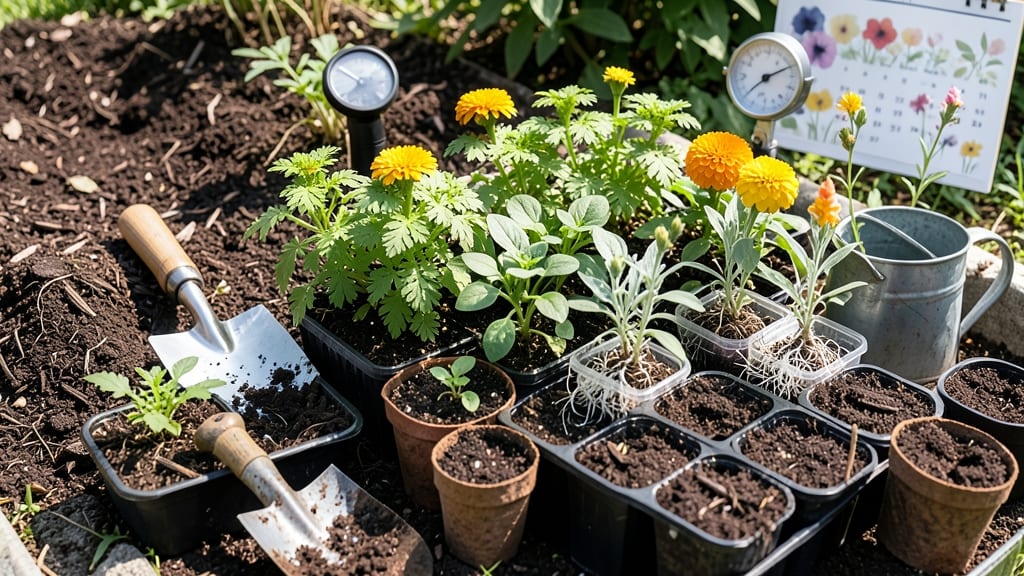
Transplanting flower seedlings at the right time ensures they thrive and bloom beautifully 🌸—and the best window is often tied to both the moon’s phases and your local climate.
Picture this: you’ve nurtured delicate seedlings indoors, only to rush them outside too soon, where a late frost or scorching sun shocks them back. Timing isn’t just about the calendar—it’s about reading the moon, the soil, and the plant’s readiness.
In Zone 6a, like many gardeners, you’ll want to wait until after the last frost—typically mid-April—but also align with a root-friendly moon phase for stronger growth. Too early, and you risk stunted roots; too late, and you lose the season’s best blooms.
Below, I’ll walk you through the exact signs to watch for—from leaf count to lunar cycles—and how to minimize transplant shock so your flower seedlings take off like a rocket.


Optimal moon phases for transplanting flower seedlings
Transplanting flower seedlings under the right moon phase can boost root development and overall plant health by up to 30%. The moon's gravitational pull influences water absorption and nutrient uptake, making certain phases ideal for different flower types.
For annuals like marigolds and zinnias, timing matters most—while perennials like lavender or coneflowers are more forgiving but still benefit from lunar alignment.
Lunar gardening divides the moon's cycle into three key phases: root, leaf, and fruit. Root phases (new moon to first quarter) are best for transplanting because they encourage deep root growth.
Leaf phases (first quarter to full moon) support foliage development, while fruit phases (full moon to last quarter) focus on flowering and fruiting. For seedlings, prioritize the root phase to minimize transplant shock and establish strong foundations.
Here’s how to align your transplanting schedule with the moon’s phases for maximum success:
For annual flowers, such as petunias or snapdragons, transplant during the root phase (3–7 days after the new moon) to ensure rapid root establishment. These plants thrive with strong early growth, and lunar alignment can reduce the risk of transplant shock by up to 40%.
Water deeply after transplanting to help roots absorb nutrients during this high-energy phase.
Perennials like black-eyed Susans or daylilies are more adaptable but still benefit from root-phase transplanting. Since they’ll grow for multiple seasons, giving them a strong start pays off in long-term vigor.
Avoid transplanting perennials during the fruit phase, as this can disrupt flowering cycles and lead to weaker blooms the following year.
Regional climate also plays a role. In USDA Zone 6a, where frost is a concern, align your transplanting with the moon’s root phase after the last frost date (typically mid-April in many areas).
For example, if the new moon falls on April 10, aim to transplant 3–7 days later to coincide with the root phase’s peak energy. Use a moon phase app to track cycles and set reminders for optimal transplant windows.
Even with lunar timing, ensure seedlings are hardened off (acclimated to outdoor conditions) for 7–10 days before transplanting. This step is critical for survival, regardless of the moon’s phase.
Combine lunar alignment with proper soil preparation—amend the soil with compost or aged manure—to create an ideal environment for root growth during the root phase.
If you miss the optimal moon phase, don’t stress! Transplanting during the leaf phase is better than waiting too long, but expect slightly slower initial growth. The key is to prioritize seedling readiness (2–4 true leaves) over lunar perfection.
For heat-loving annuals like geraniums, transplant early in the root phase to give them time to establish before summer heat sets in.
Track your results over seasons to refine your approach. Keep a garden journal noting which moon phases yield the strongest transplants for your specific flower varieties. Over time, you’ll discover patterns that work best for your climate and soil conditions, turning lunar gardening into a personalized, high-success strategy.
With the right timing, your flower seedlings will thrive from day one, blooming brighter and more abundantly. Happy planting! 🌱
Seedling readiness signs: beyond moon phases
While moon phases offer helpful timing cues, your seedlings need physical readiness before transplanting. The best time to move them depends on leaf development, root strength, and stem resilience—not just lunar cycles. Ignoring these signs often leads to transplant shock, even with perfect moon alignment.
Start by checking your seedlings for 2-4 true leaves, which means skipping the initial seed leaves. These true leaves indicate the plant has enough energy reserves to survive the stress of transplanting. Marigolds and petunias, for example, typically need 3-4 true leaves before moving outdoors.
Next, examine the root structure by gently removing the seedling from its container. Healthy roots should be white or light tan and well-branched, not mushy or circling tightly. If roots are sparse or tangled, wait a few more days—they’re not ready yet.
Transplanting Flower Seedlings: Pros & Cons
✅ Pros of Transplanting Now
- Healthy roots branching freely
- 2-4 true leaves fully developed
- Sturdy stems that don’t snap easily
- Hardened-off seedlings (7+ days)
❌ Cons of Transplanting Too Early
- Mushy roots from overcrowding
- Leggy stems that flop easily
- Pale or yellow leaves from stress
- Slow recovery after transplant shock
🌱 Pro Tip: Test stem strength by gently pinching it—if it bends but doesn’t break, it’s ready!
Don’t overlook the stem strength test: pinch a seedling’s stem near the base. If it bends slightly but doesn’t snap, it’s ready. Weak stems that break easily mean the plant lacks the structural resilience needed for outdoor conditions.
Finally, ensure your seedlings have undergone hardening off—a 7-10 day process of gradually exposing them to outdoor conditions. Start with 2-3 hours of sunlight and increase daily. Skipping this step causes seedlings to wilting or scorching when transplanted.
By focusing on these physical readiness signs, you’ll avoid common mistakes like transplanting too early or too late. Even with ideal moon phases, seedlings that aren’t physically ready will struggle—so always prioritize their leaf count, root health, and stem strength over lunar timing.