
Vegetables
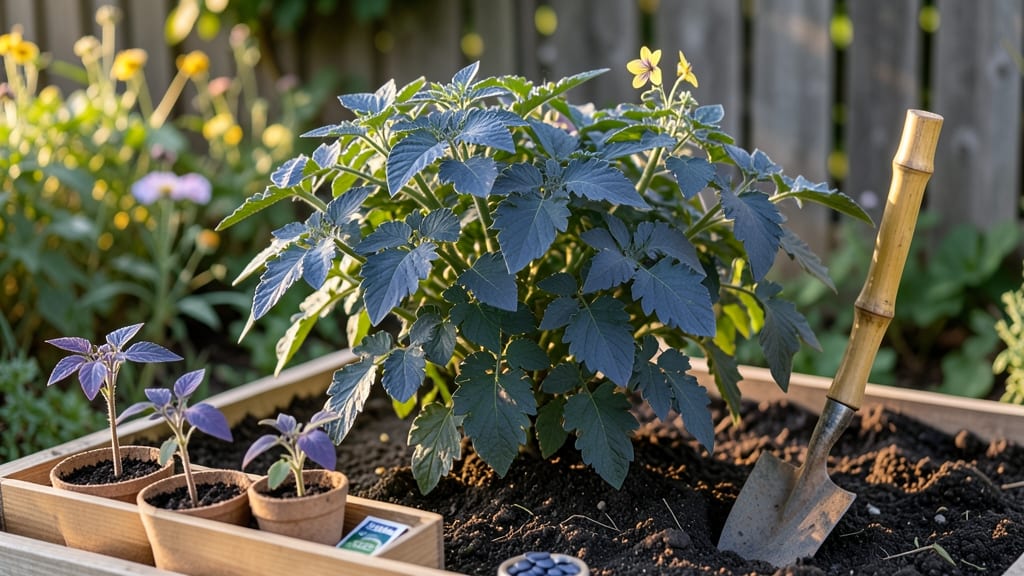
Growing blue tomatoes from seed unlocks a harvest that looks like edible art—and it's easier than you think. 🌱 These heirloom varieties aren't just stunning; they're packed with the same sweet-tart flavor as red tomatoes, just with a showstopping indigo hue that deepens as they ripen.
The key difference? They need just a few extra care tweaks to bring out that signature blue color and keep producing through multiple seasons.
Start with a warm, well-draining soil mix (think 60% potting soil, 30% compost, 10% perlite) and keep seed trays in a sunny window or under grow lights until seedlings pop in 10-14 days.
Blue tomatoes thrive in full sun (6-8 hours daily) and need consistent moisture—never soggy soil—so a drip irrigation system or self-watering pots saves headaches.
The real magic happens when you fertilize lightly with fish emulsion every 2-3 weeks once flowers appear, because these beauties need steady nutrients to develop their vibrant color.
What you'll end up with is vines heavy with deep blue-purple fruit that ripens over 80-90 days, plus the satisfaction of growing something truly unique. The first harvest might surprise you—those tomatoes start green, then turn lavender, and finally deepen to an almost black-blue when fully ripe.
They're perfect for slicing on sandwiches, stuffing, or leaving whole as conversation pieces on your dinner table.
Here's the secret to avoiding common pitfalls: protect young plants from blossom end rot by adding crushed eggshells to the soil, and watch for sunburn on the blue skins—provide afternoon shade in hot climates.
With these adjustments, you'll get 2-3 harvests per season from a single plant, and the seeds you save will grow just as true the next year. Ready to turn your garden into a blue tomato wonderland?
📚 In This Guide
- What you need
- Instructions
- Tips and common mistakes
- Wrapping up and next steps
What you need
- ● Blue tomato seeds (perennial or heirloom varieties like Indigo Rose or Blue Beauty) – 1–2 packets (50–100 seeds each).
- ● Seed-starting mix – 1–2 gallons (sterile, peat-free blend for best results).
- ● Biodegradable seed pots or peat pellets – 6–12 units (3–4 inches deep).
- ● Grow lights or sunny windowsill – 6–8 hours/day (LED grow lights work best).
- ● Watering can with a fine rose nozzle – 1 unit (for gentle hydration).
- ● Fertilizer – Balanced organic option (e.g., fish emulsion or compost tea, diluted to half-strength).
- ● Perennial growing setup: Cold frame or greenhouse (if extending seasons in cooler climates).
- ● Mulch (straw or leaves) – 2–3 inches (to insulate roots in winter).
- ● Pruning shears – 1 pair (for shaping plants and harvesting).
- ● Garden trowel – 1 unit (for transplanting seedlings).
- ● pH testing kit – 1 kit (ideal soil pH: 6.0–6.8).
- ○ Thermometer (optional) – 1 unit (to monitor soil/water temps, especially for perennials).
- ● Mycorrhizal fungi – Boosts root health for perennial tomatoes.
- ● Drip irrigation system – Automates watering and reduces stress.
- ● Row covers or frost cloth – Protects young plants in early/late seasons.
- ● Journal or app – Track growth stages, harvest dates, and notes for future years!
Step-by-step guide to growing blue tomato seeds perennially
Here’s how to transform your blue tomato seeds into a thriving perennial harvest—no annual replanting required.
🌱 Step 1: Stratify Seeds for Perennial Germination
Blue tomatoes (Solanum lycopersicum 'Blue') need cold stratification to break dormancy. Place seeds in a damp paper towel, fold them into a sealed plastic bag, and refrigerate for 6-8 weeks at 34-40°F. This mimics winter conditions and ensures strong perennial roots.
Check weekly for moisture—if the towel dries, mist it lightly. Once seeds sprout, remove them from cold storage immediately. Perennial tomatoes rely on this process to establish deep root systems that survive winter.
🪴 Step 2: Plant in Deep, Well-Draining Soil
Choose a sun-drenched spot with 6+ hours of direct light daily. Amend the soil with 3-4 inches of compost and mix in 1 part perlite to prevent waterlogging. Perennial tomatoes need 18-inch-deep roots, so avoid compacted clay.
Dig holes twice as wide as the root ball and space plants 24-36 inches apart. Plant at the same depth as the nursery pot to avoid stem rot. Water deeply to settle soil around roots—this encourages root expansion into the cold months.
☀️ Step 3: Protect Young Plants Through First Winter
After planting, mulch heavily with 4-6 inches of straw to insulate roots. Perennial tomatoes need consistent moisture but drainage—water weekly if rainfall is scarce. In Zone 5-7, wrap plants in burlap during hard freezes (<20°F) to prevent dieback.
Prune aggressively in late fall, cutting back 80% of foliage to redirect energy to root growth. This sacrifice pays off—next spring, you’ll see stronger regrowth and earlier fruit production.
⏰ Step 4: Train Vines for Perennial Productivity
Use a strong trellis or cage to support vines, keeping them off the ground to prevent disease. Perennial tomatoes need regular pruning—pinch suckers weekly to focus energy on fruit-bearing branches. Harvest only blue-green fruit (fully ripe blue tomatoes turn purple).
Fertilize lightly in early spring with balanced 10-10-10 to avoid overstimulating foliage. Over-fertilizing weakens perennial roots. Watch for hornworms—handpick them daily to protect your investment.
🌿 Step 5: Overwinter for Next Year’s Harvest
After final harvest, stop fertilizing and reduce watering. Let foliage die back naturally, then mulch with 6 inches of leaves for insulation. In Zone 8+, perennial tomatoes may produce year-round with minimal care.
Mark plant locations with stakes—perennial tomatoes resprout from the same roots. By year 3, you’ll enjoy larger yields with less effort. The secret? Patience and protecting those roots.
Tips & tricks for growing perennial blue tomatoes
These secrets will help you turn your blue tomato seeds into a thriving perennial harvest that keeps giving year after year.
Stratification Strategy: The 6-8 week cold treatment at 34-40°F is non-negotiable for breaking dormancy in blue tomato seeds. I use a small refrigerator drawer set to 38°F for consistent results—avoid freezer temps, which can damage the seeds. Place a small dish of water in the bag with your seeds to maintain humidity without over-saturating the paper towel. Once you see sprouts, move them immediately to prevent over-chilling, which can stunt early growth.
Soil Preparation Insight: When amending your soil with 3-4 inches of compost and 1 part perlite, mix them thoroughly to a depth of at least 18 inches. I like to use a broadfork to loosen compacted soil before adding amendments—this creates ideal conditions for those deep perennial roots. For clay-heavy soils, consider adding 20% sand to improve drainage while maintaining moisture retention. The goal is to mimic the loose, well-draining conditions blue tomatoes thrive in.
Winter Protection Pro Tip: That 4-6 inches of straw mulch is your plant's winter blanket, but don't let it compact over time. Fluff it annually in early spring to maintain insulation. In Zone 5-7, I've found that wrapping plants in burlap during hard freezes below 20°F works best when combined with a layer of bubble wrap underneath—the double protection prevents frost damage while allowing airflow. Remember, the goal is to protect roots, not smother the plant.
Pruning Precision: When you're cutting back 80% of foliage in late fall, focus on removing only the top growth while leaving the lower leaves intact. These lower leaves will photosynthesize during the short winter days, providing energy for root development. I use sharp pruning shears to make clean cuts just above leaf nodes, which promotes faster regrowth in spring. This aggressive pruning might seem counterintuitive, but it's what transforms annual tomatoes into hardy perennials.
Pro Tips for Blue Tomato Seeds
- These secrets will help you turn your blue tomato seeds into a thriving perennial harvest that keeps giving year afte...
- Stratification Strategy: The 6-8 week cold treatment at 34-40°F is non-negotiable for breaking dormancy in blue tomat...
- Soil Preparation Insight: When amending your soil with 3-4 inches of compost and 1 part perlite, mix them thoroughly ...
Frequently asked questions
Got questions about growing blue tomato seeds? You’re not alone—these unique perennials spark curiosity! Here are answers to the most common queries to help you cultivate success.
How long does it take for blue tomato seeds to germinate?
Blue tomato seeds typically germinate in 10–21 days when kept in warm, moist soil (70–85°F). For faster results, soak seeds overnight before planting and maintain consistent moisture. Patience is key—some varieties may take longer, especially in cooler climates.
Can blue tomatoes survive winter in cold climates?
While blue tomatoes are perennial in warm zones (USDA 8–11), they’re not cold-hardy. In colder areas, grow them as annuals or overwinter potted plants indoors. Use mulch to protect roots in mild winters, but expect to replant each spring if frost is severe.
What’s the difference between blue tomato seeds and regular tomato seeds?
Blue tomatoes
are heirloom varieties (like Indigo Rose or Blue Beauty) bred for anthocyanin-rich purple-blue skin, not color-changing fruit. They offer higher antioxidants than red tomatoes but follow the same growing needs—just with a striking twist!
Can I save and replant blue tomato seeds from store-bought fruit?
Yes! Scoop seeds from ripe blue tomatoes, ferment them in water for 3–5 days (to remove gel), then dry and store in a cool, dark place. Pro tip: Label seeds—some hybrids may not produce true blue fruit. For guaranteed results, buy certified organic seeds.
Why are my blue tomato seedlings turning yellow or wilting?
Yellowing leaves often signal overwatering or fungal issues (like damping-off). Ensure pots have drainage holes and avoid soggy soil. Wilting may also mean underwatering or root rot. Check soil moisture daily and use a fungicide if mold appears.
Are blue tomatoes easier to grow than regular tomatoes?
Not necessarily! They share the same sunlight (6–8 hrs/day), well-draining soil, and staking needs as red tomatoes. However, their thicker skins resist cracking better in humid weather—making them slightly more forgiving for beginners in rainy climates.
Wrapping up and next steps
Growing blue tomato seeds for perennial harvests isn’t just a gardening trick—it’s a game-changer for sustainable, year-round yields! With the right soil, light, and care (plus a dash of patience), you can enjoy vibrant, nutrient-packed tomatoes well beyond the usual season.
Whether you’re a seasoned gardener or just starting, these indigo wonders are a rewarding challenge that pays off in bold flavors and lush foliage.
Ready to take the next step? Start small—plant your first batch of blue tomato seeds this season and experiment with pruning or companion planting to maximize growth. Share your progress, tweak your techniques, and soon, you’ll be the green-thumb hero of your neighborhood! 🌱✨