
Shrubs
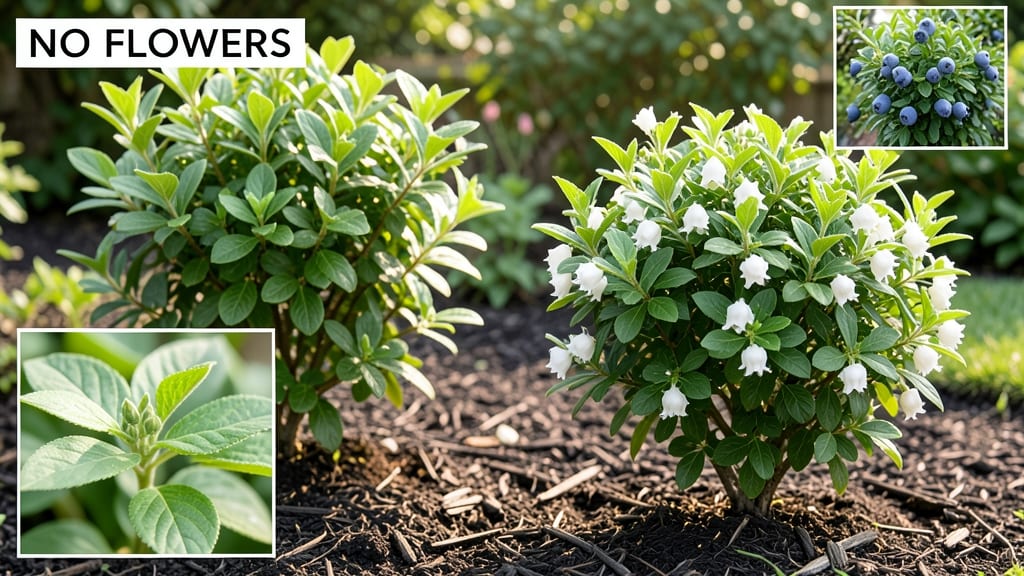
3 Most common reasons your blueberry bush isn’t flowering (and how to fix them fast)
If your blueberry bush looks healthy but refuses to produce flowers, you're not alone. Many gardeners face this frustrating issue, often without realizing the simple fixes that can restore blooms in just 7 days.
The key is identifying the root cause—whether it's insufficient chilling hours, poor pruning habits, or nutrient imbalances. Let’s break down the top three culprits and how to address them quickly.
Blueberry bushes need specific conditions to flower, including winter dormancy, proper pruning timing, and the right soil nutrients. When these are off, your bush may focus all its energy on leafy growth instead of flowering.
The good news? Each of these issues has a fast solution—some as quick as a single afternoon’s work. Let’s start with the most common problem: insufficient chilling hours.
Blueberries need 800-1,000 hours below 45°F annually. Without this, buds won’t form. Test your region’s chill hours or move potted bushes to a cooler spot during winter.
Pruning at the wrong time (e.g., late summer) removes next year’s flower buds. Prune right after harvest (July-August) to encourage new growth and bud formation for spring.
Lack of phosphorus or potassium stunts flowering. Apply a balanced acidic fertilizer (10-10-10) in early spring and a high-phosphorus fertilizer in late summer to boost bloom production.
Let’s tackle the first issue: insufficient chilling hours. Blueberries are native to cold climates, and they rely on winter’s chill to trigger flowering. If your region doesn’t get enough cold (common in Zone 8+), your bush may stay dormant but never flower.
The fix? Choose southern-highbush varieties like 'Southern Highbush' or 'Premier,' which need fewer chill hours (300-500 hours). For existing bushes, move potted plants to a garage or shaded patio during winter to mimic chill exposure.
Next up: improper pruning. Many gardeners prune blueberries in early spring, but this is a mistake. Blueberries flower on old wood, meaning last year’s growth holds this year’s buds. Prune immediately after harvest (July-August) to remove dead wood and thin out crowded branches.
Use clean, sharp shears and cut back to 1/3 of the bush’s height to encourage airflow and new growth. Avoid heavy pruning in fall or winter, as this can stress the plant.
Finally, nutrient deficiencies often go unnoticed until flowering fails. Blueberries thrive in acidic soil (pH 4.5-5.5) rich in phosphorus and potassium. If your soil lacks these, your bush may produce leaves but no flowers. Test your soil’s pH and amend it with peat moss or sulfur if needed.
In early spring, apply a balanced fertilizer (10-10-10), and in late summer, switch to a high-phosphorus fertilizer (e.g., 5-10-10) to promote bud formation for next year.
Here’s a quick action plan to revive your blueberry bush in 7 days:
- Day 1-2: Test soil pH and amend if needed.
- Day 3: Apply a high-phosphorus fertilizer around the base.
- Day 4-5: Prune dead or overcrowded branches (if not already done post-harvest).
- Day 6-7: Monitor for new growth and adjust watering to keep soil consistently moist but not soggy.
With these fixes, your blueberry bush should start producing flowers within 2-4 weeks. Remember, consistency is key—blueberries reward long-term care with abundant harvests for years to come. If you’re still seeing no flowers after a month, revisit your chill hours or consider relocating your bush to a cooler microclimate.
🌱
Blueberry bush care calendar: when and how to prune, fertilize, and water for maximum blooms
To get your blueberry bush flowering again, timing is everything. Blueberries need precise care at each stage—from winter dormancy to spring blooming. Follow this seasonal calendar to trigger those critical flower buds and set yourself up for a bountiful harvest.
The key? Prune in late winter, fertilize at the right time, and water deeply without overdoing it.
Start with winter pruning (January-February) to remove dead wood and shape the bush. This isn’t just about aesthetics—it’s about allowing sunlight and air to reach next year’s flower buds. Then, in early spring, feed your bush with acidic fertilizer to wake up dormant growth.
Summer care focuses on consistent watering and light feeding, while fall prep ensures the bush stores energy for winter.
Blueberry Care Seasonal Checklist
| Season | Task | Timing | Key Notes |
|---|---|---|---|
| Winter | Prune | Late Jan-Feb | Remove dead wood; cut old canes at base |
| Spring | Fertilize | Early March | Use acidic 10-10-10 fertilizer; 1/4 cup per bush |
| Summer | Water | Every 2-3 days | Deep soak morning only; 1-1.5 gallons per bush |
| Fall | Mulch | October | Add pine needles; 2-3 inches thick |
In late winter, prune your blueberry bush to remove any dead or diseased canes. Cut them back to the ground, and thin out crowded branches to improve airflow.
This step is crucial for preventing fungal diseases and encouraging new growth. Use clean, sharp pruning shears to make clean cuts just above a bud or branch junction.
When spring arrives (around March in most regions), it’s time to feed your bush. Use a balanced acidic fertilizer (like 10-10-10 with sulfur) to provide essential nutrients.
Apply it in early spring, just as new growth begins. Avoid fertilizing in fall—this can stimulate late-season growth that won’t harden off before winter.
During the growing season (spring to summer), focus on consistent watering. Blueberries need about 1-1.5 gallons of water per bush, delivered deeply every 2-3 days.
Water in the morning to reduce evaporation and fungal risks. Mulch around the base with pine needles or wood chips to retain moisture and maintain soil acidity.
As summer winds down, prepare your bush for winter by applying a 2-3 inch layer of mulch. This protects the roots from freezing temperatures and helps retain moisture. In fall, avoid fertilizing—let your bush enter dormancy with stored energy for next year’s blooms.
With this seasonal routine, your blueberry bush will thrive and flower beautifully each spring.