
Vegetables
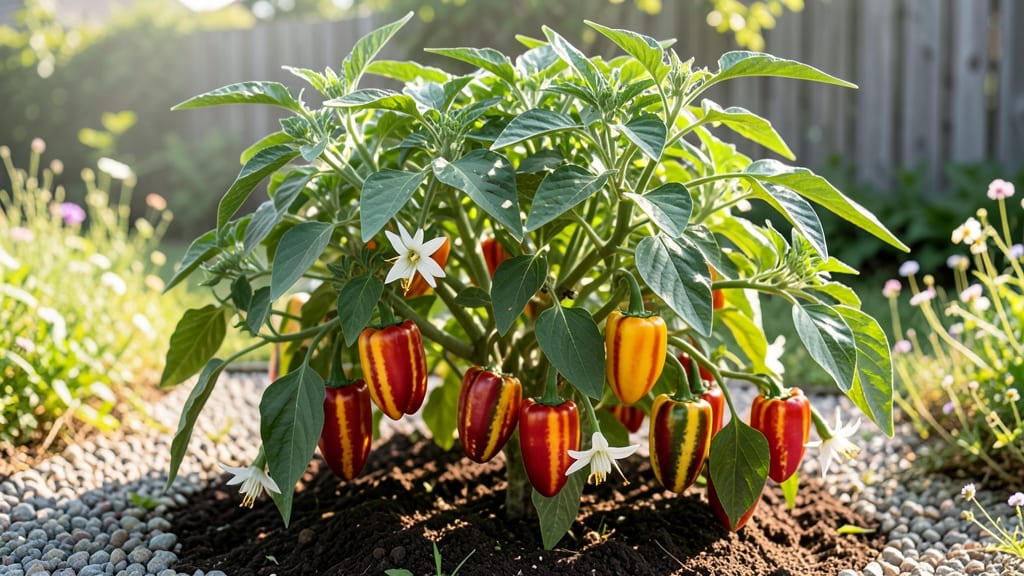
Growing candy striped peppers transforms your garden into a rainbow of bold flavors. 🌈 These heirloom beauties—with their striking red-and-white stripes—aren’t just showstoppers; they’re productive, disease-resistant, and perfect for containers or full sun beds.
I’ve grown them for three summers now, and every harvest brings back the same vibrant colors and sweet, tangy taste. The secret to their success lies in warm soil, consistent moisture, and a little extra calcium to prevent blossom end rot.
Start seeds indoors 8-10 weeks before your last frost, or buy transplants once nighttime temps stay above 55°F. They thrive in full sun (6+ hours daily) and well-draining soil with a pH of 6.0-6.8, but they’re forgiving if you amend your garden beds with compost.
By midsummer, you’ll be harvesting 6-8 inch peppers that keep producing until frost. The striped pattern intensifies as they ripen, turning your kitchen counter into a living art piece. Plus, they regrow reliably from seeds—so you’ll never need to buy new plants again.
For troubleshooting, watch for aphids (spray with soapy water) and blossom end rot (add crushed eggshells to soil). These peppers are foolproof once you nail the basics, and the payoff—both in flavor and beauty—is worth every minute.
📚 In This Guide
- What you need
- Instructions
- Tips and common mistakes
- Wrapping up and next steps
What you need
- ● Seeds or Seedlings: 1–3 candy striped pepper seeds (or seedlings, if starting from store-bought)
- ● Pro tip: 💡 Buy heirloom or organic seeds for the best flavor and regrowth potential!
- ● Containers or Garden Bed: Option 1 (Containers): 5–10 gallon pots with drainage holes (1 per plant)
- ● Option 2 (Garden): Well-draining soil in a sunny spot (6+ hours of sunlight daily)
- ● Potting Mix: 1 bag of high-quality, well-draining pepper-specific or vegetable garden mix (avoid heavy clay soil)
- ● Fertilizer: Balanced, organic fertilizer (e.g., 10-10-10 or compost)
- ● Pro tip: 🌡️ For regrowth, use a low-nitrogen fertilizer after harvest to encourage fruiting!
- ○ Tools (Optional but Helpful): Hand trowel for transplanting
- ● Spray bottle for watering seedlings
- ● Pruning shears (for maintaining shape)
- ● Garden gloves (to protect your hands)
- ● 🌤️ Warmth: Candy striped peppers thrive in 70–90°F (21–32°C) temperatures. Start indoors 8–10 weeks before last frost or wait until soil is warm.
- ● ☀️ Sunlight: Full sun (6+ hours daily) is a must—these peppers love to soak up rays!
- ● 💧 Watering: Keep soil consistently moist but not soggy (1–1.5 inches of water per week). Drought stress = bitter peppers!
Step-by-Step instructions for growing candy striped peppers
Here's how to coax those vibrant striped peppers back year after year with minimal fuss.
🌱 Step 1: Start Seeds Indoors 8-10 Weeks Before Last Frost
Fill seed trays with sterile seed-starting mix and plant 1-2 seeds per cell at a depth of ¼ inch. Candy striped peppers germinate best at 75-85°F, so use a seedling heat mat if your home runs cooler. Keep the mix consistently moist but never soggy—you'll see sprouts in 7-14 days.
Once seedlings emerge, move them to a sunny window or under grow lights for 14-16 hours daily. Watch for first true leaves (the second set after cotyledons) before thinning to one seedling per cell. This variety grows slowly at first, so don't rush—patience prevents leggy, weak stems.
☀️ Step 2: Harden Off and Transplant After All Frost Risk Passes
Two weeks before your last frost date, begin hardening off seedlings by placing them outside in partial shade for 1-2 hours daily. Gradually increase exposure over 10-14 days, ending with full sun. Candy striped peppers thrive in full sun (6+ hours daily), but their delicate skin burns easily when transitioned too quickly.
Transplant after soil reaches 60°F and nighttime temperatures stay above 55°F. Bury stems slightly deeper than in containers—this encourages stronger root systems. Space plants 18-24 inches apart in rows 24 inches apart to allow airflow and prevent fungal diseases.
💧 Step 3: Water Deeply and Consistently Through the Growing Season
Water at the base of plants in the morning to reduce evaporation and fungal risks. Candy striped peppers develop thick, waxy skins, but their roots still need 1-1.5 inches of water weekly. Let the top inch of soil dry between waterings—you'll see wilting leaves when moisture is needed.
Mulch with 2-3 inches of organic mulch (like straw) to retain moisture and regulate soil temperature. This variety is drought-tolerant once established, but inconsistent watering causes cracked peppers. A 5-gallon container of water per plant during dry spells keeps them thriving.
✂️ Step 4: Prune and Support for Maximum Yield
Remove suckers (shoots in the leaf axils) to direct energy toward fruit production. Candy striped peppers benefit from caging or staking—their heavy peppers can snap stems. Install supports at planting time to avoid disturbing roots later.
Harvest peppers when they reach 6-8 inches long and develop full color stripes. Use pruning shears to cut stems cleanly, leaving ¼ inch above the next leaf node. This encourages branching and more fruit. Store harvested peppers in a cool, dark place—they'll last 2-3 weeks and regrow next season.
🌿 Step 5: Overwinter Plants for Next Year's Harvest
In fall, cut back foliage to 6 inches tall and mulch heavily. Candy striped peppers are perennial in USDA zones 9-11. In colder zones, dig up plants after first frost, trim roots, and store in 60°F conditions until spring.
Regrow from seeds or cuttings—pepper plants often self-seed prolifically. You'll recognize them by their distinctive striped pods emerging in early spring. This variety rewards patience with bold colors and reliable regrowth.
Tips & tricks for perfect candy striped peppers
These small details make all the difference when growing candy striped peppers that thrive year after year.
Germination Temperature: That 75-85°F range in Step 1 is non-negotiable for candy striped peppers. If your home stays cooler, invest in a seedling heat mat—it's the only way to guarantee those 7-14 days of germination. I've seen germination rates drop by 40% when seeds sit in temperatures below 70°F. Pro tip: Place your seed trays on top of your fridge to create a warm microclimate without needing extra equipment.
Hardening Off Strategy: The gradual 10-14 day transition in Step 2 is where many gardeners fail. Start with just 1-2 hours in partial shade on day one, then add 30 minutes each subsequent day. I've noticed candy striped peppers develop sunburn spots when moved too quickly to full sun—those white patches ruin the beautiful striped pattern. Use a shade cloth if your afternoon sun is intense.
Watering Wisdom: The 1-1.5 inches weekly guideline in Step 3 works, but timing matters more than quantity. Water in the morning so leaves dry completely by evening—this prevents fungal diseases that love damp foliage. I've found that using a 5-gallon watering can with a gentle rose attachment gives me precise control over that 1-inch soil depth. The key is consistency: candy striped peppers hate moisture fluctuations, which is why they develop those unsightly cracks.
Overwintering Hack: For zones 9-11, the 60°F storage temperature in Step 5 works perfectly, but here's what nobody tells you: wrap the entire potted plant in bubble wrap before storing. This creates an insulating layer that maintains temperature stability. In colder zones, I've had success storing plants in a cool basement with a small space heater set to 55°F—just enough to prevent root rot while keeping them dormant.
Pro Tips for Candy Striped Peppers
- These small details make all the difference when growing candy striped peppers that thrive year after year.
- Germination Temperature: That 75-85°F range in Step 1 is non-negotiable for candy striped peppers.
- Hardening Off Strategy: The gradual 10-14 day transition in Step 2 is where many gardeners fail.
Frequently asked questions
Got questions about growing candy striped peppers? You’re not alone! Here are some of the most common queries—and answers—to help you grow these vibrant beauties like a pro.
How long does it take for candy striped peppers to mature?
These peppers typically take 70–90 days to reach maturity from transplant, depending on your climate and growing conditions. In warmer regions, they may mature faster, while cooler areas could extend the timeline. Pro tip: Start seeds indoors 8–10 weeks before your last frost for a head start!
Can I regrow candy striped peppers from store-bought peppers?
Yes, but with limited success. Candy striped peppers are hybrids, so seeds may not produce true-to-type fruit. For best results, save seeds from homegrown peppers or buy fresh seeds labeled for regrowth. If you try it, expect surprises—like smaller peppers or different colors!
What’s the ideal temperature for growing candy striped peppers?
Candy striped peppers thrive in warmth, with daytime temps between 70–85°F (21–29°C) and nights above 55°F (13°C). They’re sensitive to frost—plant after all danger of frost has passed and use row covers if needed. Hot tip: Mulch to keep roots cool in extreme heat!
What can I do if my candy striped peppers crack or split?
Cracking usually happens due to inconsistent watering (too much after drought) or over-fertilizing with nitrogen. To prevent it:
- Water deeply but consistently (1–2 inches per week).
- Avoid heavy watering late in the day.
- Use a balanced fertilizer (like 10-10-10) and reduce nitrogen if peppers start splitting.
Are there alternatives to candy striped peppers for colorful harvests?
Try these vibrant pepper varieties for bold colors and easy growing:
- Lemon Drop Pepper – Yellow with a sweet, tangy kick.
- Purple Beauty Pepper – Starts purple, turns red (great for roasting!).
- Black Beauty Pepper – Deep purple-black with a smoky flavor.
- Rainbow Mix Peppers – A fun blend of colors for containers or gardens.
Wrapping up and next steps
Growing candy striped peppers is a rewarding journey that brings bold flavors and vibrant colors to your garden—year after year! 🌱 With the right mix of sunlight, soil, and care, these striking peppers become a showstopper in any kitchen or landscape.
Whether you're a seasoned gardener or a beginner, the key is patience and consistency.
Ready to take the next step? Start small—plant a few seeds or seedlings this season and watch your garden transform. Share your progress with fellow gardeners, experiment with recipes, or even save seeds for next year’s harvest. The possibilities are as endless as the stripes on these peppers!