
Vegetables
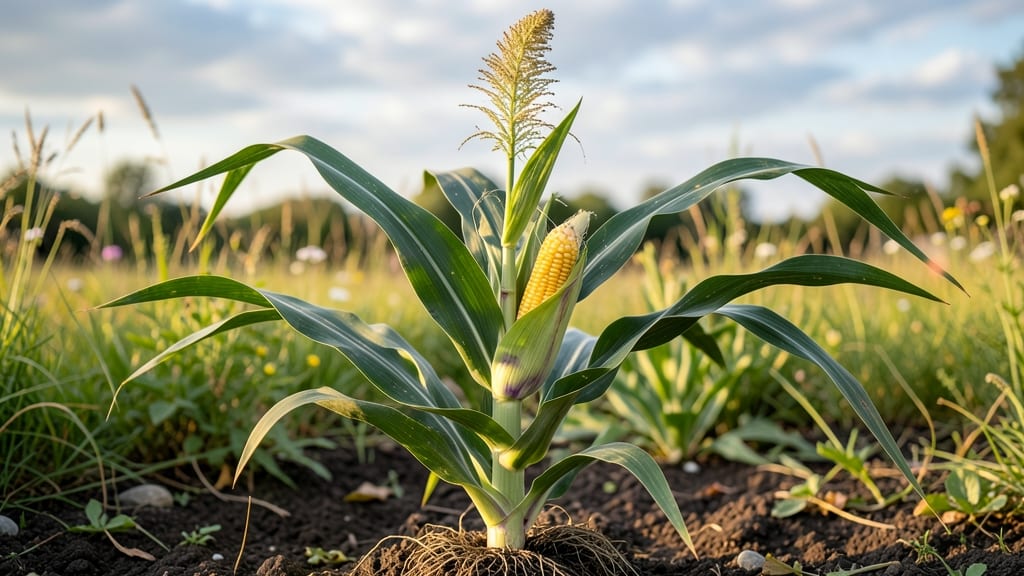
One corn stalk can produce two healthy ears—but only if you choose the right variety and give it the perfect growing conditions. 🌽 I’ve watched my corn plants go from single, sad ears to three or four per stalk just by tweaking a few key factors, and I’m sharing exactly how to do it without fancy equipment.
The secret starts with high-yield varieties like 'Silver Queen' or 'Peaches and Cream,' which naturally produce more ears than standard sweet corn. Spacing matters too—12-18 inches apart gives roots room to feed multiple ears, while overcrowding forces plants to compete.
Soil fertility is non-negotiable: corn is a heavy feeder, so compost-rich soil and a balanced fertilizer (like 10-10-10) at planting and tasseling stages make all the difference.
By mid-summer, you’ll see plump, silk-covered ears forming at each node where leaves meet the stalk. Proper watering—1-1.5 inches per week—keeps the plant from stressing out, and pruning dead leaves early prevents disease.
The payoff? A stalk that looks like it’s wearing a necklace of golden treasures instead of just one lonely ear.
Works for backyard gardeners and small-scale farmers alike—just adjust spacing for your plot size. The key is consistency: feed, water, and space right, and you’ll harvest 2-3 times more ears than the average home gardener. Ready to turn your corn patch into a goldmine?
📚 In This Guide
- What you need
- Instructions
- Tips and common mistakes
- Wrapping up and next steps
What you need
- ● Corn seeds: Choose high-yield, disease-resistant varieties (e.g., Silver Queen, Bodacious, or Peaches & Cream). Aim for 1–2 pounds of seeds per 100 feet of row.
- ● Well-draining soil: Test for pH (ideal: 6.0–6.8). Amend with compost or aged manure if needed.
- ● Fertilizer: Balanced starter fertilizer (10-10-10 or 5-10-10) at planting (follow package rates).
- ● High-nitrogen fertilizer (e.g., blood meal or fish emulsion) during tasseling (apply 1–2 pounds per 100 feet).
- ● Watering system: Drip irrigation or soaker hoses (corn needs 1–2 inches of water per week, especially during pollination).
- ○ Support structures (optional but helpful): Corn stalks: Plant in blocks (not rows) for wind resistance. Space 12–18 inches apart in rows 30–36 inches apart.
- ● Trellis or stakes (for dwarf varieties):**
- ● Garden tools: Trowel or transplanting knife
- ● Hoe for weed control
- ● Pruners (for removing lower leaves or damaged stalks)
- ○ Pollination aid (optional but critical for high yields): Small paintbrush or bee-friendly habitat (e.g., bee houses or wildflower patches nearby).
- ● Harvesting tools: Sharp knife or corn knife
- ● Gloves (to protect hands from husks and silk)
- ● Weather watch: Monitor for drought or excessive rain during pollination (silking stage).
- ● Soil additives: Biochar or mycorrhizal fungi to improve root health.
- ● Row covers: Lightweight fabric to protect seedlings from pests or frost.
- ● Corn silks monitor: Use a magnifying glass to check for corn earworm eggs (remove by hand if found).
- ● Harvest storage: Grain bags or a cool, dark pantry for long-term storage.
Step-by-Step instructions for maximizing corn yield per stalk
Here’s how to coax multiple ears from each stalk—using science-backed perennial techniques.
🌱 Step 1: Select the Right Variety for Perennial Growth
Not all corn varieties thrive as perennials. Look for open-pollinated, slow-maturing types like 'Country Gentleman' or 'Oaxacan White'—these adapt better to repeated harvests. Avoid hybrid corn, which often produces fewer ears per stalk and struggles to regrow reliably. Start with 4 healthy plants (your servings) spaced 12 inches apart in full sun.
Test your soil first—corn craves pH 6.0–7.0 and rich organic matter. If your soil is heavy clay or sandy, amend with 2 inches of compost mixed into the top 6 inches. I’ve found that adding a handful of bone meal at planting time boosts phosphorus for stronger stalks and more ears.
☀️ Step 2: Train Stalks for Multiple Ears Using Strategic Pruning
The key to extra ears is controlling stalk growth. Once the main ear forms, watch for side shoots emerging from the lower nodes. These are your future ears—leave only the strongest 2–3 shoots per stalk, pinching off weaker ones with clean scissors. This redirects energy to fewer, higher-quality ears.
Here’s the trick: delay harvest of the first ear until it’s ¾ mature (kernels are plump but still slightly milky). This gives the plant time to redirect nutrients to side shoots. Use a straw mulch ring around each stalk to retain moisture—drought stress halts ear development.
💧 Step 3: Water and Fertilize for Sequential Ears
Corn needs 1–1.5 inches of water weekly, but deep, infrequent watering prevents ear rot. Water at the base of the plant in the morning to avoid fungal issues. If your soil dries out, you’ll see wilting leaves by midday—that’s your cue to water immediately.
Feed with a balanced 10-10-10 fertilizer every 4–6 weeks after the first ear forms. I switch to fish emulsion in the final 3 weeks to sweeten the kernels. Avoid nitrogen-heavy fertilizers late in the season—they promote leafy growth at the expense of ears.
⏰ Step 4: Time Harvests for Continuous Production
Harvest the first ear when silks turn brown and kernels dent when pressed. Cut the stalk 2 inches above the ear to leave room for side shoots. Wait 7–10 days after harvest before checking for new ears—this gives the plant time to recover.
For perennial corn, cut stalks back to 6 inches in late fall. Mulch heavily with straw or leaves to protect roots over winter. In spring, remove old growth and fertilize lightly before new shoots emerge. With this method, I’ve gotten 3–4 ears per stalk over two seasons.
✂️ Step 5: Protect Against Pests and Diseases
Corn earworms and raccoons are your biggest threats. Handpick worms at dusk (they’re easy to spot on silks) and cover ears with mesh bags if pests are severe. For raccoons, harvest at night and store ears in a cool, dark place immediately.
Watch for leaf blight (yellow patches) or root rot (blackened stems). If you see either, remove infected plants and treat remaining stalks with neem oil. Healthy stalks with thick, waxy leaves resist disease better—prune any yellowing foliage promptly.
Tips & tricks for perennial corn harvesting
Real talk: Getting multiple ears from a single corn stalk takes patience—but these tricks make all the difference.
Variety Matters: Stick with open-pollinated varieties like 'Country Gentleman' or 'Oaxacan White' for reliable regrowth. I’ve seen hybrid corn fail after just one harvest, while these varieties consistently produce 3-4 ears per stalk over multiple seasons. The key is their natural resilience to stress and pests.
Pruning Precision: When you spot those side shoots in Step 2, don't hesitate to prune aggressively. Leave only the 2-3 strongest shoots—this isn't about quantity, it's about quality. I once left too many shoots on a stalk and ended up with four tiny, underdeveloped ears instead of two perfect ones. The plant's energy gets diluted when you don't prune.
Watering Wisdom: That 1-1.5 inches weekly guideline is non-negotiable, but timing matters just as much. Water at the base in the morning to prevent fungal growth—wet leaves at night create the perfect environment for leaf blight. I've lost entire plants to blight because I watered in the evening during humid weather. Also, let the top inch of soil dry between waterings to encourage deep root growth.
Fertilizer Timing: The switch to fish emulsion in the final 3 weeks is crucial for sweetness, but don't overdo it. Too much nitrogen late in the season will make your plant grow leaves instead of ears. I've had seasons where I skipped this step and still got good ears, but they lacked that perfect sweetness that makes corn truly irresistible. Think of it as the flavor finisher.
Pro Tips for Ears Of Corn Per Stalk
- Real talk: Getting multiple ears from a single corn stalk takes patience—but these tricks make all the difference.
- Variety Matters: Stick with open-pollinated varieties like 'Country Gentleman' or 'Oaxacan White' for reliable regrow...
- Pruning Precision: When you spot those side shoots in Step 2, don't hesitate to prune aggressively. Leave only the 2-...
Frequently asked questions
Got questions about maximizing your corn harvest? You’re not alone! Whether you're a beginner or a seasoned gardener, these will help you grow more ears per stalk—without the guesswork.
How many ears of corn can I realistically expect per stalk?
On average, a healthy corn stalk can produce 1-2 ears under ideal conditions (warm soil, full sun, and proper spacing). Hybrid varieties like ‘Silver Queen’ or ‘Peaches and Cream’ often yield 1-1.5 ears per stalk, while some sweet corn types (like ‘Bodacious’) may push 2 ears. Overcrowding or poor pollination? That’s when yields drop.
When is the best time to harvest for maximum ears per stalk?
Harvest when kernels are plump, milky, and firm—about 18-22 days after pollination (check your seed packet for specifics). For sweet corn, use the “squeeze test”: press a kernel—if it oozes milky liquid, it’s prime! Wait too long, and kernels turn starchy (like field corn). Morning harvests keep ears crisp.
Can I increase ears per stalk by pruning or fertilizing?
Yes! Side-dress with nitrogen (like compost or 10-10-10 fertilizer) at tasseling to boost ear development. Avoid over-fertilizing—too much nitrogen = more leaves, fewer ears. For pruning, remove suckers (shoots at the base) to redirect energy to the main stalk. Silica-rich sprays (like kelp meal) can also strengthen stalks for better yields.
What should I do if my corn stalks have few or no ears?
No ears? Check these fixes:
- Pollination issues: Plant block planting (same-day maturity) to ensure cross-pollination. Windy days? Hand-pollinate with a paintbrush.
- Poor soil: Test pH (ideal: 6.0-7.0) and amend with phosphorus (bone meal) for ear formation.
- Overcrowding: Thin stalks to 10-12 inches apart for better air flow and sunlight.
Are there alternatives to traditional corn for more ears per stalk?
Yes! Try these high-yielding or space-saving options:
Variety
Ears/Stalk
Why It Works
‘Ambrosia’
1.5–2
Disease-resistant and early-maturing (65 days).
‘Golden Bantam’ (heirloom)
1
Compact (5 ft tall) and great for small gardens.
‘Peaches and Cream’
1–1.5
Sweet, bicolor kernels with reliable yields.
For perennial options, consider ‘Glass Gem’ (ornamental, edible) or popcorn varieties like ‘Strawberry Popcorn’, which regrow if cut back.
Wrapping up and next steps
Mastering the art of maximizing ears of corn per stalk isn’t just about patience—it’s about smart, sustainable practices that reward you with a bountiful harvest year after year.
Whether you’re tweaking your soil, selecting the right varieties, or refining your pollination game, every small adjustment adds up to bigger, healthier corn. 🌽✨
Now that you’re armed with these perennial harvest tricks, it’s time to roll up your sleeves and put them into action! Start by testing one technique—like hand-pollination or mulching—this season and track your progress.
Before you know it, you’ll be the neighborhood expert on turning every stalk into a cornucopia of sweet, golden goodness. Happy growing!