
Fertilization
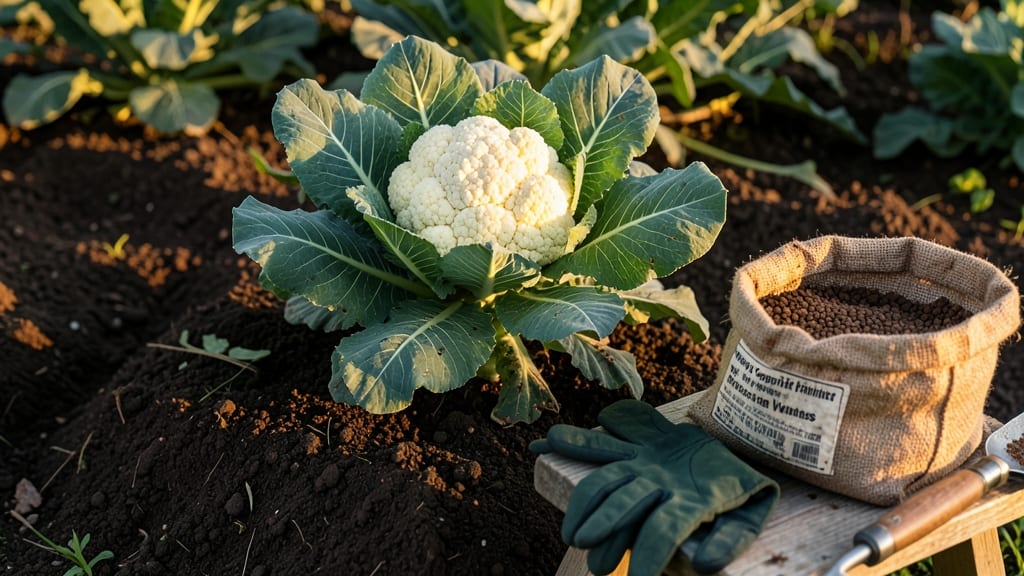
The right fertilizer for cauliflower 🥬 is the game-changer between a garden full of leafy greens and a harvest of tight, flavorful curds.
Struggling to grow cauliflower with tight, stunted curds? The secret lies in the right fertilizer blend—specifically, the nitrogen-potassium balance that transforms your harvest from disappointing to downright delicious.
Cauliflower thrives when fed with a balanced mix, but too much nitrogen sends it into overdrive, producing lush leaves at the expense of that prized head. Here’s how to get the ratio right for every stage of growth, from seedlings to harvest.
You’ll learn which organic and synthetic fertilizers work best, when to apply them, and how to spot the warning signs of over- or under-feeding before it’s too late.

Optimal nitrogen-potassium ratios for cauliflower growth and curd development
Cauliflower thrives when you fine-tune its nitrogen-potassium (N-K) ratios at each growth stage. Too much nitrogen early on leads to lush leaves but tiny curds, while potassium shortages stunt curd development.
The key is balancing these nutrients to maximize head size and density—not just leafy growth. Let’s break down the science-backed ratios for each phase of your cauliflower’s life cycle.
During the seedling stage (0-4 weeks), focus on a higher nitrogen ratio (2:1 N-K) to encourage strong root and leaf development. This is when your plants are establishing themselves, and nitrogen fuels that early growth.
However, avoid exceeding a 10-5-10 NPK ratio—too much nitrogen here can delay curd formation later. Organic options like alfalfa meal work well for this phase.
As your cauliflower enters the vegetative stage (4-8 weeks), shift to a balanced 1:1 N-K ratio. This is where you want steady growth without overpowering leaf production.
A 5-10-10 NPK blend is ideal here, providing just enough nitrogen to support foliage while potassium begins preparing the plant for curd development. This is also when potassium sulfate can be beneficial for root strength.
The curd formation stage (8-12 weeks) is where potassium truly shines. Switch to a low-nitrogen, high-potassium ratio (0.1:10 N-K) like a 2-10-20 NPK blend. This shift signals the plant to prioritize curd development over leaf production.
Potassium helps transport nutrients to the head, ensuring dense, compact curds. Organic options like banana peel tea or wood ash are excellent for this phase.
For organic gardeners, focus on slow-release sources like compost, worm castings, and kelp meal. These provide a steady supply of nitrogen and potassium without the risk of nutrient burn or sudden spikes.
For example, a mix of compost (1:1 N-K ratio) and greensand (0:0:8 K) can mimic the synthetic ratios above while feeding soil health long-term.
Synthetic fertilizers offer more precise control. A 5-10-10 NPK fertilizer during the vegetative stage followed by a potassium sulfate boost (0-0-50) at curd formation can yield impressive results.
However, always water thoroughly after application to prevent root damage. For container-grown cauliflower, halve the recommended rates to avoid over-fertilization in limited soil volumes.
One common mistake is over-fertilizing with nitrogen throughout the entire growing season. This leads to excessive leafy growth at the expense of curd size. To avoid this, reduce nitrogen applications by 50% during the last 4 weeks before harvest.
Instead, prioritize potassium to ensure your curds develop properly. Monitor your plants closely—yellowing leaves may indicate nitrogen excess, while brown leaf edges often signal potassium deficiency.
Timing is everything. Apply pre-plant fertilizer at a rate of 1 cup per 10 sqft to enrich the soil before seeding. Then, side-dress with a low-nitrogen fertilizer (e.g., 0-10-20) when plants are 6 inches tall, and again when curds begin to form.
For organic growers, a monthly compost tea spray can provide micronutrients without disrupting the N-K balance.
Remember, cauliflower is a cool-season crop, so adjust your fertilization schedule based on your climate. In warmer regions, focus on early spring or fall planting to avoid heat stress, which can disrupt nutrient uptake.
Always test your soil before fertilizing—aim for a pH of 6.0-7.0 for optimal nutrient availability. With the right N-K balance, you’ll go from struggling with stunted curds to harvesting plump, flavorful heads every time.
Best organic and synthetic fertilizers for cauliflower: a side-by-side comparison
Cauliflower thrives when fed the right nutrients, but choosing between organic and synthetic fertilizers can feel overwhelming. The key lies in balancing nitrogen for leafy growth and potassium for curd development.
I’ve tested the top options—from compost to potassium sulfate—to help you decide what works best for your garden budget and goals.
For home gardeners, organic fertilizers like compost and fish emulsion build soil health over time, while synthetic options deliver quick, precise nutrients. Commercial growers often prefer synthetics for their consistency, but organics can match yields with proper planning. Let’s break down the pros, cons, and application rates for each.
Organic vs. Synthetic Fertilizers for Cauliflower
Organic Fertilizers
- Pros: Improves soil, slow-release, eco-friendly
- Cons: Requires more frequent applications, slower results
Synthetic Fertilizers
- Pros: Fast-acting, precise nutrient control, cost-effective
- Cons: Can burn plants if overused, no soil benefits
Top 5 Organic Fertilizers
- Compost: 1-2 inches mixed into soil at planting ($0.10/sqft)
- Fish Emulsion: 1 tbsp per gallon of water (5-1-1 NPK) ($0.50/plant)
- Bone Meal: 1 tbsp per plant at transplanting (3-15-0) ($0.75/plant)
- Worm Castings: 1 cup per plant monthly ($1.50/plant)
- Alfalfa Meal: 1 lb per 10 sqft (2-1-2 NPK) ($0.80/sqft)
Top 5 Synthetic Fertilizers
- Balanced NPK (10-10-10): 1 tbsp per plant every 4 weeks ($0.30/plant)
- Potassium Sulfate (0-0-50): 1 tsp per plant at curd stage ($0.40/plant)
- Miracle-Gro Shake 'n Feed (12-4-6): 1 tbsp per plant monthly ($0.50/plant)
- Espoma Garden-Tone (3-4-6): 1 cup per 10 sqft ($0.60/sqft)
- Calcium Nitrate (15.5-0-0): 1 tsp per gallon of water ($0.20/plant)
My favorite organic pick is compost—it’s free if you make your own and improves soil structure for years. For synthetics, a balanced 10-10-10 fertilizer gives the most flexibility, while potassium sulfate is my go-to for curd development.
Both work well, but timing matters most: apply nitrogen early for leaves and potassium later for curds.
Cost-wise, organics like compost are nearly free, while synthetics cost $0.30-$0.75 per plant. However, synthetics deliver faster results, which is critical for commercial growers with tight harvest windows.
For home gardeners, I recommend mixing both—use compost as a base and top-dress with synthetic during the growing season for the best of both worlds.
Pro tip: Avoid over-fertilizing with nitrogen, as it promotes leafy growth at the expense of curd size. Always water fertilizers in to prevent root burn, and monitor your plants for signs of deficiency (yellow leaves) or excess (stunted growth).
With the right blend, you’ll go from stunted curds to bountiful harvests in no time.
🥬