
Shrubs
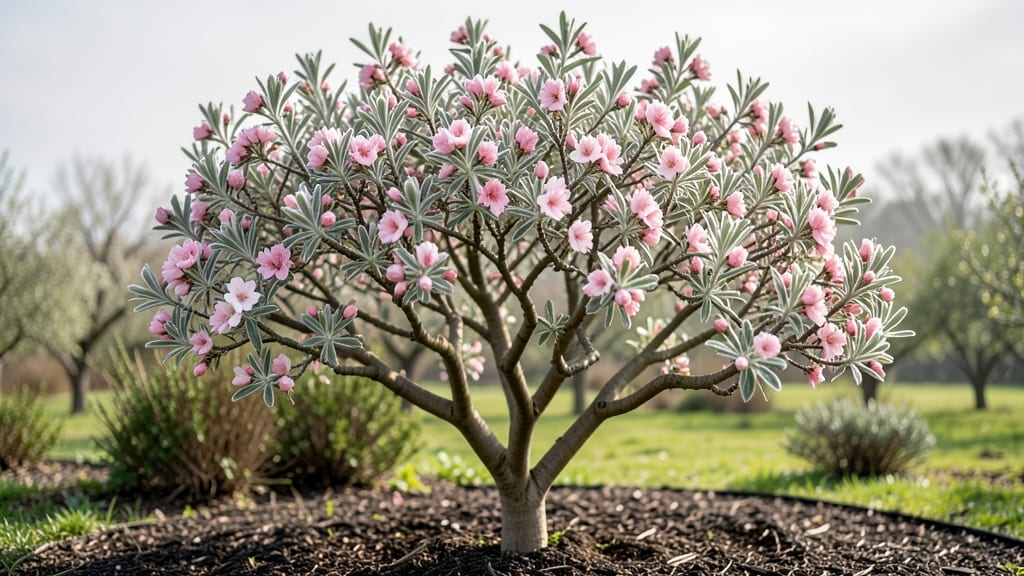
The size of a flowering almond 🌸 at maturity determines whether it becomes a delicate accent plant or a bold garden statement—some varieties top 20 feet while others stay compact.
Wondering how big your flowering almond tree will grow? The right variety can transform your garden from a small backyard shrub to a stunning centerpiece—here’s what you need to know before planting.
Standard flowering almonds reach 10 to 20 feet tall with a spread of 10 to 15 feet, making them perfect for large landscapes or as a focal point. But dwarf varieties stay under 8 feet, ideal for containers or small yards.
Below, I break down the exact mature sizes for popular varieties, spacing tips to avoid overcrowding, and how to control growth with pruning—so you can pick the perfect fit for your space.

Flowering almond tree size by popular variety (height & spread guide)
Choosing the right flowering almond tree depends on your garden's space and vision. Some varieties stay compact as shrubs, while others grow into small trees. The Prunus triloba, or ornamental almond, is the most popular choice for its stunning spring blooms and adaptability.
But did you know there are dwarf varieties that fit containers and small yards? Let’s break down the mature sizes so you can pick the perfect fit for your outdoor space.
Understanding height and spread is critical before planting. A standard flowering almond can reach 15-20 feet tall, while dwarf varieties stay under 8 feet. The spread varies too—some grow wide and bushy, while others have a more upright form.
Proper spacing recommendations ensure your tree thrives without crowding other plants or structures. Below, we compare the most popular varieties to help you decide.
If you’re working with a small garden or patio, the Prunus glandulosa varieties are ideal. Their compact size (4-8 ft) makes them perfect for containers or tight spaces. For larger landscapes, the standard Prunus triloba will create a dramatic focal point with its 15-20 ft height.
Always check the spread measurement—some varieties grow wider than they do tall, which is crucial for planning.
Spacing is another key factor. Plant standard varieties at least 15 feet from structures or other trees to allow for airflow and sunlight. For dwarf or semi-dwarf types, 8-10 feet of space is usually sufficient.
Proper spacing prevents overcrowding, which can lead to disease or poor flowering. Always consider the mature size when placing your tree, not just its current size.
Pruning plays a role in managing flowering almond size. Regular pruning in late winter or early spring can encourage a bushier shape and control height. Remove any dead or crossing branches to improve airflow and reduce disease risk.
If you’re growing a dwarf variety, pruning is less critical but can still help maintain its shape and encourage more blooms.
Climate also affects growth. Most flowering almonds thrive in USDA zones 5-9, but their size can vary based on local conditions. In warmer climates, they may grow slightly larger, while cooler areas might see slower growth.
Always choose a variety suited to your hardiness zone and soil type for the best results.
For container growing, opt for dwarf or miniature varieties. A 5-gallon pot is ideal for the
How to choose the right flowering almond size for your space
Selecting the perfect flowering almond size depends entirely on your garden layout and long-term vision. A standard variety like Prunus triloba can reach 15-20 feet, making it perfect for large landscapes or as a focal point.
But if you have a small yard or container gardening space, dwarf varieties like 'Compacta' (6-8 feet) are game-changers. The key is matching the mature size to your available space while accounting for its spreading habit, which can add 10-15 feet to its footprint.
Before planting, measure your space and consider future growth. A flowering almond planted near a patio or driveway could become a pruning headache if it outgrows its welcome.
For example, a 10-foot-tall tree needs at least 10 feet of clearance above and 8-10 feet around it to thrive without constant trimming. In urban gardens or balconies, opt for container-friendly varieties like 'Purple Leaf', which stays under 8 feet when pruned regularly.
🌸
Quick Size Guide for Your Space
Containers, Patios, Urban Gardens
Backyards, Foundation Plantings
Ornamental Focal Points
Dwarf varieties (e.g., 'Compacta')
Semi-dwarf (e.g., 'Purple Leaf')
Standard (e.g., Prunus triloba)
Your USDA hardiness zone also plays a role in size selection. Flowering almonds thrive in zones 5-9, but colder climates (zones 5-6) may benefit from semi-dwarf varieties that recover better from winter stress.
For example, 'Snow Fountains' (8-10 feet) handles zone 5 winters better than a 20-foot standard variety, which might struggle with frost damage or snow load.
In warmer zones (7-9), you can push the limits with larger varieties, but always factor in heat tolerance—some flowering almonds wilt under 100°F+ temperatures without adequate afternoon shade.
Pruning is your secret weapon for controlling growth. Even standard varieties can be kept smaller with annual pruning in late winter or early spring, right after flowering. Remove 1/3 of the oldest wood each year to encourage new growth and maintain shape.
For container-grown flowering almonds, prune more aggressively—up to 50% of the canopy—to prevent root-bound stress. Just avoid heavy pruning in summer, as it can stimulate late-season growth vulnerable to frost damage.
If you're unsure which size to choose, start with a smaller variety and transplant later if needed. Flowering almonds adapt well to relocation when young, so you can always upgrade to a larger variety as your garden grows.
Just remember: patience is key—these trees take 3-5 years to reach half their mature height, so plan ahead to avoid overcrowding or root competition with other plants.
For container gardening, select a pot at least 24 inches wide and deep with drainage holes, and use a well-draining potting mix. Container-grown flowering almonds need regular watering (every 5-7 days) and monthly feeding with a balanced fertilizer during spring and summer.
With the right container size and care routine, even a 6-foot dwarf can thrive on a balcony or patio.
✂️