
Planting
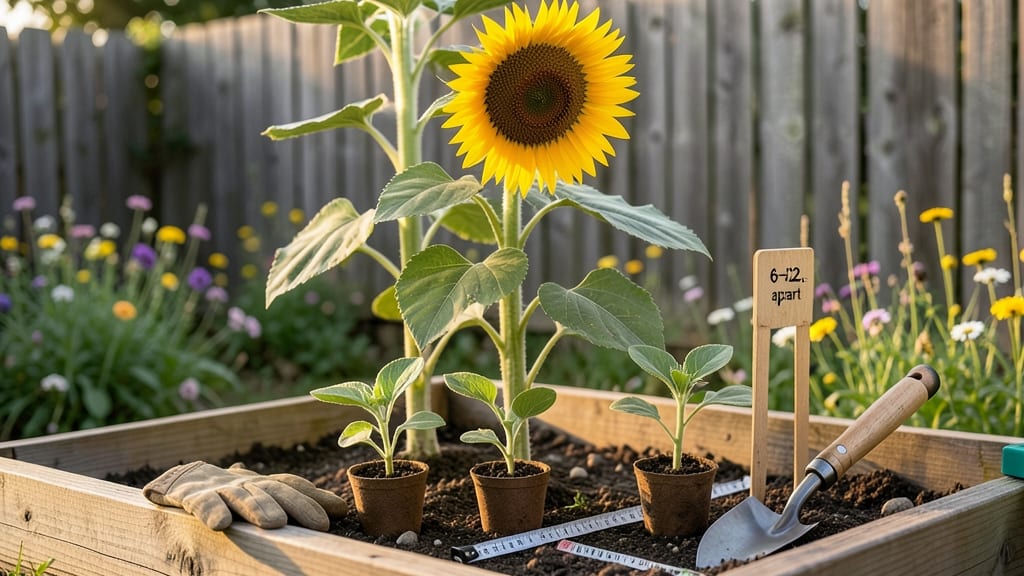
Planting sunflowers too close will leave you with a jungle of weak stems and sad, droopy blooms instead of the towering, vibrant 🌻 displays you dream of.
Sunflowers are nature’s showstoppers—but planting them too close can turn your dream garden into a tangled mess of weak stems and stunted blooms. Get the spacing right, and you’ll grow towering, healthy sunflowers that steal the show.
The key is knowing how much room each variety needs. Giant sunflowers like Mammoths require 2-3 feet between plants, while smaller varieties like Teddy Bear can thrive with just 12-18 inches of space. Crowding them too tightly leads to competition for nutrients, which weakens growth and invites disease.
In this guide, I’ll break down the perfect spacing for your sunflower type, share common mistakes to avoid, and even show you how to maximize small spaces with creative planting hacks.
Optimal sunflower spacing by variety: giant blooms vs. compact gardens
Sunflowers come in every shape and size—from Mammoth varieties that reach skyscraper heights to Teddy Bear hybrids perfect for small gardens. But getting the spacing right isn’t just about aesthetics; it’s about giving each plant room to thrive.
Crowd them too close, and you’ll end up with weak stems and disease-prone foliage. Follow these guidelines, and your sunflowers will grow strong, steady, and stunning.
The key to sunflower spacing lies in two factors: mature plant size and root competition. Giant varieties like Russian Giant need elbow room to support their towering stature, while dwarf varieties can thrive in tight clusters.
Even container-grown sunflowers require careful spacing to prevent root bind and nutrient theft. Let’s break down the best practices for each type so you can plan your sunflower garden like a pro.
| Variety Type | Plant Spacing (inches) | Row Spacing (feet) | Container Spacing (gallons) | Notes |
|---|---|---|---|---|
| Mammoth (e.g., Russian Giant, Mammoth Russian) | 18-24" | 3-4' | 15+ gallons | Needs stakes or cages; prone to lodging. |
| Standard (e.g., ProCut, Sungold) | 12-18" | 2-3' | 7-10 gallons | Ideal for cut flowers; moderate height. |
| Dwarf (e.g., Teddy Bear, Little Becka) | 6-12" | 1-2' | 3-5 gallons | Perfect for containers or borders; compact blooms. |
| Semi-Dwarf (e.g., Autumn Beauty, Lemon Queen) | 10-14" | 2' | 5-7 gallons | Balanced height and spread; great for mixed beds. |
| Cut Flower (e.g., ProCut, Super Bear) | 12-16" | 2-3' | 7-10 gallons | Prioritize stem strength for long-lasting bouquets. |
For Mammoth sunflowers, spacing them 18-24 inches apart in rows 3-4 feet apart gives their deep roots the room they need to anchor. These giants can grow 10-14 feet tall, so they’ll also need windbreaks or stakes to prevent toppling.
If you’re growing them in containers, opt for 15-gallon pots or larger—smaller pots will stunt their growth and lead to nutrient competition.
On the other hand, dwarf varieties like Teddy Bear sunflowers thrive in tighter clusters. Plant them 6-12 inches apart in rows 1-2 feet apart to create a lush, low-maintenance border.
These sunflowers max out at 2-4 feet tall, making them ideal for urban gardens, balconies, or mixed flower beds. In containers, a 5-gallon pot is perfect for 1-2 plants, while larger pots can accommodate small groups.
If you’re growing sunflowers for cut flowers, like ProCut or Sungold varieties, focus on stem strength and longevity. Space them 12-16 inches apart in rows 2-3 feet apart to ensure sturdy stems.
For containers, use 7-10 gallon pots and avoid overcrowding—this variety needs room to develop thick, durable stems that hold up in bouquets.
One common mistake is assuming all sunflowers need the same spacing. Semi-dwarf varieties, like Autumn Beauty, strike a balance with 10-14 inch spacing and 2-foot rows. These plants are versatile enough for both in-ground gardens and containers, making them a great choice for beginners.
Always check the seed packet for specific variety guidelines, as some modern hybrids have unique spacing needs.
For container gardening, the rule of thumb is one sunflower per 3-5 gallons of soil for dwarf varieties, scaling up to 15+ gallons for Mammoth types. Use well-draining potting mix with added compost to prevent root rot.
If you’re growing multiple sunflowers in a single container, space them at least 6 inches apart and prune lower leaves to improve airflow—a critical step to prevent fungal diseases like powdery mildew.
Pro tip: If you’re short on space, try succession planting. Sow
Common spacing mistakes that stunt sunflower growth (and how to fix them)
Even the hardiest sunflowers can struggle when planted too close together. Overcrowding steals nutrients, spreads disease, and weakens stems—leading to stunted growth or even toppling plants. I’ve seen 10-foot giants collapse like toothpicks because they lacked space to develop strong roots and sturdy stalks.
The good news? Most spacing mistakes are easy to fix with simple adjustments.
Let’s tackle the three biggest offenders: overcrowding, poor soil prep, and wind exposure. Each of these can turn your sunflower patch into a sad, tangled mess—but I’ll show you how to rescue your plants with thinning techniques, companion planting, and structural support.
⚠️ How Close to Plant Sunflowers?
Minimum spacing: 6 inches apart for dwarf varieties, 12-18 inches for standard types, and 24+ inches for mammoth sunflowers.
Row spacing: 2-3 feet between rows to prevent competition for sunlight and nutrients.
Containers: 1 plant per 5-gallon pot—never more than two, even for dwarf varieties.
Warning: Planting closer than 6 inches guarantees weak stems, disease spread, and poor blooms. Fix it now by thinning or transplanting!
First, let’s talk about overcrowding. If you’re squeezing sunflowers into tight rows or containers, their roots will compete for water and nutrients. I once saw a Teddy Bear variety planted 4 inches apart—the result? Pale stems and tiny blooms that barely reached waist height.
The fix? Thin seedlings to the correct spacing as soon as they’re 4-6 inches tall, using clean scissors to snip at soil level.
Next, poor soil prep worsens spacing issues. Compacted or nutrient-poor soil forces roots to spread outward in search of resources, making plants lean or topple. Before planting, loosen soil to a depth of 12 inches and mix in 2 inches of compost.
For heavy clay soil, add sand or perlite to improve drainage. I’ve seen sunflowers in amended soil grow 30% taller than those in untouched ground!
Wind exposure is another sneaky culprit. Sunflowers planted too close in open areas develop weak, floppy stems as they struggle to stay upright. If your garden is windy, space plants 18-24 inches apart and provide support with stakes or cages.
For tall varieties, drive a 6-foot stake into the ground beside each plant and tie stems loosely with soft fabric strips every 2-3 feet up the stalk.
For a long-term fix, try companion planting. Pair sunflowers with low-growing companions like borage or nasturtiums, which deter pests and improve airflow. Avoid planting near corn or potatoes, as they compete for the same nutrients.
I’ve had great success with a sunflower-basil combo—the basil repels thrips while the sunflowers provide shade for its roots.
Remember, prevention is key. Plan your spacing before planting, and don’t be afraid to transplant seedlings if they’re too close. With the right adjustments, your sunflowers will reward you with bold blooms and strong stems that reach for the sky—just like they’re supposed to! 🌻