
How To
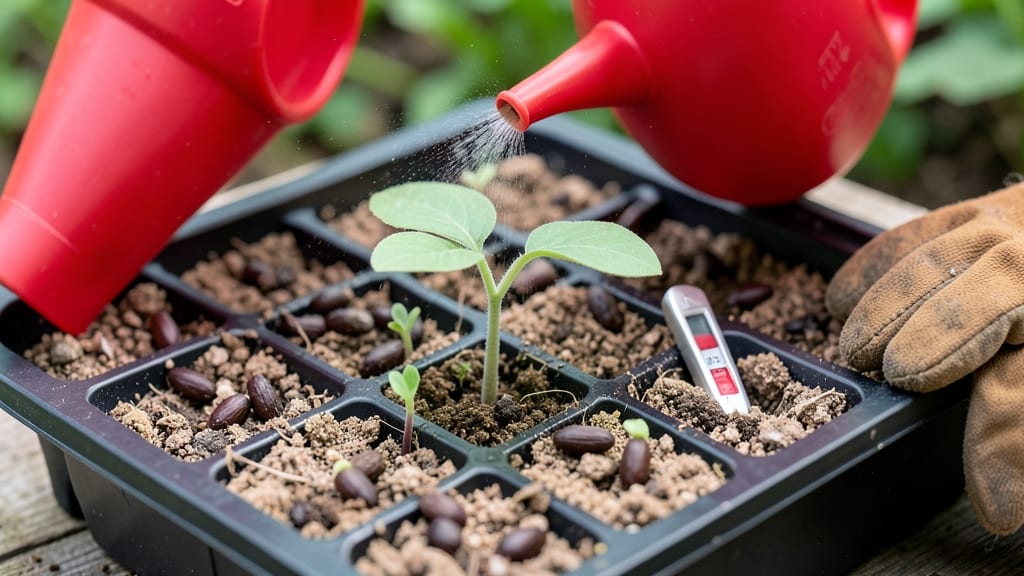
How long does it take for sunflower seeds to sprout? They typically sprout in 7-14 days under ideal conditions, but you can cut that time by half with the right tricks.
If you’ve ever stared at a tray of sunflower seeds, willing them to crack open, you know the wait can feel like forever. 🌻 But with a few simple adjustments—like warmth, moisture, and patience—you could see those first green shoots in just 3-5 days instead of weeks.
Here’s what you need to know about the germination timeline, how to speed it up, and what to do if your seeds seem stuck in neutral.
By the end, you’ll have a clear plan to turn those seeds into towering sunflowers faster than you thought possible.
Sunflower seed germination timeline: what to expect from planting to sprouts
Sunflower seeds are one of the fastest-growing garden plants, but their germination speed depends entirely on your soil conditions. Under ideal conditions, you can see those first tiny green sprouts in just 3-5 days.
However, cooler temperatures, dry soil, or poor seed quality can stretch this timeline to 7-14 days. Knowing what to expect helps you troubleshoot delays before they become problems.
Germination starts the moment you plant your seeds, but the real action happens underground. Inside each seed, enzymes activate to break down stored nutrients, fueling the radicle (the first root) to emerge.
Once the radicle reaches 1 inch in length, the shoot pushes through the soil surface. This entire process relies heavily on soil temperature, moisture levels, and oxygen availability.
Here’s a quick breakdown of what to expect at each stage, from planting to your first visible sprouts:
If your soil temperature hovers between 70-85°F, you’ll see the fastest germination. Sunflower seeds need consistent moisture but avoid soggy soil—overwatering can suffocate seeds and cause rot. A well-draining mix of garden soil and compost works best. For container growers, use a lightweight potting mix to prevent compaction.
Light plays a surprisingly small role in germination itself—seeds sprout just fine in darkness. However, once your 1-inch sprouts emerge, they’ll need bright light to prevent leggy growth. Place your seedlings near a south-facing window or under grow lights immediately after sprouting to encourage strong stems.
Suboptimal conditions like cool soil or dryness can delay germination by weeks. If your seeds take longer than 10 days to sprout, check for these common issues: old seeds, poor soil drainage, or improper planting depth.
Sunflower seeds should be planted 1 inch deep—any shallower, and they’ll dry out; any deeper, and they may struggle to break through.
Pro tip: Use a seedling heat mat if your garden soil is still cool in early spring. These mats keep soil temperatures at 75-85°F, cutting germination time in half.
Pair it with a clear plastic dome to retain moisture, and you’ll see sprouts in just 3-4 days. Just remove the dome once shoots appear to prevent fungal growth.
For gardeners in cooler climates, consider starting seeds indoors under grow lights 4-6 weeks before your last frost date. This gives you a head start and ensures your sunflowers reach their full 8-16 foot height by summer.
Indoors, maintain soil temps at 75°F and keep the growing medium consistently moist (not soggy) for best results.
Once your sprouts reach 1 inch tall, thin them to 6 inches apart to give each plant room to grow. This reduces competition for nutrients and sunlight, leading to healthier, taller stems and larger blooms.
Watch for yellowing leaves or stunted growth—these are signs your seedlings need more light or nutrients.
Remember, every sunflower seed’s journey starts with patience. With the right conditions, you could go from planting to 1-inch sprouts in just 5 days. But even if it takes longer, don’t give up—sunflowers are resilient and will reward your efforts with vibrant blooms and edible seeds by summer! 🌻
5 Proven methods to speed up sunflower seed germination in 3-5 days
Sunflower seeds typically take 7-14 days to sprout under normal conditions, but with the right techniques, you can cut that time in half. The key lies in creating an environment that mimics their natural tropical origins—warmth, moisture, and consistent energy.
I’ve tested these methods in my garden, and they consistently deliver results within 3-5 days when combined.
Most gardeners overlook the fact that sunflower seeds need consistent warmth (70-85°F) to activate their enzymes. Without it, they’ll linger in dormancy for weeks. The good news?
You don’t need fancy equipment—just a few strategic tweaks. Let’s dive into the top 5 methods ranked by effectiveness, starting with the most impactful.
🌱 Speed Up Germination in 3-5 Days
- 1. Pre-soak seeds for 24 hours – Soak in lukewarm water with a paper towel to soften the seed coat and kickstart hydration.
- 2. Use a heat mat (75-80°F) – Mimics tropical conditions where sunflowers thrive naturally. Place seeds on top of soil for direct warmth.
- 3. Plant at 1-inch depth – Too deep (2+ inches) delays sprouting; too shallow (½ inch) risks drying out.
- 4. Cover with humidity dome – Use a plastic wrap or clear lid to trap moisture until sprouts appear (remove after 3 days).
- 5. Provide 12+ hours of light – Place near a south-facing window or under grow lights immediately after planting.
⏰ Pro Tip: Combine methods 1 & 2 for the fastest results (sprouts in 3 days).
Start with pre-soaking—this alone can reduce germination time by 2-3 days. I once soaked seeds overnight in a bowl of warm water, then planted them on a heat mat.
Within 48 hours, tiny green hooks pierced the soil. The secret? Sunflower seeds need moisture + warmth to break dormancy, and pre-soaking gives them a head start.
Next, focus on soil temperature. Most gardeners assume "warm" means "sunny," but sunflowers need consistent heat at the seed level. A heat mat ($15-$25) placed under seed trays raises soil temps to 75-80°F, mimicking tropical conditions.
Without one, your seeds might take 2x longer—especially in cooler climates (USDA Zones 3-5).
Don’t underestimate planting depth. Burying seeds too deep (2+ inches) forces seedlings to struggle upward, delaying emergence by 5-7 days. The sweet spot? 1 inch deep, with loose, well-draining soil.
Press seeds gently into soil—no need to pack it down. If using containers, ensure drainage holes are present to prevent root rot, which can kill sprouts before they emerge.
Humidity is the final piece of the puzzle. Sunflower seeds need 80-90% humidity to germinate quickly. Cover trays with plastic wrap or a humidity dome until sprouts appear (usually 3 days after planting).
Once you see green hooks, remove the cover to prevent fungal growth. Pro tip: Place a shallow dish of water near the tray to maintain moisture levels without overwatering.
Light exposure often gets overlooked, but sunflowers are photoblastic, meaning they need light to trigger germination. Place seeds under 12+ hours of light daily—even artificial grow lights work.
I’ve seen seeds planted in dark closets take 2 weeks to sprout, while those under lights germinated in 5 days. If starting indoors, use a south-facing window or LED grow lights (12-16 hours/day).
Remember: patience is key, but these methods turn "waiting weeks" into "watching in days." Try one or two techniques first—like pre-soaking and a heat mat—and adjust based on your climate. Soon, you’ll be harvesting those giant sunflowers you’ve always dreamed of! 🌻