
Watering
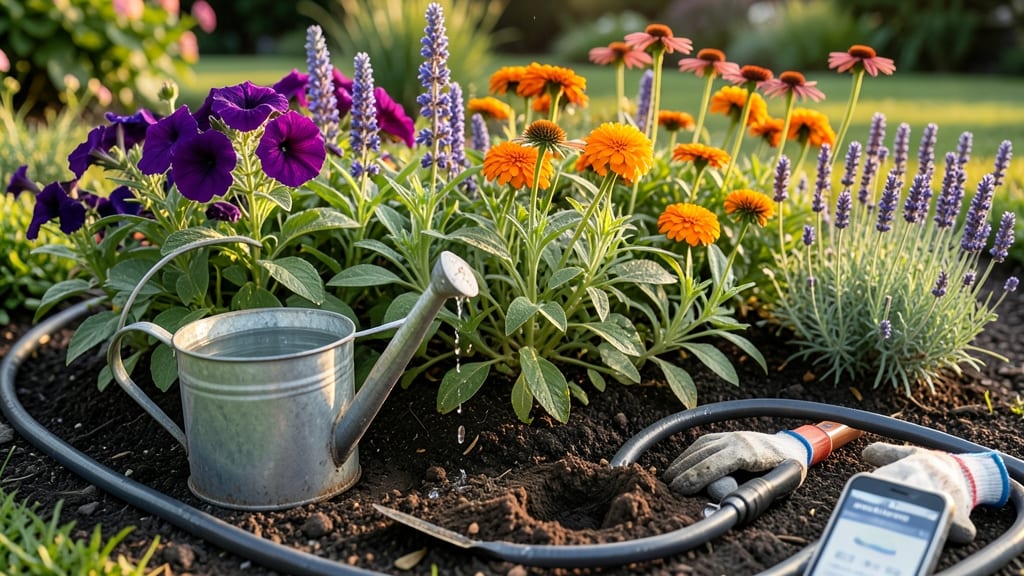
Watering flower beds the right amount keeps 🌸 blooming vibrantly all season — but guessing how often to water leads to soggy roots or thirsty plants.
Overwatering or underwatering your flower beds can turn vibrant blooms into wilted disappointments — yet most gardeners guess rather than measure. The secret to perfect timing lies in understanding your soil’s hidden signals and seasonal needs.
In this guide, I’ll show you how to check soil moisture with a simple test, adjust for clay or sandy soil, and tweak your schedule for summer heat or winter dormancy.
You’ll learn the exact intervals for newly planted vs. established beds, plus how to spot overwatering vs. underwatering before it’s too late.
How often to water flower beds: the 3-Step soil test method for precision
Overwatering or underwatering your flower beds can turn vibrant blooms into wilted disappointments—yet most gardeners guess rather than measure. The secret to perfect timing lies in understanding your soil’s hidden signals and seasonal needs.
Instead of relying on rigid schedules, I’ve perfected a 3-step soil test method that adapts to your unique garden conditions.
This approach combines the finger test, weight check, and visual cues to determine when your flower beds truly need water. The best part? It works for both clay soil (which holds moisture tightly) and sandy soil (which drains quickly).
Let’s dive into the science-backed steps that will transform your watering routine.
The Finger Test (1-2 Inches Deep)
Stick your index finger 1-2 inches into the soil near your flowers. If it feels dry and crumbly, it’s time to water. For clay soil, wait until it’s completely dry at this depth—clay holds moisture longer.
In sandy soil, you may need to water more frequently since it drains quickly.
The Weight Check (Lift a Clod)
Grab a handful of soil and squeeze it gently. If it feels light and falls apart easily, your flowers need water. For sandy soil, the clod will disintegrate almost instantly. In clay soil, it may hold its shape longer—wait until it’s truly dry before watering again.
Visual Cues (Observe the Plants)
Check for wilting leaves, yellowing foliage, or dull petals—these are clear signs your flowers need hydration. For drought-tolerant flowers like lavender, wait until leaves start curling. For thirsty blooms like petunias, water as soon as soil feels dry at the surface.
Once you’ve mastered these three steps, you’ll notice a dramatic difference in your flower beds. Deep watering (1-1.5 inches per week) is key—it encourages roots to grow deeper, making your flowers more resilient.
I recommend using a soaker hose or drip irrigation to deliver water directly to the roots without wasting a drop.
For clay soil, water less frequently but more deeply. The dense particles trap moisture, so you’ll likely only need to water every 5-7 days during dry spells. In contrast, sandy soil drains like a sieve, so you may need to water every 2-3 days to keep roots hydrated.
Always water in the early morning to reduce evaporation and fungal risks.
Don’t forget to adjust your watering schedule based on weather conditions. After a heavy rain, skip your usual watering routine and check the soil again in 24 hours. During heatwaves, you may need to water daily, especially for newly planted flowers.
Mulching around your flower beds with 2-3 inches of organic mulch (like shredded bark or straw) helps retain moisture and regulates soil temperature.
One common mistake I see is surface-level watering, which only wets the top layer of soil. Instead, aim for a slow, deep soak that reaches at least 6 inches down. This mimics natural rainfall and encourages stronger root development.
You can test your watering depth by digging a small hole after watering—if the soil is moist 6 inches down, you’ve done it right.
Pro tip: Keep a watering journal to track when and how much you water your flower beds. Note the soil type, weather conditions, and plant responses. Over time, you’ll develop a personalized watering schedule that keeps your blooms thriving with minimal effort.
With this method, your flower beds will stay lush, healthy, and full of vibrant color all season long.
🌸
Watering frequency by season: adjusting for heat, rain, and dormancy
Seasonal changes dramatically impact how often your flower beds need water. In summer heat, roots dry out faster, while winter dormancy slows moisture needs to a trickle.
Even rainfall can disrupt your schedule—so flexibility is key. Let’s break down the ideal watering frequency for each season and how to adapt when Mother Nature takes over.
Start with the baseline rule: most established flower beds need 1–1.5 inches of water weekly, delivered deeply to encourage strong root growth. Newly planted flowers, however, require daily moisture for the first 2 weeks to establish roots.
Adjust this baseline based on your local climate, soil type, and plant varieties—drought-tolerant succulents like lavender need far less than thirsty petunias.
In summer’s peak heat, switch to deep-watering techniques to protect roots. Water early in the morning to minimize evaporation, and aim for the soil’s root zone (6–12 inches deep) rather than surface splashing.
For container gardens, check moisture daily—pots dry out 3x faster than in-ground beds. Mulch with 2–3 inches of organic matter (like straw or wood chips) to lock in moisture and regulate soil temperature.
When rainfall becomes your watering partner, skip scheduled waterings if you’ve received 1 inch or more in the past week. Use a rain gauge to track accumulation—most garden centers sell them for under $20.
For drought conditions, group drought-tolerant plants like yarrow or black-eyed Susans together and water them deeply but infrequently to encourage deep root growth.
Winter care shifts to dormancy support. Most perennial flowers enter a resting phase, requiring little to no water. Focus on protecting soil moisture for bulbs like tulips or daffodils by applying a thick layer of mulch after the ground freezes.
Avoid watering annuals in winter—they won’t survive frost anyway. Instead, use this time to plan next year’s beds and amend soil with compost for spring planting.
Pro tip: Keep a gardening journal to track your flower beds’ responses to seasonal changes. Note which plants thrive with less water, which wilt in heat, and how your soil reacts to rainfall. Over time, you’ll create a customized watering schedule tailored to your microclimate and plant collection.