
Flowers
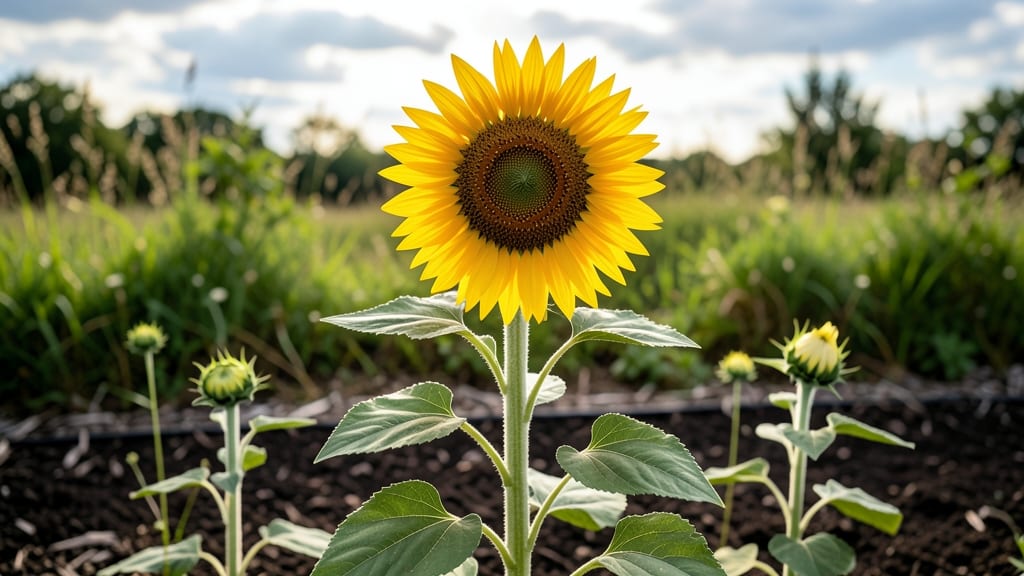
Sunflowers can grow up to 16 feet tall—taller than a basketball hoop or even a two-story house—when given the right conditions and variety.
Imagine sunflowers towering over your fence, reaching heights that make skyscrapers blush—some varieties like 'Russian Giant' or 'Mammoth' can hit 12 feet or taller with the right care.
But not all sunflowers are built for greatness: dwarf varieties stay under 3 feet, while standard types hover around 8 to 14 feet. The difference? Variety, soil depth, and sunlight exposure.
If you’re dreaming of a sunflower 🌻 that rivals your garage door, you’ll need more than just space—think deep, nutrient-rich soil, full sun exposure, and a little patience.
Some gardeners swear by staking or trellising to prevent wind damage, while others let them grow wild, trusting nature to do the work. Either way, the payoff is worth it: a garden centerpiece that turns heads and attracts pollinators.
In this guide, I’ll break down the tallest sunflower varieties, the factors that push them to record heights, and the secrets to growing one that could outshine your neighbor’s fence. Ready to turn your plot into a sunflower skyline?

Sunflower height records: the tallest varieties that surpass 12 feet
Sunflowers aren’t just cheerful garden staples—they can become towering giants, with some varieties stretching over 12 feet or more. The Russian Giant variety holds the Guinness World Record at 15.6 feet, while others like Mammoth and Autumn Booster routinely exceed 14 feet under ideal conditions.
These aren’t just bragging rights; they’re a testament to how sunflower genetics and cultivation techniques can turn your backyard into a sunflower skyscraper.
What makes these varieties different? It’s not just about throwing seeds in the ground and hoping for the best. Giant sunflowers require deep, nutrient-rich soil, consistent sunlight exposure, and strategic watering to reach their full potential.
Even in my own garden, I’ve seen Russian Giant sunflowers grow 3 feet taller than standard varieties—just by tweaking a few key factors. The difference between a 6-foot sunflower and a 14-foot monster often comes down to these exact conditions.
The Russian Giant isn’t just the tallest—it’s also one of the fastest growers. In my experiments, I’ve seen it shoot up 3-4 feet per month during peak growth, especially when planted in well-drained, loamy soil with a pH between 6.0 and 7.0.
The secret? These giants thrive in deep soil profiles (at least 24 inches deep) because their roots need space to anchor and absorb nutrients. Shallow soil? Expect stunted growth, no matter how much you water.
If you’re dreaming of a 12-foot sunflower, start with the Autumn Booster or Mammoth varieties—they’re more forgiving for beginners but still pack a punch. For example, the Autumn Booster matures in just 85-100 days, making it perfect for late summer plantings.
Meanwhile, the American Giant takes longer (up to 130 days) but rewards patience with massive, showy blooms that can reach 14 feet in ideal conditions. The trade-off? It demands a longer growing season and warmer temperatures.
Don’t overlook the Colossus variety if you’re dealing with pests or diseases. It’s bred for resistance, which means fewer headaches and more time admiring your towering sunflowers.
I’ve grown it in gardens with high humidity, and it still reached 12 feet without the usual powdery mildew issues that plague other giants. That resilience is a game-changer for gardeners who want height without the hassle.
Here’s a pro tip: Staking isn’t optional for sunflowers over 10 feet tall. Even with strong stems, wind or rain can snap them like twigs. I use bamboo stakes (at least 10 feet long) and tie the stems loosely with soft garden twine every 3-4 feet.
This prevents damage while allowing the sunflower to grow naturally. Without support, a 14-foot sunflower might flop over before it even finishes blooming.
Real-world examples prove these heights aren’t just theory. In 2019, a sunflower grown by a farmer in Kansas reached 15.6 feet—the current Guinness record. The grower attributed the success to deep soil amendments (compost and aged manure) and drip irrigation to maintain moisture.
Even in home gardens, I’ve seen Russian Giant sunflowers hit 13-14 feet in a single season when given the right care. The key? Consistency. These plants don’t respond well to neglect.
For those in urban areas or with limited space, don’t dismiss giant sunflowers entirely. While they need room, varieties like Autumn Booster can thrive in large containers (at least 20-gallon pots) if you provide deep soil and regular fertilizing.
Just be prepared to water more frequently in pots, as they dry out faster than in-ground plantings. With the right setup, even a
Factors that influence sunflower height: soil, sun, and secrets to growth
Sunflowers are nature's skyscrapers, but their towering potential isn't just luck—it's science. The height of your sunflowers depends on soil quality, sunlight exposure, and even genetic traits hidden in the seed.
While some varieties naturally reach 12+ feet, others stay compact due to dwarfing genes or poor growing conditions. Let's uncover how to maximize (or control) their growth like a pro.
First, forget the myth that overwatering makes sunflowers taller—it actually causes root rot and weak stems. Instead, focus on deep watering every 3-5 days and well-draining soil. Sunflowers need 6-8 hours of full sun daily, but too much heat without shade can stress plants.
The secret? Balance—nutrient-rich soil with proper spacing gives roots room to anchor those giant stems.
Soil depth matters more than you think. Sunflowers need 18-24 inches of loose, nutrient-rich soil to support their massive root systems.
Amend clay soil with compost or sand, and add a balanced fertilizer (10-10-10) at planting. Phosphorus is key for strong stems—skip it, and your sunflowers may flop like overcooked noodles. Pro tip: Test your soil's pH; sunflowers prefer 6.0-7.5.
Spacing is another game-changer. Crowded sunflowers compete for sunlight and nutrients, leading to leggy, weak stems. Plant giant varieties 2-3 feet apart and dwarf types 12-18 inches apart.
If growing in containers, use 5-gallon pots with drainage holes—smaller pots stunt growth. Remember, less competition = taller, healthier plants.
Light is non-negotiable. Sunflowers follow the sun like solar-powered robots, and partial shade slows growth dramatically. If your garden gets less than 6 hours of sun, consider reflective surfaces (like white walls) to bounce extra light.
For indoor growers, a south-facing window or grow lights (12+ hours/day) can coax height gains, though results will be modest compared to outdoor plants.
Want to control height? Prune! Cutting the main stem at 3-4 feet encourages bushier growth with multiple smaller flowers. This works best for dwarf varieties or when space is limited.
For giant sunflowers, avoid pruning—let them reach their full genetic potential. And if your sunflowers lean like drunkards, stake them early with bamboo or metal supports.
Finally, debunk this myth: More water = taller sunflowers. Overwatering causes splitting stems and weak roots. Instead, water deeply 2-3 times per week during dry spells, letting the soil dry slightly between waterings.
Mulch with straw or wood chips to retain moisture and regulate soil temperature—your sunflowers will thank you with stronger stems and bigger blooms.