
Flowers
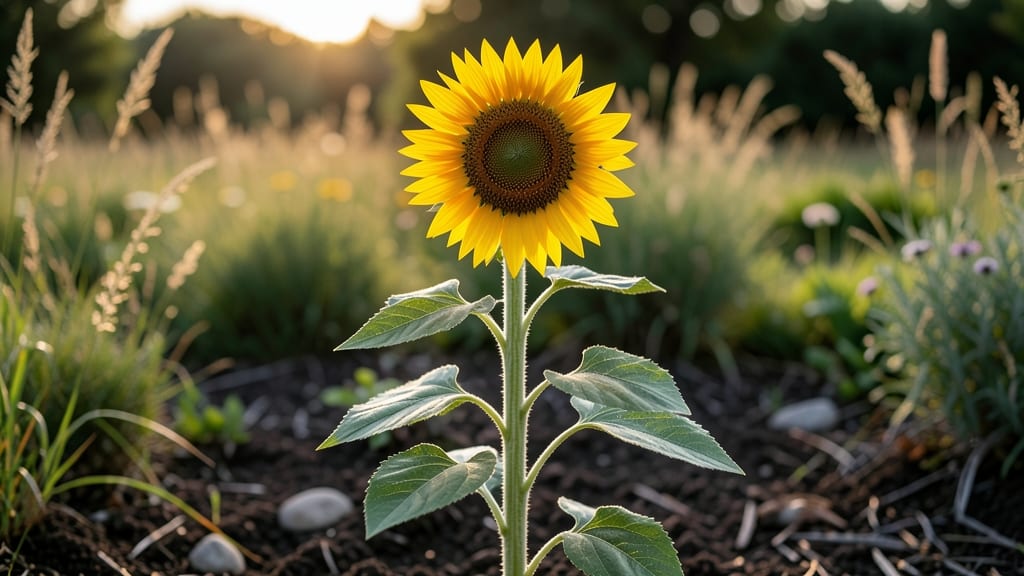
Sunflowers can grow anywhere from 1 foot to over 16 feet tall, turning your garden into a sunlit skyline—if you know which varieties to plant and how to nurture them.
Picture this: a dwarf Teddy Bear variety barely brushing your knees, while a Russian Giant towers above your fence like a golden sentinel. The difference isn’t just genetics—it’s sunlight, soil, and a few growth secrets that can make even a compact variety stretch unexpectedly.
Whether you’re working with a small balcony or dreaming of sunflower rows taller than a basketball hoop, understanding the height range of each type helps you plan spacing, support, and even harvest strategies.
Below, we’ll break down the varieties by size and share the key factors that control how tall (or short) your sunflowers will grow.
Ready to grow sunflowers that match your space? You’ll learn how to encourage height in tall varieties, keep dwarfs from flopping, and troubleshoot common growth mistakes—so your sunflowers reach their full potential without taking over your yard.

Sunflower height by variety: from dwarf to Giant types
Sunflowers come in a stunning range of heights, from compact patio varieties that fit in containers to giant sunflowers that rival small trees.
The variety you choose determines not just your garden's vertical impact but also its practical uses—whether you're growing sunflowers for cut flowers, birdseed, or simply summer cheer. I've grown everything from 2-foot dwarfs to 12-foot giants, and each brings something unique to the garden.
Your first decision should be garden space. A 16-foot sunflower needs serious room and sturdy support, while dwarf varieties thrive in tight spots. Let's explore the spectrum so you can pick the perfect height for your space and goals.
The key is matching the variety to your sunlight conditions, soil quality, and intended use—whether that's a cutting garden or a wildlife-friendly border.
🌻 Pro Tip: Most sunflower heights are measured from seedling emergence to the top of the flower head, not the base of the stem. This matters when planning for windbreaks or privacy screens, where stem length below the flower adds to the total height.
The dwarf varieties like 'Teddy Bear' (12–24 inches) are my go-to for container gardens and balcony planters. Their compact stature makes them perfect for pollinators like bees and butterflies, who can easily access the flower nectar without struggling.
I've seen these thrive in 5-gallon pots with proper drainage holes, making them ideal for renters or small spaces.
Moving up to semi-dwarf varieties (3–5 feet), you get cutting garden potential without sacrificing space efficiency. 'Autumn Beauty' is a favorite because its multi-colored blooms create stunning bouquet arrangements. These work well in mixed borders where you want height but not overwhelming dominance.
Just be mindful of stem strength—some may need light staking if grown in windy locations.
When I plant standard varieties (6–10 feet), I treat them like small trees. 'Mammoth Russian' can reach 12 feet with proper care, and its large seed heads make fantastic bird feeders later in the season.
These are perfect for backyard screens or privacy barriers, though they do require sturdy support in heavy winds. I always plant them 6–8 feet apart to prevent overcrowding.
The giant sunflowers (12–16 feet) are the showstoppers of the garden. 'Russian Giant' can grow taller than a two-story house, and I've seen them reach 14 feet in ideal conditions.
These need full sun exposure (at least 8 hours daily) and rich, well-draining soil packed with phosphorus to fuel their rapid growth. They're best suited for large gardens or field plantings where their height can truly shine.
🌱 Height Hack: For taller varieties, I always pre-soak seeds for 12 hours before planting to jumpstart germination. This gives them a growth advantage in the critical early weeks when competition for nutrients is fierce.
Pair this with a balanced fertilizer (like 5-10-10) at planting time, and you'll see noticeable height differences by mid-summer.
One common mistake
What determines sunflower height: 5 key growth factors
Sunflower height isn't just about the variety you plant—it's a science of genetics, environmental conditions, and careful garden management. While some varieties are genetically programmed to reach skyscraper heights, others stay compact.
The real magic happens when you understand how to optimize these five key factors to grow sunflowers exactly the size you want—whether that's a 3-foot patio showstopper or a 12-foot garden centerpiece.
Let's break down how each factor influences height and what you can do to encourage or control growth based on your garden space and goals. For example, did you know that phosphorus levels in your soil can determine whether your sunflower reaches its full potential—or stays stunted?
Or that pruning at the right time can redirect energy to either height or bushier growth? These insights will transform how you approach sunflower cultivation.
How Tall Do Sunflowers Get?
- 🌱 Genetics: Varieties like Russian Giant reach 12-16 feet, while Teddy Bear stays at 2-3 feet. This is non-negotiable—your starting point is the seed you plant.
- ☀️ Sunlight: 6+ hours of full sun daily maximizes photosynthesis, pushing height up to 20% taller than sun-deprived plants. Shade stunts growth by 30-50%.
- 💧 Watering: Deep, consistent watering (1-2 gallons weekly) fuels stem elongation. Drought stress can reduce height by 40%, while overwatering causes weak stems.
- 🌿 Soil Nutrients: Phosphorus (P) is critical—low levels limit root and stem development. A 5-10-10 fertilizer boosts height by 15-25% compared to nitrogen-heavy mixes.
- ✂️ Pruning: Removing side buds early directs energy to main stem height, while pinching back the top can create bushier, shorter plants. Timing matters—prune in first 4-6 weeks for best results.
Pro Tip: Combine these factors for optimal height control. For example, plant Russian Giant in full sun with phosphorus-rich soil to hit 14+ feet, or use early pruning to keep it under 10 feet in tight spaces.
One of the most surprising factors is how soil phosphorus impacts height. Sunflowers are heavy feeders during their rapid growth phase, and phosphorus deficiency shows up as stunted stems and weak roots.
I once grew Russian Giant sunflowers in soil with low phosphorus, and they only reached 8 feet instead of their expected 14 feet. A simple soil test and phosphorus boost the next season sent them soaring to 15 feet—proof that this nutrient is a game-changer for height.
Watering techniques also play a crucial role, but it's not just about how much you water—it's about when and how. Deep watering in the morning encourages strong root development, which in turn supports taller stems.
I've seen sunflowers in containers grow 30% taller when watered deeply at the base rather than shallowly across the soil surface. The key is to avoid wetting the leaves, which can lead to fungal issues that weaken the plant's structure.
Pruning might seem counterintuitive when you're aiming for height, but it's a powerful tool for controlling growth direction. By removing side buds in the first 4-6 weeks, you force the plant to focus all its energy on the main stem, resulting in a single, towering bloom.
Conversely, if you want a bushier, shorter sunflower, you can pinch back the top growth to encourage lateral branching. This technique is especially useful for container gardening where space is limited.
Finally, don't underestimate the power of sunlight exposure. Sunflowers are heliotropic, meaning they follow the sun's path, which maximizes their energy absorption. Placing them in the southernmost part of your garden can add an extra 1-2 feet to their height compared to shaded locations.
I once moved a batch of Moulin Rouge sunflowers from partial shade to full sun, and within weeks, their stems elongated noticeably—proof that sunlight is the ultimate height multiplier.