
Vegetables
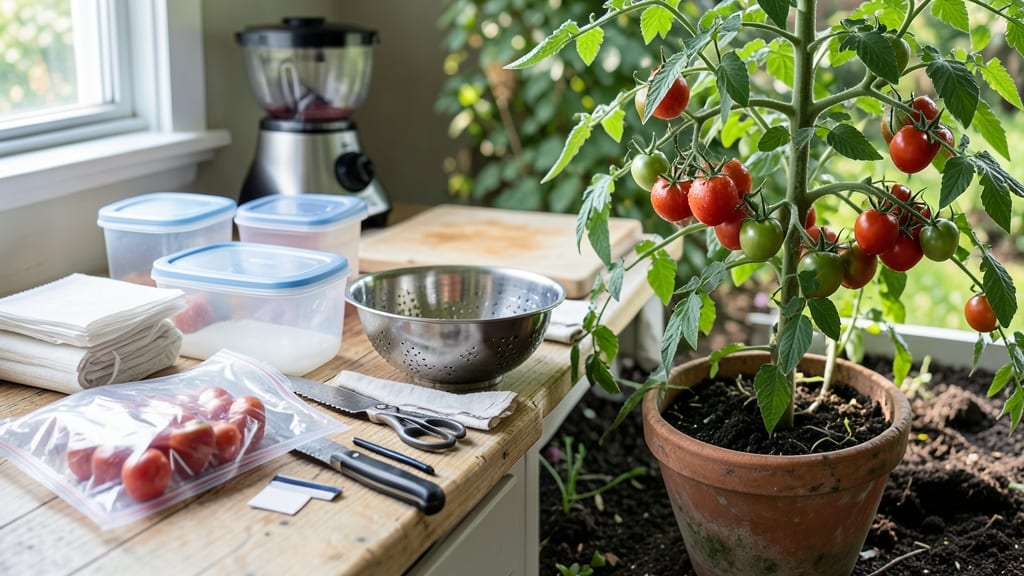
Preserving tomatoes in the freezer saves your summer harvest from turning to mush by winter. 🌱 I’ve frozen tomatoes for years, and the key is blanching, peeling, and crushing them right—no soggy, bland results here.
This method keeps the flavor vibrant and the texture perfect for soups, sauces, or salsas later. The secret lies in quick prep: blanching for 30 seconds, peeling while warm, and crushing with a fork or your hands.
Store them in freezer bags or airtight containers, squeezing out excess air to prevent freezer burn. You’ll end up with a pantry staple that tastes like summer all year. Once frozen, these tomatoes stay fresh for up to 12 months, ready to transform into sauces, stews, or even smoothies.
No more wasted garden bounty—just pure, preserved flavor whenever you need it. Perfect for gardeners who grow more tomatoes than they can use fresh. Here’s how to do it right the first time!
📚 In This Guide
- What you need
- Instructions
- Tips and common mistakes
- Wrapping up and next steps
What you need
- ● Fresh tomatoes: 1–2 lbs (450–900g) of ripe, firm tomatoes (Roma or vine-ripened work best).
- ● Cutting board: A large, stable board (preferably plastic or wood for easy cleanup).
- ● Sharp chef’s knife: An 8–10-inch knife for precise slicing or dicing.
- ○ Blender or food processor: (Optional but helpful for sauces or purées—choose a 3–5 cup capacity).
- ● Fine-mesh strainer: (For sauces or juices—4-inch diameter is ideal).
- ● Freezer-safe containers: Rigid plastic containers: 1–2 quart-sized with airtight lids (e.g., Tupperware or Ziploc FreezerPaks).
- ● Silicon ice cube trays: (For single-serving portions—great for smoothies!).
- ● Heavy-duty freezer bags: Quart or gallon-sized, with zip-top seals (lay-flat bags work best).
- ● Paper towels or clean kitchen towel: For patting tomatoes dry.
- ○ Liquid measuring cup: (Optional, for adding water or oil if prepping sauces).
- ● Vacuum sealer: Extends shelf life and prevents freezer burn (great for long-term storage).
- ● Stasher bags: Reusable silicone bags for portion control (BPA-free!).
- ● Parchment paper: For lining containers and easy removal.
- ● Lemon juice or citric acid: 1 tsp per quart (preserves color and prevents browning).
- ● Olive oil or butter: 1 tbsp per quart (for sauces—helps retain texture post-thaw).
Step-by-Step instructions for freezing tomatoes without sog or flavor loss
Here’s how I preserve tomatoes for months without the mushy, bland results you often get.
🌱 Step 1: Select and Prep Tomatoes for Freezing
Pick firm, ripe tomatoes—avoid bruised or overripe ones. Wash them thoroughly, then slice into ½-inch thick rounds or chop into ½-inch pieces. The key here is uniformity: evenly sized pieces freeze and thaw at the same rate, preventing some from turning mushy while others stay firm.
Spread the slices or chunks on a baking sheet lined with parchment paper. Place them in a single layer, not touching. This step is critical—it prevents clumping when frozen. Pop the tray in the freezer for 2-3 hours until solid. You’ll know they’re ready when you can lift a piece without it sticking to the paper.
💧 Step 2: Blanch for Texture and Flavor Retention
Boil a large pot of water and prepare an ice bath in a separate bowl. Working in batches, drop the frozen tomato pieces into the boiling water for exactly 30-45 seconds. This brief blanch preserves texture and prevents sauce separation later. Immediately transfer them to the ice bath to stop the cooking process.
Drain the tomatoes well and let them air-dry for 5 minutes on a clean towel. This removes excess surface moisture, which is the enemy of freezer burn. You’ll notice the pieces look slightly wilted but firm—this is normal and ensures they stay dry in the freezer.
🪴 Step 3: Package for Long-Term Freezing
Use freezer-safe bags or airtight containers for storage. Divide the blanched tomatoes into 1-pint portions—this makes it easy to grab just what you need later without thawing the whole batch. Squeeze out as much air as possible before sealing to prevent freezer burn.
Label each bag with the date and contents. Place them flat in the freezer to save space and prevent crushing. These tomatoes will keep their quality for up to 12 months, but I recommend using them within 6-8 months for the best texture and flavor.
☀️ Step 4: Thaw and Use Like Fresh Tomatoes
When ready to use, transfer the frozen tomatoes directly from the freezer to a pot. Add ½ cup water per pint and simmer for 10-15 minutes until heated through. The pieces will soften slightly but retain their shape—perfect for sauces, soups, or salsas.
For a smoother texture, blend the thawed tomatoes with a pinch of salt and a splash of water. You’ll be amazed at how close they come to fresh tomatoes in flavor and usability. The key is never letting them sit at room temperature—just toss them straight into your recipe from frozen.
Tips & tricks for perfect freezer-preserved tomatoes
Took me a while to figure these out, so here goes—these tricks will help you avoid the soggy, flavorless results that ruin so many freezer tomato attempts.
Uniformity is Key: When slicing your tomatoes in Step 1, aim for pieces that are all ½-inch thick or ½-inch chunks. The slight variation in size between slices and chunks is intentional—thicker slices hold up better in soups, while smaller pieces work perfectly in sauces. Just avoid anything smaller than ¼-inch or larger than ¾-inch, as these extremes can lead to uneven freezing and texture issues.
Freezing Time Hack: That 2-3 hour freeze time in Step 1 might seem long, but it's worth it. If you're short on time, try this: After arranging your tomato pieces on the tray, place it uncovered in the freezer for 1 hour to partially freeze the edges. Then cover with parchment paper and freeze for another 1-2 hours. This two-stage approach speeds things up while still preventing clumping.
Blanch Batch Management: For Step 2, work in batches that fit comfortably in your boiling water—no more than 2-3 cups of tomato pieces at a time. Overcrowding lowers the water temperature, which means your tomatoes won't blanch properly. I use a slotted spoon to transfer pieces directly from the ice bath to the towel, keeping everything moving efficiently. The 30-45 second window is tight, so stay alert!
Package Like a Pro: When dividing into 1-pint portions in Step 3, consider your future needs. For sauces, you'll want more pieces per pint, while soups can handle fewer. Use a straw to suck out excess air from bags before sealing—the difference in freezer burn prevention is noticeable. And here's a bonus: If you're using vacuum-sealed bags, you can extend that 6-8 month quality window by another 2-3 months.
Pro Tips for Preserve Tomatoes In Freezer
- Took me a while to figure these out, so here goes—these tricks will help you avoid the soggy, flavorless results that...
- Uniformity is Key: When slicing your tomatoes in Step 1, aim for pieces that are all ½-inch thick or ½-inch chunks. T...
- Freezing Time Hack: That 2-3 hour freeze time in Step 1 might seem long, but it's worth it. If you're short on time, ...
Frequently asked questions
Got questions about freezing tomatoes like a pro? You’re not alone! Here are answers to the most common concerns—so you can freeze, thaw, and enjoy tomatoes without the soggy, bland surprises.
Can you freeze tomatoes whole?
Nope!
Whole tomatoes won’t freeze well—they’ll turn mushy and lose texture. Always peel, seed, and chop them first (or crush for sauces). For whole tomatoes, try canning instead—it’s the better long-term preservation method.
How long do frozen tomatoes last?
6–12 months
is the sweet spot for peak quality. After that, they’ll still be safe to eat (thanks to your freezer’s low temps), but texture and flavor may degrade. Label bags with the date to keep track!
Do frozen tomatoes taste different after thawing?
Yes, but not badly!
Frozen tomatoes lose some freshness but shine in cooked dishes like sauces, soups, or salsas. For raw uses (e.g., salads), opt for sun-dried or canned tomatoes instead. The key? Freeze them raw—no pre-cooking!
Why do my frozen tomatoes turn gray or watery?
Oxidation is the culprit!
Tomatoes release air and moisture when frozen. To prevent graying, blanch them for 2–3 minutes before freezing, or add a splash of lemon juice or olive oil to the bag. For watery texture, squeeze out excess liquid after thawing or use them in cooked recipes.
Can I freeze cherry tomatoes?
Absolutely!
Cherry tomatoes freeze beautifully—just wash, dry thoroughly, and freeze them whole or halved on a tray first (to prevent clumping). Once solid, transfer to a freezer bag. They’re perfect for winter stir-fries or pasta dishes!
What’s the best way to thaw frozen tomatoes?
Slow and gentle wins.
Move the bag to the fridge overnight for even thawing. Never microwave or soak them—this breaks down texture. For sauces, thaw directly in the pot over low heat. Pro tip: Use thawed tomatoes within 1–2 days for best results.
Are frozen tomatoes healthy?
Yes!
Freezing preserves most nutrients (like vitamin C and lycopene), though some may degrade over time. Just avoid refreezing thawed tomatoes. For a nutrient boost, pair them with garlic, olive oil, or herbs after thawing.
What if I don’t have a freezer?
No problem! Try these alternatives:
- Canning: Acidic tomato sauces or whole tomatoes last 1–2 years unrefrigerated.
- Dehydrating: Sun-dried tomatoes keep for 6–12 months in a cool, dark place.
- Fermenting: Sauerkraut or kimchi adds probiotics and shelf life!
Wrapping up and next steps
Preserving tomatoes in the freezer is your secret weapon for year-round freshness—no soggy, bland surprises here! Whether you’re prepping for sauces, soups, or smoothies, freezing tomatoes the right way locks in flavor, texture, and nutrients.
With just a few simple steps and the right containers, you’ll turn summer’s bounty into a pantry staple that’s always ready to shine.
Now that you’ve mastered the art, why not try it today? Grab those ripe tomatoes, follow your favorite method, and stock up for meals that taste like summer—even in winter! 🌱❄️